







Interventional Glaucoma
Latest News
Advertisement
Video Series





CME Content












Advertisement
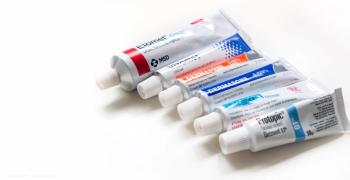
Danish JAMA Dermatology trials show short-term topical or oral corticosteroids don’t raise intraocular pressure, easing glaucoma worries in atopic dermatitis care.

Learn how IBD affects gut and beyond—risk factors, gender differences, eye complications, and treatment options to manage flares and protect vision.
AI-assisted screening in glaucoma clinics flags patient distress early, improving adherence and outcomes without adding staff burden.

Melding ophthalmology and neurology

Mt. Sinai to introduce the miDOC system at the ASCRS annual meeting
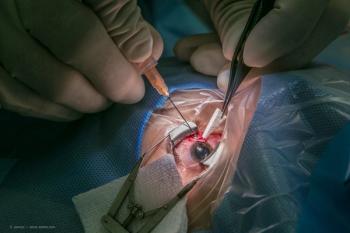
A trio of ASCRS presentations collectively offer insight to surgeons, suggesting that glaucoma drops harm meibomian glands, while combining cataract surgery with MIGS can boost long-term IOP control.
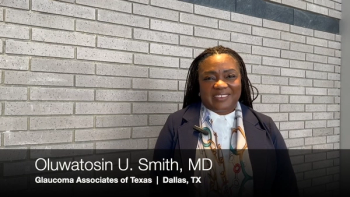
Oluwatosin U. Smith, MD, provides an overview of angle-based techniques, cyclodialysis cleft repair, and minimally invasive approaches to glaucoma surgical complications.


Key regulatory filings, phase 3 readouts, and trial enrollments to watch through June 30.

The prospective, multicenter study enrolled 318 patients across 20 US sites.

Ian Pitha, MD, PhD, argues that leveraging large-scale utilization data to identify the highest-impact medications could help the field get ahead of supply disruptions before they reach patients.

See which ophthalmology surgery centers earn US News’ 2026 high-performing badge, where they cluster, and why complication rates drop 40%.
Pitha discusses how ophthalmic drug shortages — more frequent and longer-lasting than the national average — are threatening adherence to glaucoma therapy.

The BIM-IOL System consists of 2 non-bioerodible drug pads attached to the optic-haptic junction of a monofocal intraocular lens (IOL), which is implanted as part of routine cataract surgery.
Paula Anne Newman-Casey, MD, MS, explains the multifactorial needs and her decades-long research that resulted in the SEE program for glaucoma patients.
The 6-month Support, Educate, Empower (SEE) program was associated with a 20% improvement in glaucoma treatment adherence and reduced distress among adult patients.

Inder Paul Singh, MD, spoke alongside Mary Qiu, MD, and Danica J. Marrelli, OD, FAAO, AAODip, in a CE Spotlight Symposium at the conference.

Most patients do well on topical therapy, but innovation in IOP-lowering drops remains essential.
EnVision Summit insights spotlight complex glaucoma cases, MIGS pitfalls, and personalized surgery choices—preview the issues driving 2026 debates in Puerto Rico.
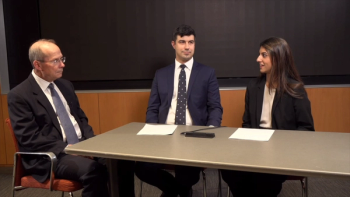
NYU Grossman’s Preeya Mehta, MD, and Jonathan S. Williams, MD, sit down with Mount Sinai’s Louis R. Pasquale, MD, to discuss long-term safety and efficacy data from a PreserFlo microshunt trial and the role of microshunts in glaucoma surgery.

AI is reshaping clinical practice in retinal imaging and workflow optimization, according to Priv.-Doz. Dr. med. Jan H. Terheyden, FEBO.

Commercial OCT maps five IPL sublayers; aging reduces contrast, hinting at earlier biomarkers for glaucoma and Alzheimer’s.

Glaukos noted under the updated labeling, physicians may now re-administer iDose TR more than once in patients who maintain a healthy cornea, as defined by corneal endothelial cell density parameters.

The trial will evaluate the safety and effectiveness of the company's titratable glaucoma therapy system, designed to optimize IOP reduction in patients undergoing glaucoma surgery.
Advertisement
Advertisement
Trending on Eye Care Network - Ophthalmology Times
1
Brepocitinib meets all Phase 3 end points in noninfectious uveitis
2
Myopia control using spectacle lenses with highly aspherical lenslets
3
Demodex blepharitis: Diagnosis, treatment response, and recurrence
4
CHMP recommends ranibizumab biosimilar Fovlussea for retinal disease
5