


Interventional Glaucoma
Latest News
Advertisement
Video Series







CME Content













Advertisement

The framework covers ocular hypertension to severe progression

Funding will support the continued clinical advancement of its lead ocular implant candidate, PA5108, for the reduction of IOP in patients with ocular hypertension and glaucoma.

EssilorLuxottica and MidEuropa recently entered into an agreement that will allow EssilorLuxottica to acquire Optegra, building upon its med-tech strategy.

The novel preservative-free eye drop therapy for glaucoma aims to improve IOP control and patient adherence with a fixed-dose combination.


Weighing the benefits and trade-offs of preserved versus preservative-free glaucoma treatments is key to optimizing long-term patient care.

SpyGlass Pharma secures $75 million in Series D funding to enhance its innovative drug delivery platform for long-term glaucoma management.

Laser surgery is an appropriate adjunctive therapy across the continuum of glaucoma care, as well as a safe option for patients who also have cataracts and other complicating factors

This partnership aims to address care gaps by identifying untreated and undertreated patients at scale.

A conversation with David S. Friedman, MD, PhD, on treating uncontrolled open-angle glaucoma in patients with limited options
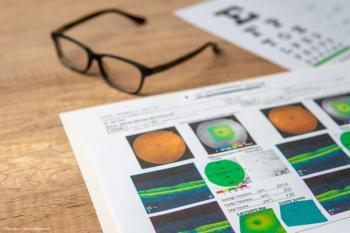
The investigators described the CASIA2 (Tomey Corporation) instrument, which is a new AS-OCT device with a swept-source laser wavelength of 1,310 nm that can scan at a speed of 50,000 A-scan/second.

Swedish researchers reveal that vitamins B6, B9, B12, and choline offer neuroprotection against glaucoma, highlighting potential new treatment avenues.

Vitamins B6, B9 and B12 were found to be neuroprotective against retinal ganglion cell death

NCX 470, Nicox’s lead clinical product candidate, is a novel NO-donating bimatoprost eye drop with a dual mechanism of action (nitric oxide and prostaglandin analogue).

Glaucoma management is shifting toward earlier, drop-sparing interventions using sustained drug delivery and advanced laser technologies that improve outcomes and quality of life for both patients and physicians.


Roshan Kenia presented a poster on how AI-CNet3D enhances glaucoma classification using cross-attention networks while improving interpretability and performance in OCT scan analysis.

A novel vitrectomy device shows promising safety and efficacy in the targeted removal of symptomatic vitreous opacities in pseudophakic eyes

STAR-GLOBAL is an extension trial of the initial EU clinical trials investigating the long term safety and efficacy of MINIject in patients with glaucoma with up to 5 years of follow up.
Endoscopic cyclophotocoagulation (ECP) has major potential for patients with glaucoma
Explore innovative glaucoma treatments and technologies, including AI, home monitoring, and new surgical options, to enhance patient care.


Leos is supported by emerging data from a randomized controlled clinical trial, further validating its safety and efficacy.

A survey collected demographic data, ocular and medical history, and responses assessing knowledge of glaucoma and cataracts in the Qassim region of Saudi Arabia.

Mah previews a packed 2025 Annual Meeting, from the debut of SightLine to Dr. Glaucomflecken’s return to the main stage, and outlines his priorities for the year ahead as incoming ASCRS president.
Advertisement
Advertisement
Trending on Eye Care Network - Ophthalmology Times
1
Brepocitinib meets all Phase 3 end points in noninfectious uveitis
2
Myopia control using spectacle lenses with highly aspherical lenslets
3
CHMP recommends ranibizumab biosimilar Fovlussea for retinal disease
4
Duravyu misses wet AMD end point again as EyePoint pivots to DME
5