






Interventional Glaucoma
Latest News
Advertisement
Video Series

CME Content











Advertisement
In celebration of Ophthalmology Times 50th anniversary, we asked leading experts in the field what they see as the biggest innovation in ophthalmology in the last 5 decades.

A combination of canaloplasty and goniotomy provides sustained IOP reduction and decreases medication burden with a strong safety profile, making it a valuable option for glaucoma management.
An AI model for target IOP prediction performs as well as glaucoma specialists, offering a promising tool to enhance glaucoma management, especially for nonspecialists.

ZEISS VISULAS Combi is an advanced therapeutic laser workstation offering photodisruption, photocoagulation, and slit lamp technology in a single, comprehensive solution.

The novel nitric oxide-donating bimatoprost eye drop is being clinically developed for the lowering of IOP in patients with open-angle glaucoma or ocular hypertension.

The 9 recipients receive $55,000 in seed money for collaborative projects that target one or more of the foundation’s strategic research goals.

The bio-interventional platform is for uveoscleral outflow enhancement in open-angle glaucoma patients undergoing combined cataract surgery.

Ambulatory surgical centers are freestanding health care facilities that specialize in providing surgical and diagnostic procedures, not requiring an overnight stay.

A survey conducted by the Preservative Freedom Coalition, asked 558 patients with glaucoma or ocular hypertension how they felt about their treatments, the future of their eye health, trust in their doctors and more.

Key parameters captured by the module include disc area, cup area, cup volume, minimal cup depth, maximum cup depth, cup/disc area ratio, rim absence angle, and disc-damage likelihood scale.

Researchers set out to determine the age groups for which a polygenic risk score would most effectively predict glaucomatous risk and help inform cost-effective methods for disease detection.
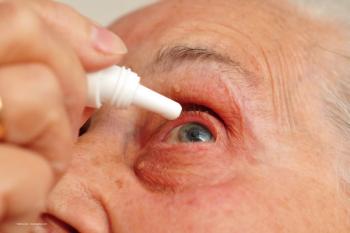
The novel nitric oxide-donating bimatoprost eye drop is designed to lower IOP in patients with open-angle glaucoma or ocular hypertension

NCX 470 0.1% achieved an intraocular pressure of less than or equal to 18 mmHg compared to latanoprost 0.005% in the trial.

Inflammation and scarring are the primary obstacles with pirfenidone.

At the EnVision Summit 2025 in San Juan, Puerto Rico, Poonam Misra, MD, and Alcina Lidder, MD, gave advice on managing glaucoma in patients with other ocular co-morbidities such as myopia and those who have undergone corneal transplantation.

Sophisticated programs require an evolving mindset.
Clinician-scientists play a vital role in advancing ophthalmology by balancing patient care with research, leveraging clinical insights to drive impactful discoveries, and collaborating across disciplines to stay at the forefront of innovation.

At the EnVision Summit 2025 in San Juan, Puerto Rico, Tania Tai, Lucy Shen, and Shivani Kamat all gave insight into complications they have seen while performing glaucoma surgery.
The research analyzed the 1-year outcomes of 132 eyes, evaluating mean IOP, baseline changes, medication reduction, and stratifying the results by race (African American vs Caucasian) and glaucoma severity (mild, moderate, severe).
What do ophthalmologists consider the key advancements in treating glaucoma over the last several decades?
Emerging technologies, such as remote tonometry and genetic risk scoring, are revolutionizing glaucoma care by enabling earlier detection, personalized management, and more efficient use of resources.
We asked ophthalmologists what stands out to them in the history of treating glaucoma and where future treatments might be heading.
The procedure offers a renewed approach to suprachoroidal drainage, with potential for both combined and standalone glaucoma surgery.
The Elios procedure increased aqueous humor outflow in all investigated eyes, but further studies are needed to correlate these improvements with its clinical efficacy.
A systematic review and meta-analysis highlights the safety and efficacy of excimer laser trabeculostomy as an implant-free MIGS procedure for managing open-angle glaucoma and ocular hypertension, either alone or in combination with cataract surgery.
Advertisement
Advertisement
Trending on Eye Care Network - Ophthalmology Times
1
Brepocitinib meets all Phase 3 end points in noninfectious uveitis
2
Myopia control using spectacle lenses with highly aspherical lenslets
3
CHMP recommends ranibizumab biosimilar Fovlussea for retinal disease
4
Duravyu misses wet AMD end point again as EyePoint pivots to DME
5