

















Cedars-Sinai research is the first to uncover disease-related changes to the cornea and to propose potential therapeutic approaches to correct diabetic wound healing.


Cedars-Sinai research is the first to uncover disease-related changes to the cornea and to propose potential therapeutic approaches to correct diabetic wound healing.
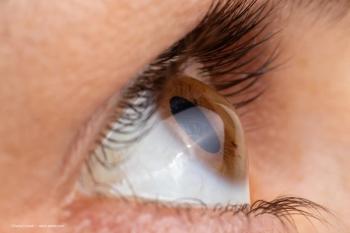
A recent study demonstrates the safety and efficacy of treating eyes with cross-linking after keratoconus relapses following keratoplasty.

Severe ocular surface and corneal damage an unseen public health burden.

Surgeon discusses latest trends for treating cornea.

William B. Trattler, MD, highlights some of the novel therapies for dry eye that have recently been approved by the FDA, along with various treatment approaches that are in development.

Keratopigmentation technique offers therapeutic and cosmetic applications.

The company completed enrollment in less than 6 months from the trial commencement. The phase 3 trial results combined with the completion of the first phase 3 trial are expected to support the company’s targeted NDA submission for Epioxa by the end of 2024.

The move could result in changes to guidelines that currently prohibit cornea donations from gay or bisexual men who have had sex with another man in the last 5 years of their life. There's no indication as to whether other queer communities, such as transgender women or nonbinary donors, will be impacted.

Groundbreaking treatment for patients with bullous keratopathy approved in Japan.

Brian Shafer, MD, discussed Fortisite and the ability to treat corneal ulcers at the 2023 ASCRS annual meeting in San Diego.

Zeba Syed, MD, from Wills Eye Hospital discussed their research on corneal swelling and dynamics during corneal collagen crosslinking at the 2023 ASCRS annual meeting in San Diego.

At the American Society of Cataract and Refractive Surgery annual meeting in San Diego, data was presented from the STORM study that demonstrate vision quality to be a major driver of the patient decision to undergo surgery.

Ophthalmology Times© spoke with Greg Kunst about Aurion BioTech's 12-month data from their recent Escalón trial 2023 at the ASCRS annual meeting in San Diego.

In a presentation at the American Society for Cataract and Refractive Surgery annual meeting in San Diego, Ana Balbuena-Pareja, MSc, explained how cenegermin-bkbj ophthalmic solution 0.002% (Oxervate, Dompé) had a positive effect on corneal nerve regeneration and sensation in patients with neurotrophic keratitis.

Grace Walther, first author of the study, described that lens centration on the eye may be beneficial for improving vision. Association for Research in Vision and Ophthalmology annual meeting.

John D. Gelles, OD, and Steven A. Greenstein, MD, share some insights into the new data on corneal cross-linking presented at IKA Keratoconus Symposium.
At the IKA Keratoconus Symposium, Justin Schweitzer, OD, FAAO, presented on establishing the keratoconus diagnosis alongside Kourtney Houser, MD.

President and CEO of the International Keratoconus Academy Andrew Morgenstern, OD, FAAO, FNAP, shares some snippets about the live white paper development session and the patient Q&A happening at the inaugural IKA Keratoconus Symposium.
Uri Soiberman, MD, shares some key takeaways from his presentation at the inaugural IKA Keratoconus Symposium.

The endothelial cells play an essential role in vision. They ensure that the cornea remains transparent by keeping it partially dehydrated.

Procedure provides ophthalmologists with another treatment option.
According to the company, KPI-012 could become the first approved treatment for persistent corneal epithelial defect across all its various etiologies.

Ophthalmologists can learn the latest techniques to help patients like Tommy Pham from the New York Mets during the first annual IKA Keratoconus Symposium: Front to Back and Everything In Between, taking place April 22-23 in Scottsdale, Arizona.
Cochair Elizabeth Yeu, MD, highlights what this program will mean for ophthalmologists, optometrists, and their patients.

Alcohol abuse is associated with significant alterations to corneal endothelial density and morphology.