



Cornea
Latest News


Bausch + Lomb launches Arise orthokeratology lens fitting system in Europe, UK and US
By Jordana Joy
Advertisement
Video Series






CME Content












Advertisement
A large-scale study indicates women are more likely to develop the inherited corneal condition

Urcosimod, formerly known as OK-101, showed clear statistical significance in multiple endpoints in a recently completed Phase 2 trial

Urcosmid is a lipid conjugated chemerin peptide agonist of the ChemR23 G-protein coupled receptor, typically found on immune cells of the eye responsible for the inflammatory response.

Cortrophin Gel is a prescription medicine that is injected subcutaneously or intramuscularly indicated for severe acute and chronic allergic and inflammatory conditions affecting the eye.

The authors said their results provide strong support that cultivated autologous limbal epithelial cell transplantation is safe and feasible

Meibomian glands are critical to the ocular health in that they secrete lipid-rich meibum, which protects the ocular surface by preventing tear film evaporation.

Gaining control of persistent corneal epithelial defects using AMT and a pressure patch
Published: | Updated:
Amniotic membrane tissue offers a number of advantages to patients.

The state-of-the-art facility more than doubles the institute’s footprint, enhancing patient care, research, and education.

A PDUFA date has been set for October 20, 2025. If approved, Epoxia will be the first epi-on corneal crosslinking on the market.

At the Envision Summit 2025 in San Juan, Puerto Rico, Ashley Wallace Tucker, OD, FAAO, FSLS, gave insight into advancements in keratoconus management and the importance of early detection as well as tips and advice on fitting scleral contact lens

Routine evaluation of meibomian glands, starting in childhood, is crucial for identifying and managing this progressive disease before it leads to long-term ocular surface issues.

The study’s main outcome measures were the changes in those 2 parameters following treatment with teprotumumab.

The rationale for the study was anecdotal reports of the effects of breast milk used by mothers to treat blocked tear ducts, rashes, and a chemical corneal burn in babies.

The authors emphasised that consumers and clinicians should be made aware of potential ophthalmic adverse events associated with cosmetics and personal care products
A qualitative study method illuminates patients’ fears for the future

The meetings support the company’s submission for its bioengineered corneal implants to eliminate corneal blindness.

A case report highlights the pathogen’s potential to cause severe, devastating ocular infections, despite aggressive treatment

The additions to the ANTERION Cornea App will be commercially available in February 2025
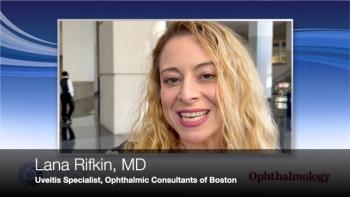
Lana Rifkin, MD, a uveitis specialist at Ophthalmic Consultants of Boston, shared insights into her work and her role as committee chair of the uveitis section for the upcoming EnVision Summit, which will be held from February 14 to 17, 2025, at the Caribe Hilton San Juan in Puerto Rico.

This year was brimming with advancements in eye care.

According to Robert Latkany, MD, understanding the causes and recognizing these diagnostic features are essential for effective treatment.

Trending topics and milestone stories from our year in ophthalmology.

Highlights from the year, courtesy of our colleagues at Ophthalmology Times

Trending topics and milestone stories from our year in ophthalmology

Epioxa is a next-generation corneal cross-linking iLink therapy for the treatment of keratoconus.
Advertisement
Advertisement
Trending on Eye Care Network - Ophthalmology Times
1
Brepocitinib meets all Phase 3 end points in noninfectious uveitis
2
Matching artificial tears to dry eye phenotype: a Q&A with Omur Ucakhan, MD
3
Demodex blepharitis: Diagnosis, treatment response, and recurrence
4
Myopia control using spectacle lenses with highly aspherical lenslets
5