


Cornea
Latest News

Advertisement
Video Series




CME Content













Advertisement
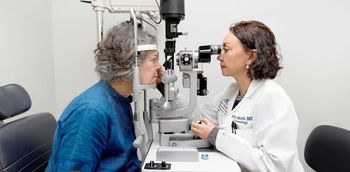
Q&A: Kira Manusis, MD, on how the Center for Refractive Solutions is redefining patient care at NYEE
As its director, Manusis outlines the facility’s role in delivering advanced, personalized solutions to improve vision and patient experience.
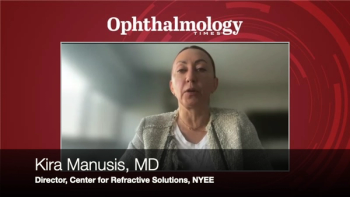
From laser vision correction to adjustable lens implants, the Center for Refractive Solutions at New York Eye and Ear Infirmary of Mount Sinai offers advanced options for every stage of life.
In the second of two video interviews from the International SPECTRALIS Symposium, Prof Malik emphasises the importance of corneal imaging

The center aims to optimize patients' vision with a range of cataract and corneal refractive procedures and minimize reliance on glasses and contacts.
Prof Malik shared his presentation, titled "An eye on neurodegenerative diseases: Challenging the dogma," at this year's International SPECTRALIS Symposium

Compared with penicillin, investigators reported no significant differences in the incidence of ophthalmologic manifestations among patients treated with ceftriaxone.

Cabozantinib is a vascular endothelial growth factor receptor tyrosine kinase inhibitor, a drug used as a therapy for several malignancies.

Cabozantinib, a vascular endothelial growth factor receptor tyrosine kinase inhibitor, has previously been associated with hepatic and dermatologic adverse effects

TGFBI corneal dystrophy is a group of genetic eye disorders caused by mutations in the TGFBI gene, resulting in abnormal protein buildup in the stromal layer of the cornea.

On the heels of the drug's FDA approval, clinicians weigh in on acoltremon’s (Tryptyr) novel mechanism of action and its potential to address unmet needs in dry eye care

Research findings from the multicentre clinical study were presented at the European Society of Ophthalmology (SOE) meeting in Lisbon, Portugal


Weighing the benefits and trade-offs of preserved versus preservative-free glaucoma treatments is key to optimizing long-term patient care.
Early improvements in OSDI scores and tear osmolarity reinforce lifitegrast’s role in managing inflammation-driven dry eye disease.

A significant proportion of cataract surgery patients exhibit hyperosmolar tear film both before and 1 month after surgery, underscoring preoperative screening and postoperative management to optimize visual outcomes.
At ARVO 2025, in Salt Lake City, Utah, Anisha Kasi talked about her presentation on how her team used the TriNetX database, a large database of over 150 million patients worldwide, to validate the connection between hidradenitis suppurativa and inflammatory eye conditions.

Viridian Therapeutics reveals promising long-term results for veligrotug in treating thyroid eye disease, highlighting its potential as a leading therapy.

A machine learning model incorporating treated astigmatism and nuanced inputs is advancing the precision and personalization of arcuate keratotomy planning
Ellen Koo, MD, presented data from first in-human clinical trials, looking at the results from magnetic cell therapy and reports on the efficacy and safety in the patients.
Advertisement
Advertisement
Trending on Eye Care Network - Ophthalmology Times
1
Brepocitinib meets all Phase 3 end points in noninfectious uveitis
2
Matching artificial tears to dry eye phenotype: a Q&A with Omur Ucakhan, MD
3
Demodex blepharitis: Diagnosis, treatment response, and recurrence
4
Myopia control using spectacle lenses with highly aspherical lenslets
5