






Cornea
Latest News
Advertisement
Video Series







CME Content













Advertisement

Long-term data from the GLK-202-03 extension study show a sustained 1.9 D improvement in Kmax after a single epithelium-on cross-linking treatment, with no serious or treatment-related adverse events reported.

Arun C. Gulani, MD, introduces a keratoconus classification based on what prevents vision: visual, structural, or salvage.

Patient enrollment is complete in the the ASTRA phase 3 study AURN001 to treat corneal edema associated with corneal endothelial dysfunction.

A JAMA Ophthalmology Clinical Trial of the Year enrolled 1421 eyes across 28 sites, with NEI-funded follow-up extending the findings to 5 years.

Startup S5G Therapeutics aims to move ubiquinol technology from the laboratory toward treatments for dry eye, Fuchs dystrophy, and other corneal conditions.

Cataract safety, Glaucoma drugs and MIGS, plus Artificial Intelligence debates and retina breakthroughs—key FDA moves and trial updates in ophthalmology.

Two optical treatment modalities can slow pediatric myopia progression without the need for pharmacologic intervention, ie, spectacle lenses incorporating highly aspherical lenslets (HAL) and orthokeratology (ortho-k) contact lenses. Both treatments are based on the same underlying theory that peripheral retinal defocus is a growth signal for axial elongation‚ but the treatments focus on different structures of the visual system, one through a manufactured spectacle lens surface (HAL) and the other through temporary corneal reshaping (ortho-k).

A retrospective study of nearly 1,000 patients found epithelial resolution with serial decellularized basement membrane graft use in subclinical to Stage 1 disease.

Topical chloroprocaine hydrochloride ophthalmic gel 3% (IHEEZO, Harrow) resulted in less pain f following intravitreal injections in patients undergoing same-day bilateral intravitreal injections.

The FDA issued a recall notice for an eye drop designed to relieve ocular redness, itching, burning, and watery eyes. The Class II recall alerts consumers and physicians to possible temporary or reversible health effects, but serious harm is unlikely.

Neel S. Vaidya, MD, MPH, MBA, on why keratoconus can progress aggressively in children and teens—and how early topographic screening and prompt crosslinking protect long-term vision.
The trial will enroll approximately 111 patients across the US and Europe following positive FDA feedback from a Type D meeting
Rare retinal diseases initially were the primary targets of gene therapy, but that is no longer the case. The focus has expanded beyond those to also include more common, chronic diseases such as diabetic macular edema and wet age-related macular degeneration. During the first half of 2026, that trend was evident.

The FDA issued a nationwide recall of a steroid eye drop.

June brings FDA clearance for Lumvoa, key retina and glaucoma trials, device deals, and hard truths on AI performance in eye care.

The RMAT designation opens the door to a faster development pathway for EO2002 as a minimally invasive alternative to corneal transplantation, while Emmecell also advances a cell therapy for geographic atrophy.

Patients with polyendocrine metabolic ovarian syndrome have higher ocular disease prevalence.

Length and width, not thickness, emerge as key drivers of higher-order aberrations.

Ophthalmology Times® On Air

A prospective pilot series finds Keraring implantation cuts refractive cylinder by 61% in non-ectatic corneas, opening a new conversation about ICRS indications.

A case report describes image-guided surgical excision combined with adjunctive cryotherapy and a single anterior chamber methotrexate injection, with no recurrence at 10 months.
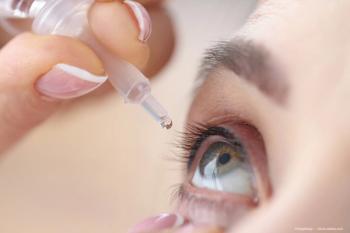
New phase 3 trial tests rhNGF eye drops for persistent corneal epithelial defects, aiming for full healing and a first approved PCED therapy.

The topical synthetic peptide receives orphan drug and fast track status and enters phase 2 as a first-in-class treatment for a rare degenerative corneal disease.

A pilot study shows that analyzing how the cornea moves under air-puff stimulation may improve early keratoconus detection.

NUS researchers report that plant-based photosynthetic nanoparticles restored corneal NADPH levels and reversed damage within 5 days in preclinical dry eye.
Advertisement
Advertisement
Trending on Eye Care Network - Ophthalmology Times
1
One day, three approvals: FDA expands options for ocular redness, thyroid eye disease, and presbyopia
2
Diabetic macular edema: an inflammatory disease in focus
3
Matching artificial tears to dry eye phenotype: a Q&A with Omur Ucakhan, MD
4
Teprotumumab and TED: Sarah Cheng, MD, PhD, on orbital tissue changes
5