







Clinical Diagnosis
Latest News
Advertisement
Video Series


CME Content










Advertisement

Researchers introduce a multistage dual-branch network to improve accuracy and efficiency

The novel corrective eye drop can be prescribed through pharmacy partners BlinkRx or Medvantx
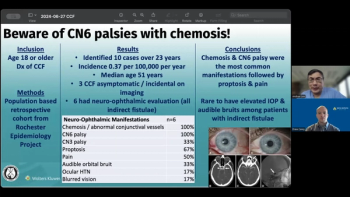
Andrew G. Lee, MD, and Drew Carey, MD, return for this episode of 'NeuroOp Guru' to discuss how sixth nerve palsy with chemosis warrants suspicion for a cavernous carotid fistula, emphasizing careful examination for dilated conjunctival vessels and the need for imaging for accurate diagnosis and timely intervention.
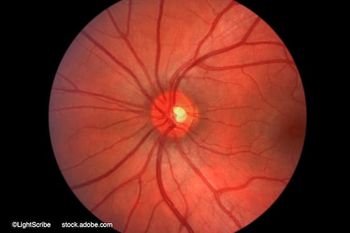
Q&A: Turning the tide on MacTel with novel retinal therapy
Published: | Updated:
The retinal implant delivers continuous neurotrophic support, potentially halting disease progression and paving the way for future treatments in neurodegenerative retinal disorders.

Insights shed light on what the approval means for providers and their patients affected by this neurodegenerative retinal disease

Ronne steps into leadership role as the ASO marks a historic milestone on International Women’s Day

To tackle systemic barriers to eye care, the organization is co-hosting an event titled “No Woman Left Behind – Advancing Eye Health Equity for Women and Girls” on Tuesday, March 11, 2025, at the 69th Commission on the Status of Women in New York.

These tools help fill a gap that current technologies cannot achieve as effectively.
The Elios procedure increased aqueous humor outflow in all investigated eyes, but further studies are needed to correlate these improvements with its clinical efficacy.
A systematic review and meta-analysis highlights the safety and efficacy of excimer laser trabeculostomy as an implant-free MIGS procedure for managing open-angle glaucoma and ocular hypertension, either alone or in combination with cataract surgery.

Incoming directors bring diverse expertise to help the ASO protect ophthalmic care and advocate for patients.

The state-of-the-art facility more than doubles the institute’s footprint, enhancing patient care, research, and education.

Direct selective laser trabeculoplasty enhances the experience for both patients and physicians, he notes, while also mitigating issues related to poor adherence and ocular surface disease from topical therapy.
The focus in recent years has shifted to reducing the long-term burden of medical therapy, minimizing the risk of medication toxicity and persistent ocular surface disease.
The new first-line laser treatment for glaucoma and ocular hypertension will be unveiled at the 2025 American Glaucoma Society annual meeting in Washington, DC, from February 26 to March 2.

Advancements in drug durability and patient care are closing treatment gaps.

Examining the performance of AI algorithms versus human graders in neovascular age-related macular degeneration

Routine evaluation of meibomian glands, starting in childhood, is crucial for identifying and managing this progressive disease before it leads to long-term ocular surface issues.
Martin Friedlander, MD, PhD, discusses phase 3 macular telangiectasia findings, highlighting the potential for a decade-long alternative to intravitreal injections.

Nathan Congdon, MD, highlights a recent study showing how virtual mentor-mentee relationships through Orbis' free telemedicine and e-learning platform can significantly enhance care.
Ooms' poster at the Association of University Professors of Ophthalmology annual meeting highlighted a study on gray area complications in strabismus surgery, showing that trainees are more likely than attendings to disclose these complications despite having similar baseline anxiety levels. Ooms is a PGY-4 ophthalmology resident at the Dean McGee Eye Institute.

Sonia H. Yoo, MD, a cornea, cataract, and refractive surgery specialist and a member of the planning committee for the EnVision Summit, highlights a session focused on the latest advancements in lens implant technologies, refractive procedures, and imaging innovations. The summit will be held from February 14 to 17, 2025, at the Caribe Hilton San Juan in Puerto Rico.

From cytokine pathways to genomics, Shree Kurup, MD, highlights new approaches for managing diabetic retinopathy and combating systemic inflammation.

Patients’ near visual needs is important when prescribing medications for glaucoma treatment

Real-world scenarios showcase a shift in treatment paradigms
Advertisement
Advertisement