



AMD
Latest News


EyeBio announces positive data from first-in-human Ph1b/2a AMARONE trial of Restoret for DME, DVAMD
By David Hutton

Adverum Biotechnologies releases positive preliminary efficacy, safety data from LUNA Phase 2 trial of Ixo-vec in patients with wet AMD
By David Hutton
Advertisement
Video Series

CME Content













Advertisement
Carl D. Regillo, MD, FACS, FASRS, discussed recent data from the DAVIO 2 trial in his presentation at the virtual Angiogenesis, Exudation, and Degeneration 2024.

Early-onset drusen maculopathy (EODM), is part of the age-related macular degeneration (AMD) phenotype that occurs in individuals under 55 years of age.
SriniVas R. Sadda, MD, sat down with David Hutton of Ophthalmology Times to discuss his presentation about precursor lesions for development of atrophy and AMD from the Angiogenesis Exudation and Degeneration 2024 event.
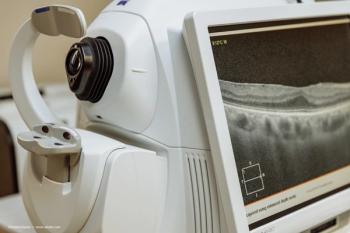
Multimodal technology bridges the gap between advanced age-related macular degeneration (AMD) biomarkers and clinical features.
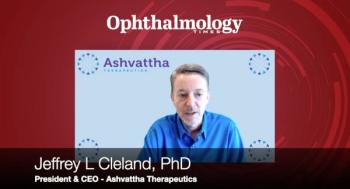
President and CEO of Ashvattha Therapeutics talks about the company's unique nanomedicine technology
David Hutton of Ophthalmology Times talks with Jeffrey Cleland, PhD, President and CEO of Ashvattha Therapeutics, about the company's D-4517.2, a unique nanomedicine technology for the treatment of wet AMD and DME.

A new case-control study found that older people ages 70 and older living in South Korea’s urban areas were at a significantly higher risk for developing incident exudative age-related macular degeneration.

According to the company, ABBV-RGX-314 continues to be well tolerated in over 100 patients from three dose levels with no drug-related serious adverse events. The new data was presented at the Hawaiian Eye and Retina meeting in Maui, by John Pitcher, MD, and includes 6-month results from two additional dose level 3 cohorts.

Principle findings showed that aflibercept 8 mg demonstrated similar improvements in BCVA and CST when compared to the 2 mg dose of aflibercept.

Company presenting data from the Phase II AAVIATE trial of suprachoroidal ABBV-RGX-314 for the treatment of wet age-related macular degeneration January 16 at the Hawaiian Eye and Retina 2024 Meeting.

Because acetylcholinesterase inhibitors have anti-inflammatory effects, authors of the study wanted to determine if these drugs reduce the risk of AMD in patients with Alzheimer’s disease.

The company announced more advancements of its RASP modulator platform, including plans for ADX-629 and ADX-246.

This study compared AVT06 with aflibercept (Eylea) in patients with neovascular AMD.

According to a news release, the services will be provided for RetinalGeniX Technologies’ Institutional Review Board to conduct a study to personalize medical evaluations for patients receiving treatment for wet macular degeneration.

According to the company, the designation follows interim Phase 1 PRISM clinical data for 4D-150 that demonstrated an encouraging safety, tolerability and clinical activity profile in patients with wet age-related macular degeneration.

According to the company, the NORSE EIGHT study is set to kick off during the first quarter of 2024 and the Biologics License Application in the US is likely by the end of 2024.

The research marks the first attempt at integrating a photoactivatable anti-angiogenic agent with a photosensitizer into a single nanoformulation for AMD treatment.

Randomization has been completed and, according to the company, topline data is expected during the third quarter of 2024.

Retina experts deliberate on the role of fluorescein angiography in AMD and discuss initiation of anticomplement therapy for geographic atrophy in conjunction with anti-VEGF therapy for neovascular AMD.
Roger Goldberg, MD, presents a case of a patient showing signs of geographic atrophy who subsequently develops nAMD and highlights the favorable outcomes achieved through anti-VEGF therapy.

According to the company, OCU410 is a modifier gene therapy product candidate being developed for dry AMD
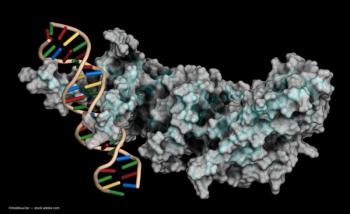
Both oxidative stress and HIF-1 have been previously implicated in the development of AMD.

Japanese investigators may have found a way of predicting which patients will develop intraocular inflammation in retrospective study.
The expert panel discusses what constitutes treatment failure in anti-VEGF therapy for nAMD and examines how various treatments may yield varying results in managing PED.
Adrienne Scott, MD, presents a case of neovascular AMD with PED in a patient who experiences a stroke while on anti-VEGF therapy.

The company announced key secondary endpoints were achieved with both EYP-1901 doses. These include a more than 80% reduction in treatment burden, with nearly two-thirds of eyes supplement-free up to 6 months.
Advertisement
Advertisement
Trending on Eye Care Network - Ophthalmology Times
1
One day, three approvals: FDA expands options for ocular redness, thyroid eye disease, and presbyopia
2
Brepocitinib meets all Phase 3 end points in noninfectious uveitis
3
Diabetic macular edema: an inflammatory disease in focus
4
Matching artificial tears to dry eye phenotype: a Q&A with Omur Ucakhan, MD
5