



AMD
Latest News
Advertisement
Video Series





CME Content













Advertisement

SOL-1 results show intravitreal axitinib hydrogel delivered superior vision maintenance and anatomic outcomes through 52 weeks.

Learn how FDA’s interchangeable ranibizumab biosimilar may streamline injections, cut costs, and guide safe switching for retina patients.

FDA approves ranibizumab-hkdz as first interchangeable biosimilar ranibizumab available in both vials and prefilled syringes
Published: | Updated:
The FDA has approved ranibizumab-hkdz (Ranluspec; Lupin Limited) as an interchangeable biosimilar for wet AMD, DME, DR, RVO, and mCNV.
SOL-1 results show intravitreal axitinib hydrogel delivered superior vision maintenance and anatomic outcomes through 52 weeks.

The FDA's OND found substantial evidence of effectiveness for bevacizumab-vikg in nAMD, clearing the way for a BLA resubmission in June 2026 and a decision expected within 60 days.

Oral QA102 shows imaging signals slowing drusen and GA progression in intermediate dry AMD at ARVO 2026, despite missing its primary end point.
Ashkan Abbey, MD, reviews findings from the DAVIO2 and VERONA clinical trials for the bioerodible intravitreal insert.

Patricio G. Schlottmann, MD, examines why injection frequency drives treatment failure in wet AMD and the particular challenges facing patients in Latin America.

Victor M. Villegas, MD, discusses supraorbital vibration as an adjunct to topical anesthesia in a high-volume retina practice.

New pathways are reshaping the management of retinal disease.

From role models to open doors, Christina Y. Weng, MD, MBA, FASRS, shares insights on career development, women in ophthalmology, evolving training models, and her work as protocol chair for the DRCR Retina Network’s Protocol AO study.

The trial, sponsored by ONL Therapeutics, aims to enroll approximately 324 patients across sites in Europe, the United States, and Canada.

Early clinical experience highlights considerations for patient selection, surgical technique, and long-term monitoring in retinal disease.

Under the US agreement, OPUVIZ (aflibercept-yszy), a biosimilar to Eylea (aflibercept) 2 mg, may launch in January 2027.

Strategies for treatment intervals, drug selection, and patient expectations.
The Investigational New Drug (IND) application from Complement Therapeutics for CTx001 was previously approved by the FDA in October 2025.

A trio of retina specialists recently reviewed the clinical benefits of aflibercept 8 mg, including its extended dosing intervals, improved patient satisfaction, and enhanced treatment outcomes for various conditions.

Knowing what’s on the market for AMD and GA aids in preserving vision.
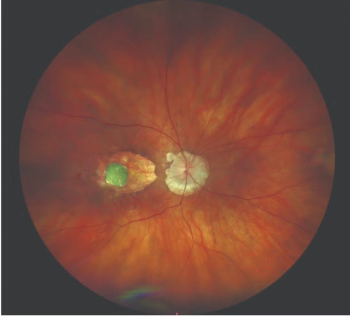
The novel system converts light into electrical signals to stimulate retinal cells.

The FDA noted in the letter that it is unable to approve the application for ONS-5010/LYTENAVA (bevacizumab-vikg) in its current form for the treatment of wet AMD.

Remote monitoring of age-related macular degeneration enhances patient care, reduces treatment burden, and leverages AI for personalized management.

New treatments show promise in preventing fibrosis in neovascular AMD, addressing a critical need for improved visual outcomes in patients.

For Jordan M. Graff, MD, FACS, early adoption is about reigniting the thrill of discovery and navigating the rewards, risks, and realities of translating innovation into practice.

Emerging anti-VEGF agents offer enhanced durability and anatomic outcomes in retinal disease.
Advertisement
Advertisement