
HELIOS Phase 1 showed consistent reductions in retinal fluid with OTX-TKI, paving the way for pivotal HELIOS-2 and HELIOS-3 trials.

HELIOS Phase 1 showed consistent reductions in retinal fluid with OTX-TKI, paving the way for pivotal HELIOS-2 and HELIOS-3 trials.
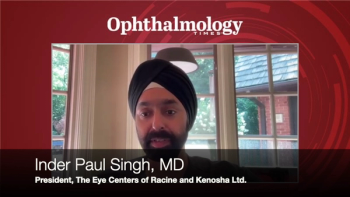
Inder Paul Singh, MD, shares a formative experience in which a patient’s vision loss—and their unexpected gesture of comfort—shaped his approach to high-risk glaucoma care.

Optogenetics shows promise in improving mobility and object recognition for patients with retinitis pigmentosa and Stargardt disease.
SriniVas R. Sadda, MD, FARVO, recalls a residency case that highlights the transformative impact of OCT and OCT angiography.
Sunir J. Garg, MD, explores the nuances of endophthalmitis, distinguishing between infectious and non-infectious responses for effective patient management.

Research reveals significant vision improvements and extended treatment intervals with aflibercept 8 mg for age-related macular degeneration and diabetic edema patients.
Phase 2 STARLIGHT study participants, particularly those with the macular phenotype, experienced meaningful gains in visual acuity at 48 weeks.
Bedrood describes improved visualization of the ciliary body, efficient setup, and favorable postoperative outcomes.
Innovations in selective laser trabeculoplasty and laser cyclophotocoagulation focus on procedural efficiency, patient comfort, and evolving first-line treatment strategies.

John P. Berdahl, MD, discusses advanced lens options for patients with pseudoexfoliation, highlighting considerations for successful longterm outcomes.
In the Phase 2 TEASE 2 trial, gildeuretinol was well tolerated and showed promising trends in slowing ellipsoid zone loss and preserving low-luminance visual acuity in patients with Stargardt disease.
A new study reveals enhanced safety and efficacy in epi-on cross-linking for keratoconus, utilizing oxygen-rich boost goggles during treatment.
Data suggests the candidate can reduce the number of injections and treatment burden for patients
The 18-month extension of the GATHER2 trial indicated continued benefit for patients receiving avacincaptad pegol, with efficacy gains increasing over time.
At the 2025 Academy of American Ophthalmology meeting, Prof Stalmans described safety and efficacy benefits of disposable non-contact vitrectomy lenses
Jean-Francois Korobelnik, MD, shares highlights from the PULSAR extension study showcasing aflibercept 8 mg and its ability to promote fluid resolution
NYU Grossman School of Medicine’s Galen Hu, MD, and Andrea Blitzer, MD, sit down with Eduardo C. Alfonso, MD, of Bascom Palmer Eye Institute, to discuss how ophthalmologists are leveraging social media not just to promote practices, but to educate patients.
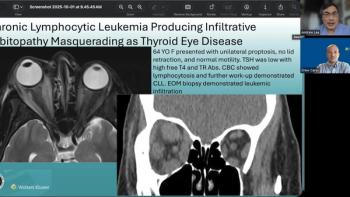
Andrew G. Lee, MD, and Drew Carey, MD, highlight how chronic lymphocytic leukemia can mimic Graves’ orbitopathy, underscoring the importance of a thorough evaluation.
Attendees of the AAO 2025 annual meeting will have a chance to preview the virtual technician training platform on October 19, at 10:30 am in the Academy Theater, Hall WB1, Booth 2761.
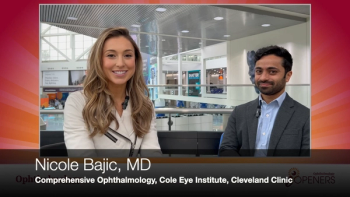
From early experiences in India to fellowship training at Wills Eye Hospital, Dr. Ansari discusses how ophthalmologists can make a lasting impact worldwide.
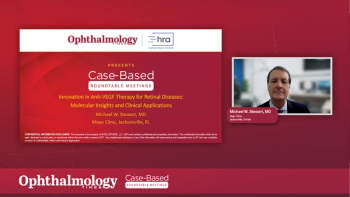
A panelist discusses how a 76-year-old patient with neovascular age-related macular degeneration (nAMD) initially stable on bevacizumab developed recurrent subretinal fluid requiring a switch to aflibercept 2 mg, but after experiencing sterile inflammatory responses to both aflibercept 2 and 8 mg doses, was successfully treated with faricimab every 6 weeks, demonstrating the value of having structurally different anti-VEGF agents to minimize cross-antigenicity when immune responses occur.
A panelist discusses how a 62-year-old patient with age-related macular degeneration (AMD) who could never be extended beyond 4-week intervals with aflibercept 2 mg achieved complete macular drying and improved vision with aflibercept 8 mg, though temporary vision loss from acute IOP elevation required dose modification to 0.06 mL (6.86 mg) to maintain efficacy while avoiding pressure-related complications.
A panelist discusses how an 83-year-old patient with diabetic macular edema (DME) who showed suboptimal response to standard anti-VEGF therapies, including aflibercept 2 mg and faricimab, ultimately achieved significant visual and anatomic improvement when switched to high-dose aflibercept (8 mg), demonstrating the enhanced efficacy of the higher molar dose formulation.

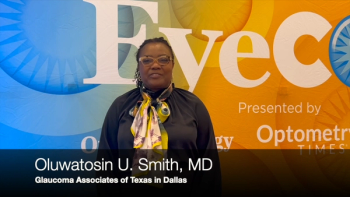
Smith highlights advances in interventional glaucoma, including first-line SLT, emerging surgical options, and co-management strategies, during the Ophthalmology Times and Optometry Times EyeCon 2025 conference.
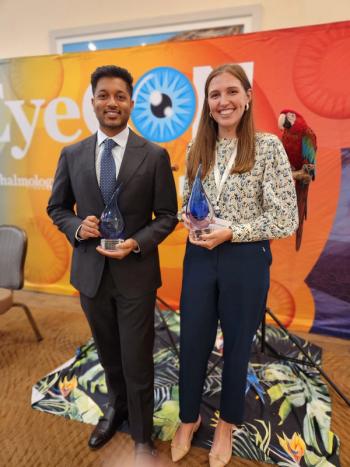
Residents across ophthalmology, optometry, and retina care were recognized for leadership, research, and dedication to advancing patient care.
We ask leading experts in the field what eye disease they would cure and why.