Frantz EyeCare reports 98% of Light Adjustable Lens patients achieved refractive accuracy within ±0.50 D of target, exceeding published national cataract surgery benchmarks.

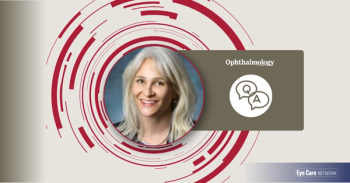
Shameema Sikder, MD, details a session she presented with Roomasa Channa, MD, at EnVision Summit 2026.
Shameema Sikder, MD a cornea and cataract specialist at the Wilmer Eye Institute, Johns Hopkins Medicine, gave an overview of an artificial intelligence (AI) and ophthalmology session she co-chaired at EnVision Summit 2026 with Roomasa Channa, MD. The session, lasting about 2 hours, centered on how AI can be integrated into the cataract surgery workflow and what is required to make these innovations practical in everyday clinical practice.
Sikder explains that AI has potential touchpoints across the entire cataract surgery continuum:
A central theme is that technological innovation alone is not enough. Even when powerful AI tools exist, there is often a lag in implementation due to issues like usability, access, and integration into existing clinical workflows. Effective innovation requires not only accuracy but also availability, ease of use, and alignment with how clinicians actually work.
Sikder’s own research focuses on using AI to improve surgical skill. The guiding belief is that better-trained surgeons produce better patient outcomes. AI tools can shorten the learning curve for new procedures and help disseminate advanced skills more efficiently, so that more surgeons can adopt best practices faster, ultimately enhancing the patient experience.
She identifies data as a major hurdle in AI development. Many AI systems are trained on data from a single institution or limited population, which can make them effective only in that narrow context and not broadly generalizable. Overcoming this requires broad, diverse training datasets that reflect the variety of real-world patients and practice settings.
Finally, Sikder emphasizes that AI in ophthalmology is inevitable. The key question is not whether it will be used, but how thoughtfully and safely it will be implemented. Clinicians must be comfortable with and knowledgeable about the technology, understanding how it is developed and what its limitations are, in order to integrate it in the most effective and responsible way.