

Opinion|Videos|December 16, 2025
Evolving Therapeutic Strategies with Next-Generation Anti-VEGF Agents in Retinal
Panelists discuss how higher-dose and dual-pathway anti-VEGF agents enable longer intervals, improved fluid control, and more flexible treatment strategies across retinal vascular diseases.
Advertisement
Episodes in this series
This segment examines how the advent of higher-dose and dual-pathway anti-VEGF agents has reshaped treatment strategies for retinal vascular diseases. The discussion underscores how aflibercept 8 mg and faricimab have improved anatomic outcomes and extended dosing intervals, offering meaningful—though patient-specific—reductions in treatment burden. Clinicians describe seeing faster retinal drying, enhanced durability, and better fluid control, particularly in treatment-naïve patients with neovascular AMD. However, they note that some “frequent flyers” still require close follow-up, reflecting ongoing unmet needs in durability. The conversation also highlights how pivotal trial designs, such as those for PULSAR and TENAYA/LUCERNE, have influenced real-world practice—encouraging earlier extension of dosing intervals and renewed emphasis on loading doses. Participants agree that these agents enable more flexible and confident interval management, while also challenging step-therapy policies that delay access to next-generation options that could improve long-term outcomes and overall care efficiency.
Advertisement
Related to this article

In this Q&A, Ping Moore, OD, covers emerging dry eye therapies, from selenium sulfide to next-gen cyclosporine, and how subtype-guided care shapes treatment choices.

Ophthalmology is projected to face one of the steepest physician shortages of any subspecialty by 2038.

Two investigational pipeline therapies take aim at the root causes of dry eye disease

The RMAT designation opens the door to a faster development pathway for EO2002 as a minimally invasive alternative to corneal transplantation, while Emmecell also advances a cell therapy for geographic atrophy.
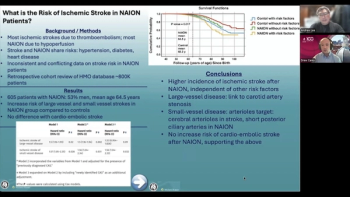
Andrew G. Lee, MD, and Drew Carey, MD, discuss findings from a retrospective study examining ischemic stroke risk in patients with non-arteritic anterior ischemic optic neuropathy and the implications for vascular risk factor management.

Length and width, not thickness, emerge as key drivers of higher-order aberrations.

What the approval of a second targeted biologic means for patients, practice, and the evolving TED treatment landscape

Three real-world cases illustrate strategies to identify and manage GA across a range of scenarios, from coexisting wet age-related macular degeneration to functionally monocular patients.
Advertisement
Advertisement
Trending on Eye Care Network - Ophthalmology Times
1
FDA approves phentolamine ophthalmic solution 0.75% (Ryzumvi) for presbyopia
2
Alvotech files first known aflibercept 8 mg biosimilar with EMA
3
FDA approves subcutaneous Enspryng for TED
4
Beyond slowing atrophy: Optogenetic therapy targets vision lost to GA
5