

25.5% of patients labeled with MacTel2 didn't meet diagnostic criteria, most often due to cystic OCT changes and telangiectatic vessels mistaken for the disease.
25.5% of patients labeled with MacTel2 didn't meet diagnostic criteria, most often due to cystic OCT changes and telangiectatic vessels mistaken for the disease.

The trial is evaluating the company’s orally administered synthetic cannabinoid, ART27.13
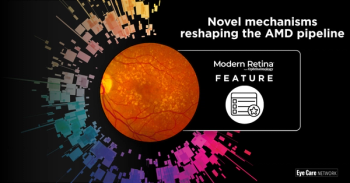
Gene therapies, Tie2 agonism, and new delivery platforms are advancing through phase 3 trials in wet and dry AMD, testing mechanisms distinct from anti-VEGF and complement inhibition.
In this Q&A from EDES 2026 in Milan, Piotr A. Woźniak, MD, PhD, discusses his real-world evidence study on a dry eye lubricating drop, including its effects on tear film stability.

Bakall on 3-year REMAIN data for MCO-010 in retinitis pigmentosa: durable 3-line acuity gains, why genotype did not matter, and which patients responded best.
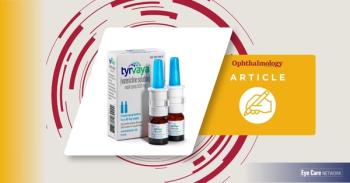
Harrow will acquire Tyrvaya, the only FDA-approved nasal spray for dry eye disease, from Viatris for up to $100 million, complementing its cyclosporine product Vevye.

Capsulotomy size may not be refractive neutral: a larger opening shifted the IOL about 120 µm posteriorly in thin lenses and anteriorly in thick ones in a paired-eye study.

An investigational treatment for vision loss associated with Bardet-Biedl syndrome is being tested in the first three patients treated.

Private practice fellowships sharpen cataract and refractive skills with high volume, new tech, and hands-on practice management mentorship.

Waste, cost and carbon are converging to reshape how cataract centres choose instruments.

In the latest episode of The Wills Retina Report, Dr. Regillo and Dr. Hsu discuss why sustained delivery with the port delivery system may outperform even closely monitored intermittent injections.

This article discusses the current treatments being investigated during the first half of 2026.

Barakat, MD, FASRS, on recognizing neovascular conversion in macular telangiectasia type 2, distinguishing it from neovascular AMD on imaging, and treating it without a robust evidence base.
Wet AMD gains a new FDA-approved therapy as retina, glaucoma, and dry eye pipelines surge—plus AI, devices, and workforce trends reshaping care.
In part 2 of a 2-part article, Arun C. Gulani, MD, walks through the 4 patient types of the Gulani classification of refractive lens exchange, from primary vision enhancement to staged vision engineering, and explains why outcomes depend on treating the eye as a complete optical system rather than on the implant alone.

The annual Best Hospitals report from US News & World Report compares more than 4500 hospitals across 14 specialties and 22 procedures and conditions.

Andrew G. Lee, MD, and Drew Carey, MD, discuss a study exploring whether these two conditions are really one disease—and what that means for long-term treatment.

The first half of 2026 turned on inherited pediatric eye disease, with 2 gene therapy programs advancing toward registration and a high-profile complete response letter in a childhood-onset optic neuropathy.

The FDA has cleared an IND for RAG-1C, a first-in-class saRNA therapy targeting proliferative vitreoretinopathy.

Home OCT now gives us the next dimension: time.
Retina specialists Baruch D. Kuppermann, MD, PhD, and Firas M. Rahhal, MD, discuss the significance of bevacizumab-vikg's approval for wet AMD and its impact on physicians and patients.

Seven-year Vestrum data: anti-VEGF gaps hit 40% of patients with wet AMD by year 1, worsening vision.

An investigational drug has shown positive activity against metastatic uveal melanoma in a phase 1 study.
In this Q&A, Vance Thompson, MD, clears up myths about dry eye and LASIK wearing off, and explains how better screening and technology are making the procedure more precise for younger patients.

Findings highlight the need for routine bilateral endothelial assessment in herpetic eye disease
Choosing the right IOL for patients seeking spectacle independence is increasingly complex as novel optical designs enter the field. This comparative case report explores how a proven diffractive trifocal IOL (AT LISA tri 839MP) performs against a novel spiral optic IOL and what the real-world trade-offs mean for patient selection.

Shortcomings of early 27-G vitrectomy systems drove the development of new technologies designed to match or surpass the performance of larger-gauge systems. The DORC TDC VELOCE represents the latest advancement - a next-generation high-speed cutter that reaches its full potential when combined with the DORC EVA NEXUS surgical system.

Jordana Fein, MD, MS, presented 64-week QUASAR data showing aflibercept 8 mg sustained visual acuity gains with up to 3 fewer injections than aflibercept 2 mg in macular edema following RVO.
When patients fall outside pivotal clinical trial criteria, retina specialists factor in real-world judgment to guide treatment.

A single vorolanib intravitreal insert extended time to supplemental anti-VEGF injection vs aflibercept in previously treated DME at 24 weeks in phase 2 VERONA; pivotal phase 3 trials COMO and CAPRI are now underway.