Jordi Monés, MD, PhD, explains why RP and Stargardt data support testing son-vec to restore vision in advanced GA.

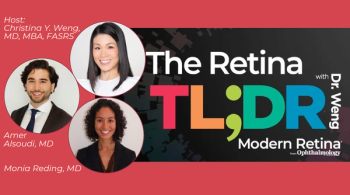
Barakat, MD, FASRS, on recognizing neovascular conversion in macular telangiectasia type 2, distinguishing it from neovascular AMD on imaging, and treating it without a robust evidence base.
Macular telangiectasia type 2 (MacTel) is typically characterized as a slowly progressive neurodegenerative maculopathy. The development of macular neovascularization changes that trajectory, and untreated neovascularization can cause irreversible central vision loss. The FDA approval of
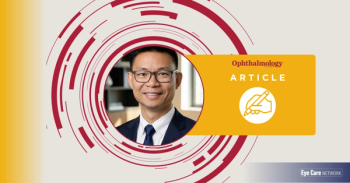
Modern Retina spoke with Mark R. Barakat, MD, FASRS, a retina specialist at Retina Macula Institute of Arizona in Scottsdale, Arizona, and a clinical assistant professor of ophthalmology at the University of Arizona College of Medicine. In the following Q&A, Barakat discusses how neovascular conversion alters the MacTel treatment paradigm, the symptoms and imaging findings that should prompt referral within a week, the aneurysmal and anastomotic features that distinguish MacTel neovascularization from neovascular
Mark R. Barakat, MD, FASRS: I tell my patients that MacTel is a maculopathy that disrupts the normal retinal architecture. While that disruption is comparably smaller and grows less aggressively than what is seen in AMD, it still degrades the natural barriers in place to new vessel growth. With the onset of neovascularization, the trajectory and treatment paradigm for MacTel changes considerably.
While, similarly to AMD, both subretinal and intraretinal fluid may be present, the neovascularization in MacTel differs by typically showing aneurysmal changes with retinal-retinal and/or retinal-subretinal anastomoses. I am typically cautious in offering prognoses to individual patients, as even the best studied pathologies only describe the median outcomes. Generally speaking, in the absence of fibrosis I advise patients on the importance of treatment and the realistic potential of visual improvement.
Barakat: The visual changes associated with neovascular conversion broadly overlap with those seen with AMD, hence home monitoring with an Amsler grid is important. New onset or worsening of metamorphopsia, scotomas, or subjective visual loss should prompt an evaluation. Macular edema or heme on examination, as well as evidence of new fluid on OCT should prompt a timely referral to a retina specialist, preferably within a week.
When a patient presents late in the course of neovascularization, such as when fibrosis is already present, I counsel the patient on a guarded visual prognosis—we have yet to find an agent effective on fibrosis. Should there still be some degree of blood or fluid present, even in the setting of fibrosis, I would certainly offer treatment at the patient's discretion. However, I would caution the patient against continually treating once the exudation has resolved, in the faint hope of improving vision.
Barakat: As in many situations, physicians use the best data available to guide decision-making with their patients. Ironically, even when we have robust data from large randomized clinical trials, we are fortunate when we are able to make an on-label decision within the constraints of insurance mandates. As for MacTel neovascularization, there is in my opinion sufficient, albeit more modest literature to suggest the benefit of anti-VEGF treatment. Coupled with the biologic plausibility given anti-VEGF's mechanism of action, I feel that anti-VEGF treatment in this scenario is certainly reasonable.
I have often found the concept of diagnosing a patient an exercise in epistemology and humility. Sometimes we have to be comfortable living with the ill-defined or unknown. I certainly have counseled patients when the nuances of their presentation are not sufficient for me to narrow down the differential diagnosis. That said, if a neovascular process is evident in a maculopathy such as MacTel or AMD, anti-VEGF therapy would seem a reasonable option, with the future treatment course dictated by anatomic response based on imaging.
Barakat: We are fortunate to have Encelto as an option for our patients. This does not inherently change how aggressively I screen for neovascularization, as neovascularization by itself can lead to drastic, irreversible vision loss if untreated. As for treating both the atrophy as well as the neovascularization, one could easily foresee the scenario where a patient develops neovascularization years after the placement of an Encelto or where a patient with previously treated neovascularization notes decreasing vision attributable to worsening atrophy and elects for an Encelto implant. Fortunately, with the years-long durability of Encelto, managing both the atrophic and neovascular aspects of MacTel may prove less of a clinical burden on the patient than in AMD.