
Eyes on September 2026: ESCRS insights, gene therapy wins, and the push to treat myopia as a disease
September was one of the busiest months of the year in eye care—From ESCRS to Eyecon
September was one of the busiest months of the year in eye care—From ESCRS to Eyecon

Real-world VOYAGER data at EURETINA 2026 show vision and anatomic outcomes with faricimab across nAMD, DME, and RVO.

At EURETINA 2026, David Steel reviewed registry evidence on gas and silicone oil tamponades for retinal detachment repair and outlined novel tamponade agents in his Kreissig Award Lecture.

Host Deborah Ristvedt, DO, welcomes Dr. Mathews to discuss the relationships, passions, and intentional choices that have shaped her career as a cornea, cataract, and refractive surgeon, dry eye expert, and educator.
As with so many diseases, lung cancer manifests in men and women differently in type, symptoms, and prognosis.

Sunir Garg, MD, FACS, previews DME and dry AMD data, free papers, and surgical sessions at AAO 2026.

Three researchers share the prize for discovering channelrhodopsin, a light-sensitive protein now being tested to restore vision in retinal disease.
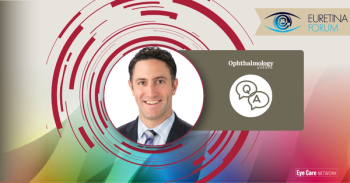
At EURETINA 2026, Roger Goldberg, MD, MBA, explains why EYP-1901 missed LUGANO's primary endpoint despite matched anatomy, clean safety and a 42% cut in treatment burden.

Cataract original papers on intracameral antibiotics and IOL power, a guideline-based case symposium, and ocular surface sessions headline AAO 2026.

Ritesh Narula, MBBS, MS, discusses phase 1 and early phase 2 results of the Eyestem subretinal stem cell study in geographic atrophy, including an 11-letter mean visual acuity gain maintained at 18 months.

At EURETINA 2026, Arshad Khanani, MD, FASRS, reviews sura-vec, 4D-150 and ixo-vec, 3 nAMD gene therapies in phase 3 with readouts expected over the next 12 months.

Ashish Sharma, MD, on what real-world data show about switching and long-term outcomes with retinal biosimilars.
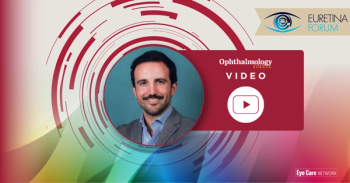
João Pedro Marques, MD, MSc, PhD, FEBOphth, discusses the IRD-PT, a web-based Portuguese registry of roughly 2,400 patients with inherited retinal diseases that supports research and identifies patients for clinical trials.

Could one surgery replace years of GA injections? Phase 2 ArMaDa data suggest gene therapy OCU410 slows lesion growth.
At EURETINA 2026, Elon van Dijk, MD, PhD, FEBOphth, reviewed trial evidence favouring half-dose PDT over micropulse laser and eplerenone for central serous chorioretinopathy.

Paul Nderitu, MBChB, MPhil, MBCS, FRCOphth, PhD, gives an update at EURETINA 2026 on Global RETFound, a foundation model being built with 108 partners from more than 40 countries
• The American Academy of Ophthalmology 2026 annual meeting is set for October 9-12 in New Orleans.

Kareem Moussa, MD, discusses how four local corticosteroid injections compare on effectiveness and IOP, and what that means for choosing among them.

4DMT's 4D-150 gene therapy enters phase 3 4SIGHT trial in DME; 2-year SPECTRA data show +10.8-letter BCVA gain in 9 patients.

Katherine Talcott, MD, discusses phase 2 VERONA results showing EYP-1901 plus aflibercept reduced supplemental treatment needs in DME, with early vision and anatomy gains and no significant safety signals.
At EURETINA 2026, Arshad Khanani, MD, FASRS, reviews 2-year SPECTRA data on 4D-150 gene therapy for DMO and the phase 3 4SIGHT trial comparing it with aflibercept.

Serena Salvatore, MD, discusses the retinal laser training gap, persistent laser myths, simulation and practical advice for safer laser at EURETINA 2026.
Ester Carreño, MD, PhD, explains how to tell retinitis pigmentosa from uveitis and why genetic confirmation now matters more.

OT Roundup returns with MOGENRY's 4-year RP data, RCA's retina care report, SYD-101's FDA hearing, and new OCU410 GA data.

Women’s systemic and ocular health associated with pregnancy is a focus at EURETINA 2026 in Vienna.
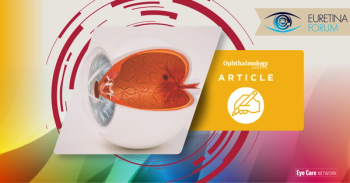
Three EURETINA 2026 e-posters examine OCT/OCTA biomarkers and real-world switching to faricimab or aflibercept 8 mg in nAMD.

Three studies use OCT and OCTA to track AMD treatment response, flag diabetic retinopathy before oedema and confirm ocular toxoplasmosis.

Japan's filing covers IRDs broadly, supported by RESTORE and open-label Stargardt data.

Francesca Cordeiro, PhD, MD, FRCOphth, explains how Detection of Apoptosing Retinal Cells (DARC) imaging predicted the speed and direction of GA growth and could help stratify patients for treatment.

Inherited metabolic diseases affect the retina even before the systemic diagnosis is established.