

News
Advertisement
Advertisement

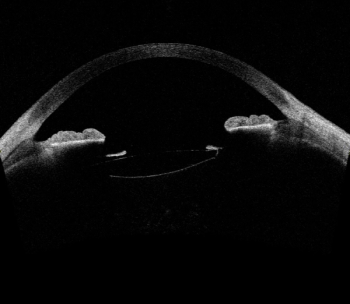
As more microinvasive glaucoma surgery (MIGS) procedures become available, surgeons are faced with decisions on adoption of new techniques.

Are older individuals less likely to undergo cataract surgery if they have small support groups? A retrospective cohort study of Medicare patients published in JAMA Ophthalmology looked at this question.
Advertisement

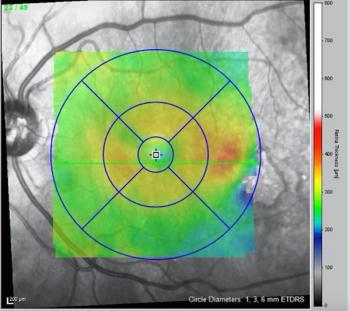
Diabetic eye disease is occurring in younger populations, which means it's time to rethink anti-VEGF standards.


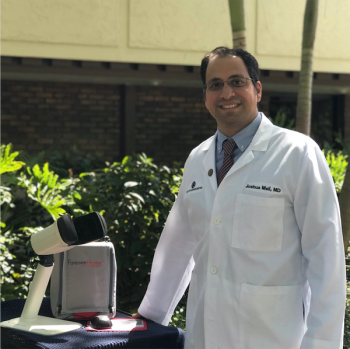
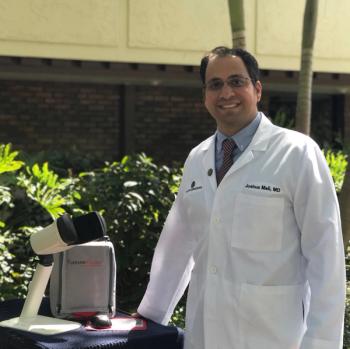
In the first part of his Clinical Innovation series, Josh Mali, MD, shares how this novel home-use device is the new standard of care for AMD monitoring. Future blogs in the series will discuss the increased efficacy of patient monitoring and present case examples.
Stormy Daniels’ pupillary diameter could indicate high intelligence
Christopher J. Rapuano, MD, explains how red eye might be something more. Superior limbic keratoconjunctivitis may be identified by lifting the upper lid and having the patient look down.

As the diversity of drop products expands and knowledge of the nuances of various ocular surface maladies increases, consider how the differences between drop products might make one drop a better choice for a given patient.
In a well-matched sample group, patients with higher levels of postoperative astigmatism reported a greater improvement in quality of life and a greater rate of willingness to have the procedure again if they received an Extended Depth of Focus IOL compared to patients receiving a low-add, multifocal IOL, despite similar postoperative clinical and patient reported performance.
Findings from a pilot study show that a novel accommodative intraocular lens (AIOL, Lumina, Akkolens) provides a true accommodative response that is maintained for at least 2 years and preserved following Nd:YAG laser capsulotomy.
The title of this blog may have you answering in the affirmative -after all, working in medicine is all about the patients, right?
How taking a holistic, tactical approach into process improvement can drive even the smallest of gains for your practice

With ability to provide LASIK-like outcomes, the light-adjustable lens creates a new opportunity for cataract surgeons to grow the premium channel, says Fritz H. Hengerer, MD, PhD.

Favorable outcomes have been achieved after the first clinical use of IOL technology that is designed to maintain an open capsule long-term after cataract surgery and enable refractive fine-tuning postoperatively.
Advertisement
Advertisement
Trending on Eye Care Network - Ophthalmology Times
1
Retinal imaging as a window into atrial fibrillation
2
First patient dosed in phase 3 NPI-001 trial for Usher syndrome RP
3
OCT-980 receives FDA orphan drug designation for retinitis pigmentosa
4
Mediterranean diet linked to slower AMD progression across stages
5