

A retrospective review was performed to describe changes in corneal thickness and to identify the incidence of posterior corneal changes characteristic of keratoconus, following DMEK surgery. Here’s what investigators found.

A retrospective review was performed to describe changes in corneal thickness and to identify the incidence of posterior corneal changes characteristic of keratoconus, following DMEK surgery. Here’s what investigators found.

Mutations in this glaucoma-associated gene may be commonly reported in many other neurodegenerative diseases.
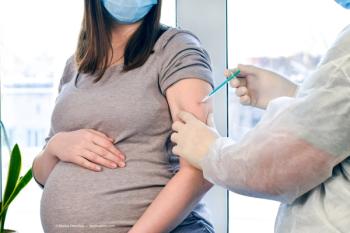
Researchers conducting a case-control surveillance of COVID-19 vaccination during pregnancy found that spontaneous abortions did not increase as a result of vaccinations.
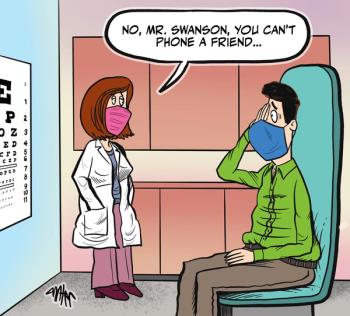
See the latest cartoon!
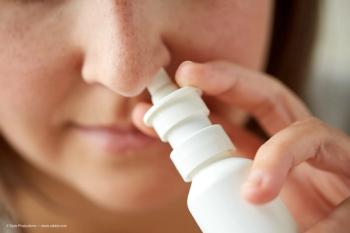
Investigators are working on the development of an intranasal subunit vaccine that provides durable local immunity against inhaled pathogens.

Investigators examine usefulness in refractive surgery evaluations.

Dr. McDonnell shares his thoughts.

The organization’s policies come amid federal mandates designed to spur Americans who are not vaccinated against COVID-19 to get a shot.

TearLab, MellingMedical reach an agreement to enhance early detection of dry eye disease in veterans.
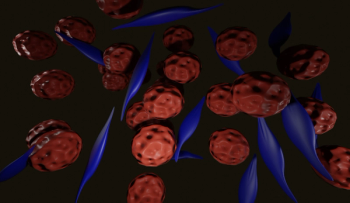
A team of investigators have found that a molecular mechanism drives the progression of uveal melanoma, an often lethal eye cancer in adults.

Researchers found that the effectiveness of the vaccine held for about 6 months in most adults, but began to be less effective at that time point.

Unilateral ptosis can be the first symptom related to other causes that are traumatic, myogenic, neurogenic, or mechanical in nature.

Investigators at Dartmouth College have found that eye contact during a conversation makes the discussion more appealing to its participants.

Pilot study shows promise of teaching surgeons with technology.

Lisa Nijm, MD, JD, discusses the brand-new Real World Ophthalmology conference, designed to support ophthalmologists starting practice.
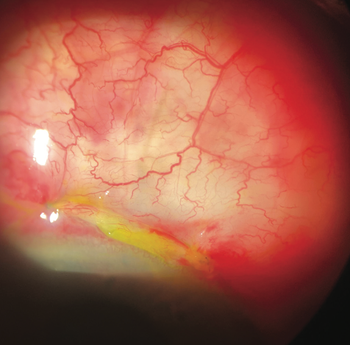
Speed the return to baseline visual acuity—and make your patients happy.
Children’s Hospital of Philadelphia and Stanford University School of Medicine will lead the $5.4 million study ,with patient recruitment beginning in late 2021 or early 2022.

AbbVie and REGENXBIO announced a strategic partnership to develop and commercialize RGX-314, an investigational gene therapy for wet age-related macular degeneration, diabetic retinopathy and other chronic retinal diseases.

CXL is safe, effective to perform on younger population, study results show.

Marta Belmonte-Grau, MD discusses the potential risk for posterior capsular rupture during cataract surgery.

Anat Loewenstein, MD, MHA, discusses how artificial intelligence can optimize optical coherence tomography.

A case study details the care of a patient who had already lost vision in one eye from a similar issue.
A 48-year-old male patient presented to an ophthalmic emergency department with what was described as progressive bilateral corneal melting 5 weeks after he received the first dose of a COVID-19 vaccine.

Despite varied results, the company will submit a New Drug Application for pegcetacoplan for geographic atrophy to the FDA early next year.

José-Alain Sahel, MD, explains how optogenetics involves artificial photoreceptors from specific retinal cells to restore vision.

The new virtual conference will debut on Sept. 18, and can help young ophthalmologists solve the small problems before they become bigger problems.

Horizon Therapeutics announced Tuesday the enrollment of the first patient in its Phase 4 clinical trial analyzing TEPEZZA® for the treatment of thyroid eye disease.

OD-OS’s teleguidance offering addresses the lack of experts and also benefits teaching in retina laser care.

Rhegmatogenous retinal detachment studied.
The gene-based AAVCOVID vaccine employs a unique adeno-associated viral vector technology that was shown in non-clinical, nonhuman primate studies to enable protection from SARS-CoV-2 challenge and to induce sustained antibody and cellular immune responses from a single dose for up to a year.