

The Glaucoma Research Foundation and the Refractive Surgery Council are welcomed as the two newest partners of the platform.

The Glaucoma Research Foundation and the Refractive Surgery Council are welcomed as the two newest partners of the platform.
The Glaucoma Research Foundation and the Refractive Surgery Council are welcomed as the two newest partners of the platform.

A word from Chief Medical Editor Peter J. McDonnell, MD.
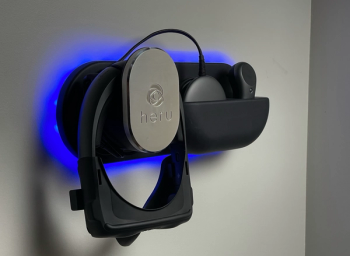
Heru Inc., announced Thursday that it has partnered with Vision Source on the commercial availability launch of re:Vive, a wearable diagnostics and visual field application.

Region may have world’s highest rate, investigators say.

Investigators from various companies described their diagnostic offerings at the Glaucoma Research Foundation’s 2021 New Horizons Forum.
Outlook Therapeutics has reported positive efficacy and safety data from Phase 3 NORSE TWO trial of bevacizumab-vikg.

Clinical trials show subretinal agents are safe, well tolerated by patients.
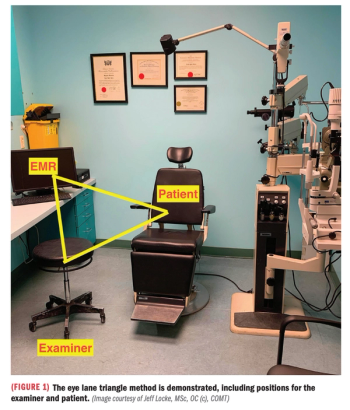
Focus on maximizing visual examination by combining methods of detection-based testing.
Option detects treatment-naive nonexudative macular neovascularization in eyes with dry age-related macular degeneration

The organization hopes to help 1 billion people worldwide, committing the international community to improve vision for 1.1 billion people living with preventable vision loss by 2030.

Telemedicine provides readiness in time of crisis.
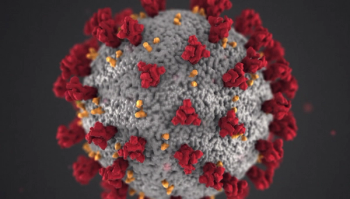
The study's finding suggest that the particles may be involved in some of the ocular clinical manifestations of the COVID-19 infection.
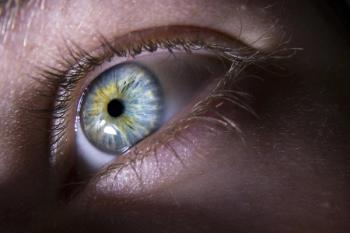
Perhaps the most important consideration is understanding the neuromuscular pathway that retracts and protracts the eyelid.

As soon as 2 weeks after treatment, changes occur to foveal layer.

Use of a drug to correct the eyelid position could eliminate the complications associated with surgery.

Trifocal IOLs can, if implanted with caution, be suitable for patients with keratoconus.

Investigators uncovered evidence that CaMKII could prove to be a desirable therapeutic target for vision preservation in conditions that damage the axons and somas of retinal ganglion cells.

Investigators have found that optical coherence tomography findings could prove to be a diagnostic tool for COVID-19.
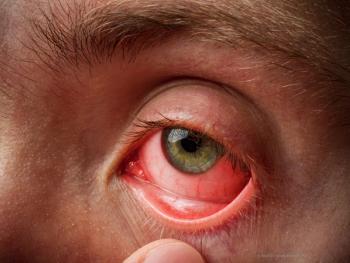
Sustained findings over long term indicate no rebound of disease.

A team of investigators used corneal confocal microscopy to identify corneal nerve damage in cases of long COVID.

First step is ruling out ocular nystagmus, saccadic disorder.
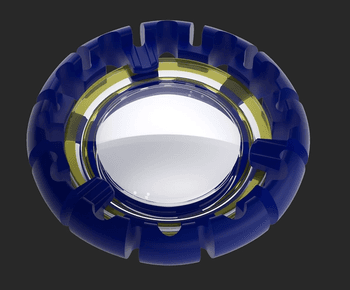
Eric Donnenfeld, MD, presents results of the year-long Grail Study demonstrating the safety and performance of the Juvene IOL from LensGen Inc.
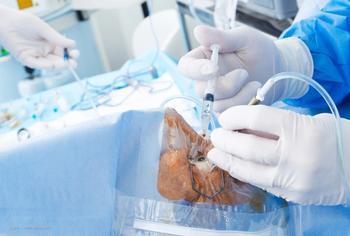
Mitchell A. Jackson, MD, presents details of a retrospective review of dexamethasone intraocular suspension 9%, including reduced postoperative inflammation.
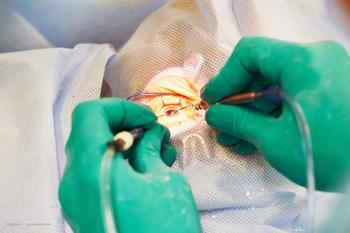
Steven Greenstein, MD, reports on results of epi-off corneal collagen cross-linking treatment in keratoconus and ectasia patients 10 years after undergoing laser refractive surgery.
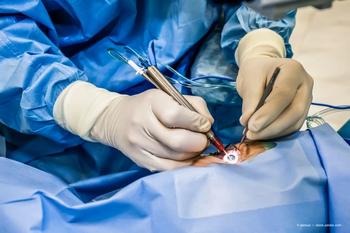
Mark Gallardo, MD, reports 12-month outcomes of iStent inject® combined with cataract surgery in a predominantly Hispanic patient population with mild to moderate open-angle glaucoma (OAG) and comorbid cataract.
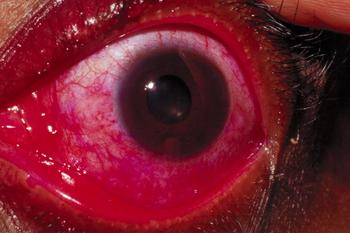
Eric Donnenfeld, MD, highlights study results exhibiting risuteganib as a potential treatment option for dry eye disease.
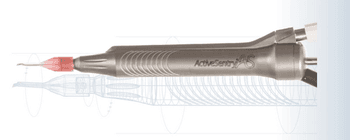
Hisaharu Suzuki, MD, PhD, provides insight on how a handpiece maintains the anterior chamber stability even when occlusion occurs, suggesting its usefulness for a safe and efficient surgery.
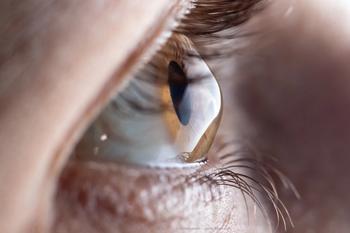
Kathryn M. Hatch, MD, details how collagen CXL is evolving with the goals of reducing complications and actually improving visual acuity.
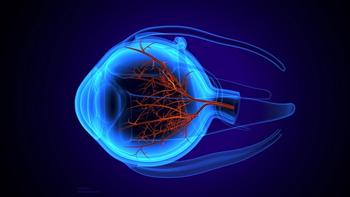
Basil Williams, Jr., MD, reports on the association between development of elevated intraocular pressure and numerous commonly performed vitreoretinal treatments.