

The company completed enrollment ahead of schedule in a second Phase 3 FDA registration trial for Nyxol in RM with top-line results expected by the end of the first quarter.

The company completed enrollment ahead of schedule in a second Phase 3 FDA registration trial for Nyxol in RM with top-line results expected by the end of the first quarter.

The latest invention from Mark S. Humayun, MD, PhD, brings hope to sufferers of age-related macular degeneration, a common type of blindness.
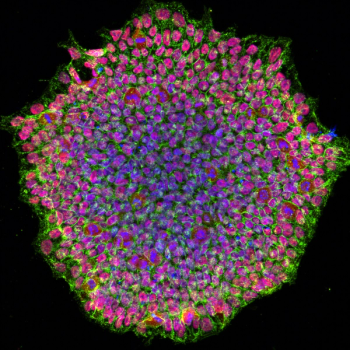
The team hopes the use of patient-derived stem cells will enable high-throughput drug screening for potential therapeutics for patients.

NGM621 is a monoclonal antibody product candidate engineered to potently inhibit complement C3 for the treatment of patients with geographic atrophy secondary to age-related macular degeneration.
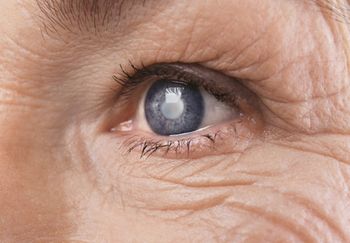
The company noted that the study was the first to evaluate whether AI software can accurately detect more-than-mild diabetic retinopathy using a single image per eye, obtained from either a desktop or handheld retinal camera.
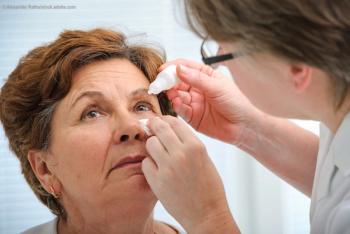
The 3-month study will assess the safety and ocular hypotensive efficacy of TC-002 ophthalmic solution.

The FDA has approved the first generic of cyclosporine ophthalmic emulsion (Restasis; Allergan) 0.05% single-use vials of eye drops to increase tear production in patients with dry eye disease.
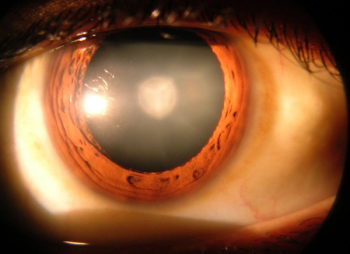
Researchers at the University of Arizona Health Sciences will use a $1.6 million National Eye Institute grant to study age-related lens cell changes that can lead to cataracts.

According to investigators, the implant can provide a sustained infusion of drug to the retina
Preeya Gupta, MD, walks through her four pearls for successful corneal collagen cross-linking, including handling patient expectations, managing the epithelial cells and preventing infectious keratitis.
A team of investigators has conducted ocular pharmacokinetic studies, including metabolism, providing valuable information for ocular drug development.

A team of investigators examined the association between COVID-19 transmissibility and elapsed time since infection, and found that SARS-CoV-2 may still be transmissible 10 days post-infection.

Cleveland Eye Bank Foundation (CEBF) will feature nine researchers from three eye institutions on February 15, from 3 to 5 pm Eastern, for its second annual virtual vision research symposium.
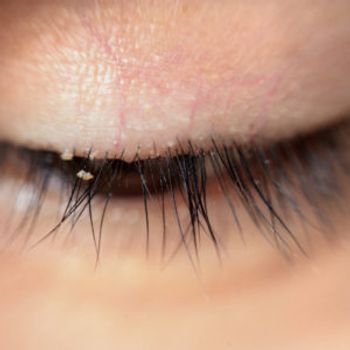
The company is expecting topline data in April from Saturn-2, the second Phase 3 pivotal trial of TP-03, with NDA submission on track for this year.

The future of this age-related condition is bright and in focus.
According to the companies, a social media initiative will include donation to Prevent Blindness’ Sight-Saving Fund.
The GMOPC was established in February 2020 at an inaugural meeting in Los Angeles, California, as an investigator-initiated clinical research study, with Heidelberg Engineering as an industry partner.
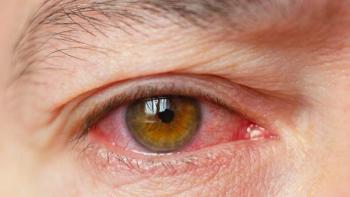
A new treatment option may increase basal tear production in patients.

The university recently launched its Center for Neuronal Longevity, which brings together a multidisciplinary team to address unmet needs in vision loss and other neurological diseases.

Spect’s mobile device will enable providers to conduct critical eye screenings anywhere in a matter of minutes.

New routes of therapeutic administration are paving the way for innovative applications.

Investigators are searching for a link between TIAs and changes in the back of the eye.

Faricimab is the first and only FDA-approved medicine targeting two distinct pathways, Ang-2 and VEGF-A, that often cause retinal diseases that may cause vision loss.
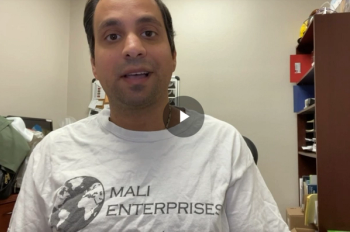
Joshua Mali, MD, shares how the FDA-approved faricimab-svoa (Vabysmo, Genentech) will change the treatment landscape for wet AMD and DME.

With the addition of 7 new therapeutics, Théa will expand its presence in the U.S. market.

The new variant is described as a "subvariant" of the omicron variant and is closely related to omicron, though it has some different mutations.

Researchers collected data on COVID-19 symptoms via online surveys from in excess of 1 million 23andMe participants who self-reported their COVID-19 symptoms.
A team of investigators at the University of California, Irvine have found that inhibiting ceramide accumulation in retina protects photoreceptors improves vision
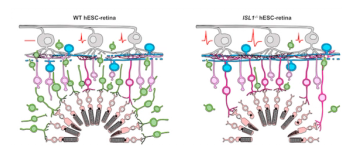
A team of investigators at the RIKEN Center for Biosystems Dynamics Research in Japan have used a genetic modification to improve human-derived retina transplants grown in the lab.

The study reviews the outcomes following penetrating, closed trauma–related injuries.