

A brief overview of findings presented at the 2022 Angiogenesis, Exudation and Degeneration meeting hosted by Bascom Palmer.
A brief overview of findings presented at the 2022 Angiogenesis, Exudation and Degeneration meeting hosted by Bascom Palmer.

During the Glaucoma 360 New Horizons Forum at the Grand Hyatt San Francisco at Union Square, several speakers discussed the latest advances in technology.

A brief overview of findings presented at the 2022 Angiogenesis, Exudation and Degeneration meeting hosted by Bascom Palmer.
Oluwatosin U. Smith, MD, associate professor in the Department of Ophthalmology, University of Texas Southwestern, Dallas, speaks with Ophthalmology Times'® Sheryl Stevenson on the highlights of her presentation exploring remote monitoring of glaucoma and the future of virtual care on the whole.
Andrew G. Iwach, MD, co-founder and co-chair of Glaucoma 360, Glaucoma Center of San Francisco, speaks with Ophthalmology Times’® Sheryl Stevenson on his presentation regarding trends and challenges of glaucoma.
Shan C. Lin, MD, explains why ophthalmologists should be mindful of refractive considerations in cataract surgery for their patients with glaucoma.
Robert L. Stamper, MD, speaks with Ophthalmology Times®' David Hutton on intraocular pressure measurement, corneal elasticity, and why hysteresis is important for glaucoma management.
This year's Shaffer-Hetherington-Hoskins Lecture keynote speaker Joseph Caprioli, MD, focuses on the phenotypes of primary open-angle glaucoma with Ophthalmology Times®' David Hutton at Glaucoma 360.
Dr. Carel Hoyng divulges the main takeaways from his Angiogenesis presentation, including the origins of Stargardt disease, correct diagnosis, ongoing gene therapy trials and the future of therapy.

Investigators in the Netherlands have developed an RNA therapy to halt the progression of Stargardt disease.
Dr. Carel Hoyng divulges the main takeaways from his Angiogenesis presentation, including the origins of Stargardt disease, correct diagnosis, ongoing gene therapy trials and the future of therapy.

Investigators in the Netherlands have developed an RNA therapy to halt the progression of Stargardt disease.
Dr Carel Hoyng divulges the main takeaways from his Angiogenesis presentation, including the origins of Stargardt disease, correct diagnosis, ongoing gene therapy trials and the future of therapy.

Carel B. Hoyng, MD, noted that investigators have developed an RNA therapy to stop the progression of the disease, which ultimately leads to legal blindness.
Dr. Carl Regillo discusses the 100-week results of KESTREL and KITE, two pivotal Phase 3 studies for brolucizumab for the treatment of diabetic macular edema.
Dr. Carl Regillo discusses the 100-week results of KESTREL and KITE, two pivotal Phase 3 studies for brolucizumab for the treatment of diabetic macular edema.
Dr Carl Regillo discusses the 100-week results of KESTREL and KITE, two pivotal Phase 3 studies for brolucizumab for the treatment of diabetic macular oedema.
Dr. Arshad M. Khanani reviews the Phase 2 part A results of the KALAHARI study of THR-149 for the treatment of DME.
Dr. Arshad M. Khanani reviews the Phase 2 part A results of the KALAHARI study of THR-149 for the treatment of DME.
Dr Arshad M. Khanani reviews the Phase 2 part A results of the KALAHARI study of THR-149 for the treatment of DMO.

KALAHARI study finds THR-149 to be safe, well-tolerated with preliminary efficacy as treatment for DME patients who respond suboptimally to anti-VEGF.

KALAHARI study finds THR-149 to be safe, well-tolerated with preliminary efficacy as treatment for DMO patients who respond suboptimally to anti-VEGF.
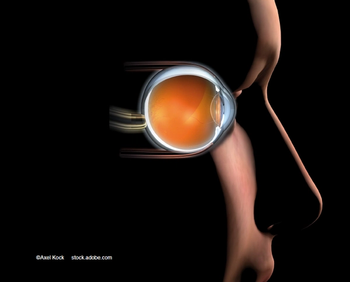
Most patients (95%) with the PDS implanted did not need supplemental treatment before the refills, indicating the persistence and durability of the treatment.

Most patients (95%) with the PDS implanted did not need supplemental treatment before the refills, indicating the persistence and durability of the treatment.
During her talk at Angiogenesis, Dr. Loewenstein outlines how artificial intelligence could revolutionize diabetic retinopathy screening.
During her talk at Angiogenesis, Dr. Loewenstein outlines how artificial intelligence could revolutionize diabetic retinopathy screening.
During her talk at Angiogenesis, Dr Anat Loewenstein outlines how artificial intelligence could revolutionize diabetic retinopathy screening.
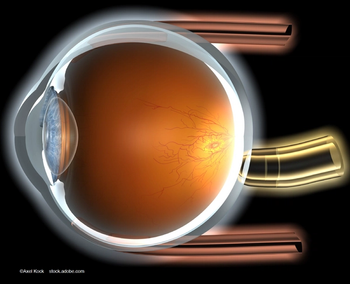
Most patients who had received monthly injections, that is, 92%, preferred the PDS after switching, with 88% having a very strong preference.
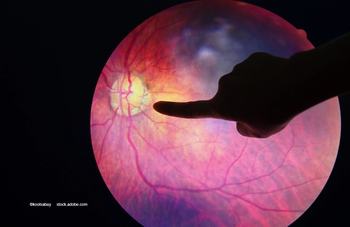
After 2 years, the improvements in vision and anatomy were sustained with extended dosing out to every 16 weeks in a high percentage of patients.

During the Glaucoma 360 New Horizons Forum, the spotlight was cast upon sustained release injectables, including innovations that have been flourishing over the past year despite, or perhaps because of, a continuing worldwide pandemic.