
Metformin, a frequently prescribed drug to treat diabetes, could be a novel therapy for AMD.
Metformin, a frequently prescribed drug to treat diabetes, could be a novel therapy for AMD.
In a presentation at the American Society of Retina Specialists, Dimitra Skondra, MD, PhD, points out that the low-to-moderate doses of metformin carried the greatest potential benefit in a retrospective case-control study.
At ASRS 2022 in New York City, New York, Rishi Singh, MD, is presenting, “12-Month Results of EYP-1901 Vorolanib in a Bioerodible Durasert Insert for nAMD: The DAVIO Trial.” The Phase 1 trial showed a reduction in treatment burden over 12 months as well as a favorable safety profile.
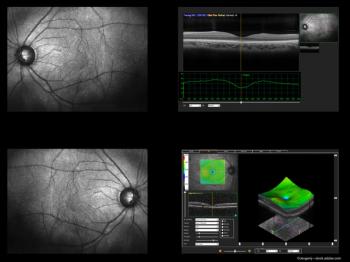
Investigators from Thailand took a close look at retinal fluid fluctuations in Thai patients with wet age-related macular degeneration (AMD) and devised a better way to measure the fluctuations in the central subfield thickness (CST).
Christopher Henry, MD, presented a talk entitled, “Efficacy of Suprachoroidal Triamcinolone Acetonide Injectable Suspension in the Treatment of Macular Edema in Patients With Chronic Uveitis,” at ASRS 2022 in New York City, New York.

In a presentation at the American Society of Retina Specialists 2022 annual meeting at the Jacob K. Javits Convention Center in New York, Yoshihiro Yonekawa, MD, detailed that primary scleral buckling achieved the best visual acuity, and pointed out that rhegmatogenous detachments increased with age.

Rhegmatogenous detachments increased with age; myopia, trauma, and history of retinopathy were common underlying risk factors for development of rhegmatogenous retinal detachments.

In the TENAYA and LUCERNE studies, more than 60% of faricimab patients could be treated every 4 months at 2 years, an increase from 45% at year 1. Study results are being presented at the American Society of Retina Specialists 2022 annual meeting in New York.
At ASRS in New York City, New York, David Eichenbaum, MD, presented “Efficacy, Durability, and Safety of Faricimab in Diabetic Macular Edema: 2-year Results on the Phase 3 YOSEMITE and RHINE Trials.”

Treatment with faricimab in patients with neovascular AMD achieved improvements in the visual acuity, central subfield thickness, and pigment epithelial detachments.
At ASRS 2022, Raj K. Maturi, MD, presented a talk entitled, “UBX1325, A Novel Senolytic Therapy for Treatment- Experienced Patients With Chronic DME or Wet AMD: 24-Week Results of a Phase 1 Study.”
At ASRS in New York City, New York, Justis Ehlers, MD, presented a talk entitled, “Higher Order OCT Feature Assessments of the Impact of Fluid Dynamics on Visual Acuity in Neovascular AMD in a Phase III Clinical Trial: The Importance of Outer Retinal Integrity.” Here he discusses the findings.
Topics spanned from faricimab in nAMD and DME; pediatric retinal detachment surgery; and the relationship between outer retinal integrity and subretinal fluid.
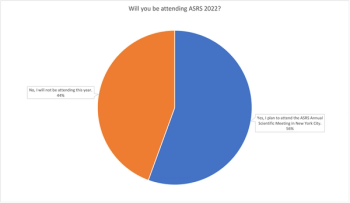
Results from our recent poll regarding ASRS 2022 attendance indicate that most ophthalmologists and retina specialists plan to participate in the Annual Meeting in person in New York, New York.
A team of investigators form Johns Hopkins Medicine say they’ve discovered that levels of a specific protein appears to help accurately predict whether people with the wet form of age-related macular degeneration may need lifelong, frequent eye injections to preserve vision or if they can be safely weaned off the treatments.

The 40th annual Scientific Meeting of the American Society of Retina Specialists is scheduled for July 13-16, 2022, in New York City, New York, United States.

A team of investigators at the Agency for Science, Technology and Research in Singapore have developed a bio-functional thermogel, a type of synthetic polymer, to prevent retinal scarring caused by failed retinal detachment repair surgery.

The 40th annual Scientific Meeting of the American Society of Retina Specialists is scheduled for July 13-16, 2022, in New York.

A poll for retina specialists regarding their attendance at the 2022 American Society of Retina Specialists 40th Annual Scientific Meeting in New York City, New York. This poll is now closed.
The FDA has accepted the supplemental Biologics License Application of aflibercept injection for review in patients with diabetic retinopathy.
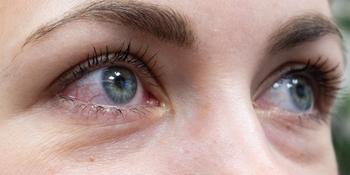
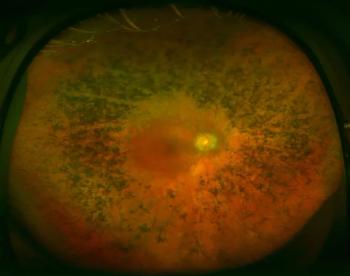
A team led by researchers from the University of Geneva has identified a molecular mechanism that causes degeneration of the eye’s photoreceptors, which can lead to blindness.
John B. Miller, MD, discusses widefield swept-source OCTA and its use in monitoring biomarkers in diabetic retinopathy.
Ash Abbey, MD, discusses the COED trial, testing the efficacy of combining steroid and anti-VEGF therapy in patients with diabetic macular edema.
Dr Timothy G. Murray discusses the 5-year followup data from a large, consecutive case series of combined anterior and posterior segment surgery and the benefits of a single procedure for the recovery of vision and decreased risk.
At ASRS, David Brown, MD, reported positive results at the head-to-head endpoints of KESTREL and KITE, but with continuing concerns about inflammation.
Dr Nathan Steinle discusses top-line results of the OAKS and DERBY trials, testing the efficacy of pegcetacoplan for the treatment of geographic atrophy.
Dr Carl Regillo takes us through the history of the port delivery system, from ideation to US FDA approval.
Dr Victor Gonzalez discusses his presentation at ASRS, regarding 0.19mg fluocinolone acetonide implants in diabetic macular oedema (DMO) patients.
Nathan Steinle, MD, discusses top-line results of the OAKS and DERBY trials, testing the efficacy of pegcetacoplan for the treatment of geographic atrophy.