Ultra-widefield pediatric retinal scans plus adaptable AI reveal hidden eye issues during routine visits, enabling comfortable, scalable screening and earlier specialist referrals.

Ultra-widefield pediatric retinal scans plus adaptable AI reveal hidden eye issues during routine visits, enabling comfortable, scalable screening and earlier specialist referrals.

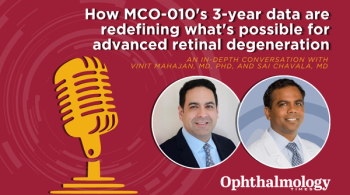
Two leading retinal specialists break down MCO-010's 3-year efficacy and safety data, the significance of contralateral eye findings, and how this gene-agnostic optogenetic approach could fill a critical gap for patients with advanced inherited retinal degeneration who have limited treatment options.

Jay Chhablani, MD, a retina specialist from UPMC Vision Institute and director of the Choroidal Analysis and Research Lab at the University of Pittsburgh, discussed recent advancements in choroidal imaging.

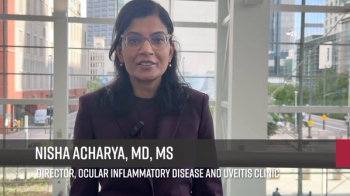
Uveitis expert Nisha Acharya, recipient of ARVO’s Mildred Weisenfeld Award, discusses how clinical trials and big data are reshaping treatment, vaccination, and vision outcomes.

Avacincaptad pegol may help preserve driving-related vision in geographic atrophy, but post hoc data did not reach statistical significance.

Paul Nderitu discusses Global RETFound, a diverse, worldwide retinal AI model that outperforms existing tools and sets a new standard for equitable, open-access medical AI.

NYU researchers discuss using CellChek C widefield specular microscopy to visualize and quantify corneal nerves in dry eye disease, revealing reduced nerve fiber length and inferior whorl changes and offering a practical alternative to in vivo confocal imaging.

At ARVO Michael Siatkowski, MD, and Jody Summers, PhD, stopped to discuss the rising rates of myopia in children and if anti-inflammatory drugs could play a role in slowing progression.

Single-shot optogenetic injection restores light sensitivity in advanced retinitis pigmentosa, delivering sustained vision gains for years with strong safety, expanding hope beyond gene-specific therapy.

At ARVO 2026, Michael Ip, MD, presented findings from a large-scale analysis of OCT biomarkers in patients with diabetic macular edema (DME), leveraging the robust DRCR Retina Network Protocol T dataset.

Aaron Lee, MD, and Cecilia Lee, MD, co-recipients of this year's Cogan Award at ARVO, reflect on what the award lecture means to them and their careers.

Dimitra Skondra, MD, PhD, discussed her talk on how the diet and gut microbiome can affect the development of age-related macular degeneration.

Oral QA102 shows imaging signals slowing drusen and GA progression in intermediate dry AMD at ARVO 2026, despite missing its primary end point.

Data presented at ARVO 2026 show that high-dose gene therapy boosts central retinal sensitivity in X-linked retinitis pigmentosa, with the phase 3 VISTA study fully enrolled.

AI-assisted screening in glaucoma clinics flags patient distress early, improving adherence and outcomes without adding staff burden.

Phase 2 and phase 3 results in diabetic macular edema and uveitic macular edema support intravitreal anti–IL-6 therapy

Several presentations at ARVO 2026 show the field advancing on two fronts: extending how long therapies last and broadening what they target.

Madhura Tamhankar, MD, took some time at the ARVO conference in Denver, Colorado, to discuss a poster on disease progression in thyroid eye disease, stressing what we know about the Rundle Curve may not be accurate.

Three-year durability data emerge for two distinct approaches to RP

Diastolic perfusion pressure emerges as the strongest predictor of myocardial strain in a recent study.

ECG-synchronized Doppler holography provides repeatable measurements of the retinal blood flow

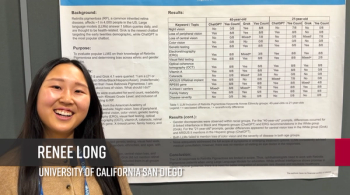
The poster looked into the LLM's potential for biases in gender and race when it came to its knowledge of retinitis pigmentosa.

Srinivas Sadda, MD, FARVO, immediate past president of ARVO, discusses the impact the organization has had on his career and how he wants to help the next generation.

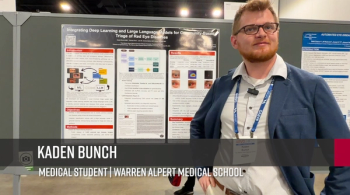
Kaden Bunch, a fourth-year medical student from the Warren Alpert Medical School of Brown University, talked about his poster on large language models and the effectiveness of diagnosing red eye diseases.

At this year's ARVO meeting in Denver, Colorado, Giulia Corradetti spoke on how baseline OCT biomarkers can predict anatomic response in neovascular age-related macular degeneration when treated with faricimab.

Assistive devices empower patients with central vision loss to regain independence, enhancing daily activities and reducing reliance on low vision centers.


Mark Daly discusses the transformative role of AI in ophthalmology, highlighting its potential to enhance patient care and streamline physician workflows.

The TEASE-1 trial reveals gildeuretinol's potential to reduce vision loss in Stargardt disease, offering hope for future treatments.

At ARVO 2025, in Salt Lake City, Utah, Emma Lessieur-Contreras, MD, PhD, talked about her poster on retina extracellular vesicles, and the role that they play on diabetic retinopathy.