

According to the company, consistent clinical efficacy across multiple signs and symptoms of dry eye along with excellent safety and tolerability build a differentiating product profile.
According to the company, consistent clinical efficacy across multiple signs and symptoms of dry eye along with excellent safety and tolerability build a differentiating product profile.

The company shared data at the Association for Research in Vision and Ophthalmology annual meeting in New Orleans that demonstrated that a single oral dose of D-4517.2 significantly reduced choroidal neovascularization lesions to a level comparable to D-4517.2 delivered subcutaneously and aflibercept administered intravitreally at the same mass dose in a laser-induced CNV mouse model.

In a presentation at ARVO 2023 in New Orleans, Yuyu Pharma’s YP-P10 is a novel, patented, synthetic peptide with anti-inflammatory properties being explored for the potential treatment of dry eye disease.

The company shared data at the Association for Research in Vision and Ophthalmology annual meeting in New Orleans that demonstrated OpRegen surgical bleb coverage of areas of GA may be critical for optimizing patient outcomes.
VLTR-557, Valitor's long-acting anti-VEGF biologic in development for durable wet age-related macular degeneration (AMD) treatment, showed that a single intravitreal (ITV) injection has potential to maintain clinical efficacy for more than six months.
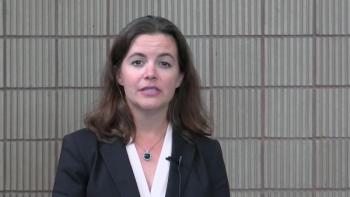
Ophthalmology Times® talked with Christine Kay, MD, about the treatment of GUCY2D associated Leber congenital amaurosis type 1 at this year's ARVO meeting.
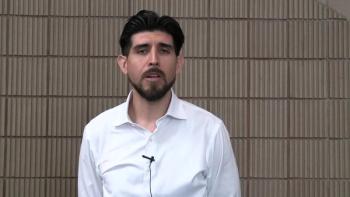
Ronald Zambrano, lab supervisor for the advanced Ophthalmic Imaging Lab at NYU Langone, talks about lamina cribrosa pressure and predicting structural glaucoma progression at this year's ARVO meeting.
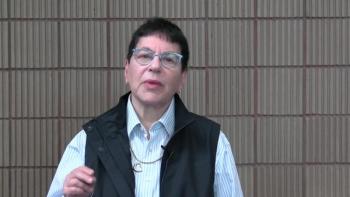
Ophthalmology Times® talked with Penny Asbell, MD, FACS, MBA, about the ARMOR study and antibiotic resistance at this year's ARVO meeting.

Atsena Therapeutics announced positive 6-month safety and efficacy data from the ongoing Phase I/II clinical trial of ATSN-101, a gene therapy for the treatment of GUCY2D-associated Leber congenital amaurosis (LCA1).
Ophthalmology Times® talked with Ronald Zambrano, lab supervisor for the advanced Ophthalmic Imaging Lab at NYU Langone about lamina cribrosa pressure and predicting structural glaucoma progression at this year's ARVO meeting.
Post-hoc analyses from four Phase III studies indicate Vabysmo dried retinal fluid faster with fewer injections in wet age-related macular degeneration and diabetic macular edema.
Dr Edmund Arthur shares his research on the early detection of diabetic retinopathy in underserved communities at this year's ARVO meeting.
Ophthalmology Times® talked with Roger Goldberg, MD, MBA, about macular leakage area in the YOSEMITE and RHINE trials comparing faricimab to aflibercept at this year's ARVO meeting.
Ophthalmology Times® spoke with Carl Danzig, MD, FASRS, at the 2023 ARVO annual meeting to learn more about the post hoc analysis for the GATHER trials and the new data on the correlation between vision loss and GA growth.
Ophthalmology Times® talked with Edmund Arthur, OD, PhD, FAAO, about his research on the early detection of diabetic retinopathy in underserved communities at this year's ARVO meeting.

Body mass index (BMI), central obesity, and the metabolic syndrome may be deciding risk factors in glaucoma.
Ophthalmology Times® talked with Jay Barth, MD, about the work at Ascidian Therapeutics and their research into developing a new way to administer gene therapy at this year's ARVO meeting.

In a presentation at the Association for Research in Vision and Ophthalmology annual meeting in New Orleans, it was noted ATSN-101 demonstrated clinically meaningful improvements in vision at the highest dose with no drug-related serious adverse events 6 months post-treatment.

In a presentation at the Association for Research in Vision and Ophthalmology annual meeting in New Orleans, SB15 demonstrates comparable efficacy, safety, immunogenicity, and pharmacokinetics profiles to reference aflibercept up to Week 56.
At the 2023 ARVO annual meeting in New Orleans, our on-site team caught up with T. Y. Alvin Liu, MD, to discuss predictive AI and its application in ophthalmology and screening of the eyes.
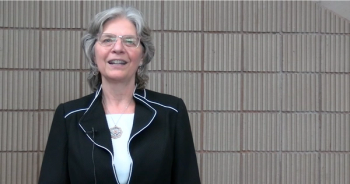
Deborah Ferrington, PhD, spoke with on our on-site team at the 2023 ARVO annual meeting in New Orleans about her presentation on using human donor tissue to identify the mechanism responsible for the death of the retinal pigment epithelium (RPE).

Eyevensys reported data showing the efficacy and durability of EYS809, a dual-gene plasmid in development for the treatment of wet age-related macular degeneration (AMD).

Under a compassionate use program, the topical application of B-VEC to the eye was well tolerated and patient showed significant improvement of visual acuity and complete corneal re-epithelization. The company presented data at the Association for Research in Vision and Ophthalmology annual meeting in New Orleans.

In a poster presented at the Association for Research in Vision and Ophthalmology, authors Paul S. Kayne, PhD, Alison Obr, PhD, John H. Dodd, PhD, and Carl Spana, PhD, it was demonstrated that PL9588 reduces ocular pressure. Data provides further support for topical administration of melanocortins for ocular inflammation.

At ARVO in New Orleans, Luxa Biotechnology shared an update on the progress of a Phase 1/2a clinical trial evaluating transplantation of RPESC-RPE-4W to treat dry age-related macular degeneration (AMD).
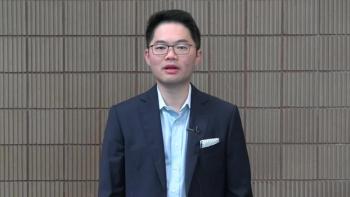
Dr T.Y. Alvin Liu talks about predictive AI and its uses in ophthalmology and screening of the eyes at this year's ARVO meeting.
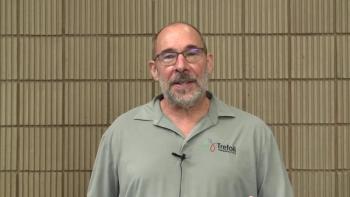
Ophthalmology Times® talked with David Eveleth, MD, CEO and Founder of Trefoil Therapeutics about TTHX1114 in patients with Fuchs endothelial corneal dystrophy (FECD) undergoing Descemet’s Stripping Only (DSO) in combination with cataract surgery at this year's ARVO meeting.

Visual impairment is associated with hallucinations, depression, agitation, and psychosis in patients with dementia.

Researchers found in their analysis that visual impairment is associated with hallucinations, depression, agitation, and psychosis in patients with dementia, although, aging and comorbidities, among other factors, may be involved.

Grace Walther, first author of the study, described that lens centration on the eye may be beneficial for improving vision. Association for Research in Vision and Ophthalmology annual meeting.