







Technology
Latest News
Advertisement
Video Series







CME Content











Advertisement

Ophthalmologists discuss topography-guided techniques, long-term corneal health, and emerging technologies set to transform refractive surgery.

Deborah A. Ferrington, PhD, highlights how breakthroughs in imaging, AI, and stem cell research are reshaping ophthalmology.

Emerging devices, wearable technology, and home-monitoring tools are reshaping how clinicians diagnose, treat, and manage patients.

Topcon Healthcare enhances its AI capabilities by acquiring Toku, Inc., aiming to revolutionize eye care with advanced predictive health insights.

Automated standardized graphs facilitate refractive surgery outcome analysis.
Faster cutting speeds and ergonomic design streamline workflows and enhance comfort.
As a US clinical investigator, Wiley shares his insights on the FineVision HP trifocal lens, highlighting patient visual outcomes, satisfaction, and its impact on cataract surgery practice.
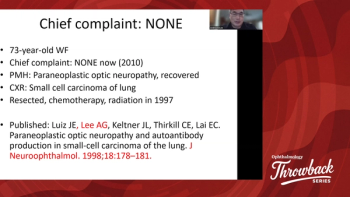
Andrew G. Lee, MD, revisits a 1997 case in which recognizing paraneoplastic optic neuropathy led to the diagnosis—and life-saving treatment—of small cell lung carcinoma.

Neda Shamie, MD, recounts a humbling experience performing cataract surgery in Honduras using older-generation phaco machines, revealing how technology elevates both skill and patient care.

SriniVas R. Sadda, MD, FARVO, recalls a residency case that highlights the transformative impact of OCT and OCT angiography.

As ophthalmic technologies move at supersonic speed, AI and gene therapy take center stage.

NYU Grossman School of Medicine’s Galen Hu, MD, and Andrea Blitzer, MD, sit down with Eduardo C. Alfonso, MD, of Bascom Palmer Eye Institute, to discuss how ophthalmologists are leveraging social media not just to promote practices, but to educate patients.

FDA clears BVI’s FineVision HP trifocal IOL for the US market
Published: | Updated:
The approval of the third-generation trifocal intraocular lens broadens the range of advanced lens options available for patients in the US.

The Polaris platform is the world’s first AI-supported and robotics-enabled surgical system developed specifically for ophthalmology, according to the company.

Singh highlights how understanding the “why” behind diagnostics and procedures boosts technician confidence, fosters pride, and strengthens their role in patient care.
The video-driven platform equips ophthalmic practices with tools to standardize education, improve workflow, and foster technician engagement.

Q&A: Robert H. Osher, MD, on how VR is changing the cataract conversation
Published: | Updated:
By letting patients “see” their options before surgery, virtual reality may eliminate confusion, boost confidence, and strengthen surgeon–patient trust.

Optain Health secures $26 million in Series A funding to enhance AI-driven retinal disease detection and expand its technology.

Q&A: Redefining cataract education for patients with virtual reality
Published: | Updated:
Immersive VR simulation helps patients better understand intraocular lens options.
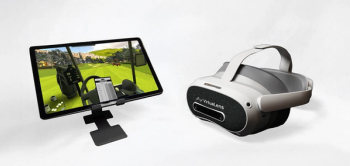
VirtuaLens introduces immersive VR IOL simulation platform; partners with Virtual Vision Health
Published: | Updated:
The virtual reality technology lets patients with cataract experience lens options in real-life scenarios, while a new strategic partnership aims to expand VR adoption.

OpZira’s product portfolio includes AdaptDx Pro and the NOVA Vision Testing System.

Virtual reality and artificial intelligence are reshaping medical education.

The goal is to provide an end-to-end operating system that unifies clinical, operational, and financial workflows.
In episode 1, Bill Trattler, MD, shares practical advice on documentation, patient communication, keratoconus management, and advanced lens technology.
Advertisement
Advertisement
Trending on Eye Care Network - Ophthalmology Times
1
One day, three approvals: FDA expands options for ocular redness, thyroid eye disease, and presbyopia
2
Matching artificial tears to dry eye phenotype: a Q&A with Omur Ucakhan, MD
3
Women’s Health: Identifying dry eye in rheumatoid arthritis can make all the difference
4
Retinal imaging as a window into atrial fibrillation
5