



Surgery
Latest News
Advertisement
Video Series


Shorts
0:33
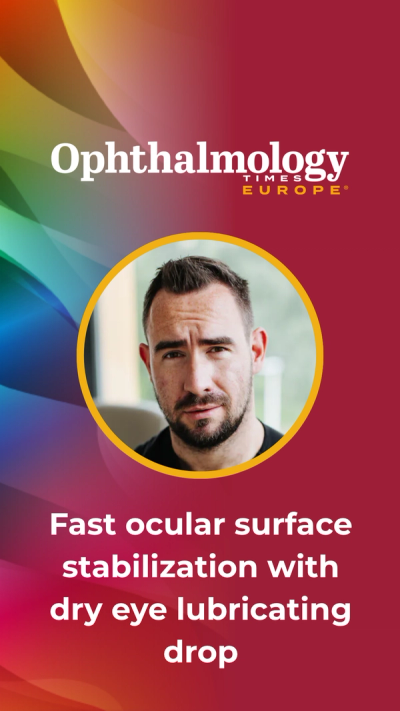
Fast ocular surface stabilization with dry eye lubricating drop: Piotr Wozniak, MD
2 months ago
by
Piotr A. Woźniak, MD, PhD(+2 more)
0:36
Redefining surgical success as "20/happy"
3 months ago
by
C. Ellis Wisely, MD, MBA
0:41
Counseling low myopes before cataract surgery: C. Ellis Wisely, MD, MBA
3 months ago
by
C. Ellis Wisely, MD, MBA(+1 more)
CME Content














Advertisement
Reconstructing periocular defects in children requires planning for growth, not just repair.
Epithelial basement membrane dystrophy can affect premium IOL outcomes.

Douglas D. Koch, MD, and Julie Schallhorn, MD, MS, discuss the optical designs behind EDOF lenses, where they fit in clinical practice, and advances shaping the category.

Approach centers on pressure-free messaging and optometric education

Waste, cost, and carbon are converging to reshape how cataract centers choose instruments.

FDA clears OMNI Ultra Surgical System, adding single-pass canaloplasty to implant-free MIGS platform
Sight Sciences' newest MIGS device gains FDA clearance for single-pass canaloplasty and trabeculotomy in open-angle glaucoma.

The annual Best Hospitals report from US News & World Report compares more than 4500 hospitals across 14 specialties and 22 procedures and conditions.

A retrospective study finds that direct selective laser trabeculoplasty significantly lowers intraocular pressure, with the greatest benefit seen in treatment-naive eyes.
Douglas D. Koch, MD, and Karolinne Maia Rocha, MD, PhD, discuss the optics behind enhanced monofocal lenses, patient selection, and how to set expectations.
Host Deborah Ristvedt, DO, welcomes Vance Thompson, MD, to discuss how prioritizing people has shaped the culture and growth of Vance Thompson Vision.

A case report describes image-guided surgical excision combined with adjunctive cryotherapy and a single anterior chamber methotrexate injection, with no recurrence at 10 months.

Finding satisfaction in ocular research—considerations about AI and enhanced datasets.

Liliana Werner, MD, PhD, joins Douglas D. Koch, MD, for a discussion on the properties, limitations, and future of IOL materials
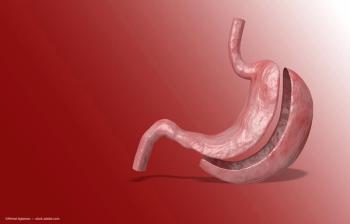
New Turkish study links sleeve gastrectomy weight loss to clearer cornea and lens, lower eye pressure, and widened anterior chamber in 6 months.

Key regulatory filings, phase 3 readouts, and trial enrollments to watch through June 30.

See which ophthalmology surgery centers earn US News’ 2026 high-performing badge, where they cluster, and why complication rates drop 40%.

P. Dee G. Stephenson, MD, FACS, shares insights on evolving LAL technology and best practices for managing the ocular surface before and after surgery.

China approves ZEISS ARTEVO 750 and 850 ophthalmic microscopes, expanding 3D digital visualization and iOCT-ready workflows for cataract and retinal surgery.
NYU Grossman’s Preeya Mehta, MD, and Jonathan S. Williams, MD, sit down with Mount Sinai’s Louis R. Pasquale, MD, to discuss long-term safety and efficacy data from a PreserFlo microshunt trial and the role of microshunts in glaucoma surgery.

Analysis of 20 years of data highlights differences in reimbursement trends across ophthalmology subspecialties and practice settings, according to Dustin D. French, PhD.

As Glaucoma Awareness Month highlights evolving practice, specialists describe how artificial intelligence, sustained drug delivery, laser therapy, and workflow integration are reshaping earlier, more individualized glaucoma care.

Joel S. Schuman, MD, FACS, highlights home tonometry, virtual visual fields, and portable OCT devices as promising tools, while noting concerns around data reliability, patient adherence, and reimbursement.

Concentric lens positioning of an adjustable lens helps avoid a late myopic shift.

The year introduced shifts in residency education, and program directors reflect on changes, challenges, and what’s next.

Looking back on 2025, Neda Shamie shares how a challenging monocular patient reinforced the importance of patience, presence, and psychological support in ophthalmic care.
Advertisement
Advertisement
Trending on Eye Care Network - Ophthalmology Times
1
AAO 2026: Tinlarebant in Stargardt disease: Jacque Duncan, MD, on DRAGON results
2
PRIMA at 3 years: Early surgical risk, durable vision gains in GA
3
FAQ: SYD-101 heads to FDA advisory committee: What clinicians should know
4
How ophthalmology researchers are applying RWD to power new insights
5