






Retina
Latest News
Advertisement
Video Series





CME Content













Advertisement

Prof. Anat Loewenstein questioned whether treat-and-extend will remain the preferred strategy as longer-acting therapies emerge.
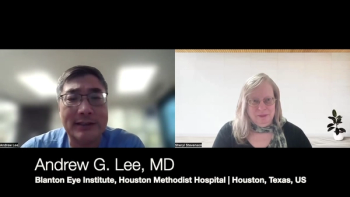
Andrew G. Lee, MD, presents the “no” perspective on whether GLP-1 agonists cause non-arteritic anterior ischemic optic neuropathy, arguing that current evidence shows association but not proven causation.

Aflibercept briefly reverses severe ROP in tiny preemies, yet nearly half relapse within weeks—prompting laser rescue and renewed safety questions.

See which ophthalmology surgery centers earn US News’ 2026 high-performing badge, where they cluster, and why complication rates drop 40%.

The trial, sponsored by ONL Therapeutics, aims to enrol approximately 324 patients across sites in Europe, the United States, and Canada.

About 90% of patients are female with obesity and potential hormonal drivers


The 3rd Winterthur Ophthalmology Symposium in Winterthur, Switzerland, on 12–13 March 2026 will feature plenary talks, hands-on workshops, satellite sessions, poster presentations, and a gala honoring the Otto Haab Medal.


The phase 2a study looks at retinal vascular diseases, including wet age-related macular degeneration (wet AMD), diabetic macular edema (DME), and retinal vein occlusion (RVO).

FDA greenlights first human trial of SVT-001, a regenerative cell therapy aiming to restore vision for patients with rare familial drusen.

The company describes liMeliGhT as a 1-year clinical trial that will support the Biologics License Application (BLA) filing for OCU400 and potential approval in 2027.

Gene and cell therapies plus AI imaging tools accelerate breakthroughs for rare retinal diseases, spotlighting new trials for RP and Stargardt patients.

A recent nonrandomized trial has demonstrated toric IOLs’ efficacy in providing long-term visual outcomes, reducing amblyopia compared to non-toric lenses.

PULSAR post-hoc finds aflibercept 8 mg matches 2 mg for PCV, offering 12–16-week dosing and reduced injection burden.

A recent study highlights the efficacy of the FAi implant in patients with NIU-related macular edema, improving BCVA and reducing choroidal thickness.

The investigators wanted to assess the safety and feasibility of intravitreal injection of autologous CD34+ bone marrow stem cells (BMSCs) in eyes with vision loss from CRVO.

An ophthalmology resident shares insights from experiences across Mexico, Europe, and the US.

Clinicians emphasize screening, individualized care, and recognition of sex-based differences to prevent vision-threatening complications

Phase 1b data show KSI-101 rapidly clears inflammatory macular edema, delivers long-lasting fluid control without steroids, and advances into enrolling phase 3 trials.

According to recent data, patients initiating semaglutide had a substantially greater risk of developing NAION versus those starting SGLT2 inhibitors.

EYE PCR’s fixOflex is now eligible for European market introduction, providing clinicians with a method of preserving the capsular bag’s form after cataract surgery.

EYE PCR’s fixOflex is now eligible for European market introduction, providing clinicians with a method of preserving the capsular bag’s form after cataract surgery.

Experts debate real-world retina cases—mystery vitreous hemorrhage, floater vitrectomy, buckle comeback, PDR laser vs anti-VEGF, GA timing.

Under the US agreement, OPUVIZ (aflibercept-yszy), a biosimilar to Eylea (aflibercept) 2 mg, may launch in January 2027.
Advertisement
Advertisement
Trending on Eye Care Network - Ophthalmology Times
1
FDA approves phentolamine ophthalmic solution 0.75% (Ryzumvi) for presbyopia
2
Alvotech files first known aflibercept 8 mg biosimilar with EMA
3
Uveitis: a practical guide for ophthalmologists and optometrists
4
AAO 2026: How to become an ocular pain detective in dry eye
5