



Retina
Latest News
Advertisement
Video Series








CME Content













Advertisement

Trial shows AAV8 PDE6A gene therapy doesn’t improve retinitis pigmentosa vision in a year and may cause retinal thinning and VA loss.

The 22nd International Scientific Symposium on Ophthalmic Imaging will take place 18–19 September 2026 in Singapore, marking an expanded scientific scope while maintaining its focus on imaging in research and clinical practice.

Retina specialists showcase innovation and precision in retinal care
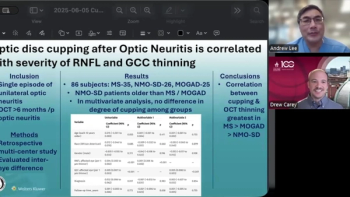
Andrew G. Lee, MD, and Drew Carey, MD, discuss how optic disc cupping after optic neuritis reflects nerve and ganglion cell thinning, not disease type, helping distinguish it from glaucoma.


The trial is evaluating OPGx-MERTK gene therapy for MERTK-related retinitis pigmentosa (RP).

AI reads infant retinal scans to flag lung disease early, while transient vision loss warns of looming stroke and heart events.

This enables the initiation of the EYETAC phase II clinical trial (NCT07285070) in patients with non-infectious anterior uveitis (NIAU).

When no retina podcast was available, Jayanth Sridhar, MD, created one—and learned lessons about branding, bandwidth, and mentorship along the way.

Japan fast-tracks MCO-010 optogenetic eye injection as studies show lasting safety and meaningful vision gains in inherited retinal disease.

Analysis of 20 years of data highlights differences in reimbursement trends across ophthalmology subspecialties and practice settings, according to Dustin D. French, PhD.

The trial is evaluating OCU410 (AAV5-RORA) for the treatment of geographic atrophy (GA) secondary to dry age-related macular degeneration.

OCU410ST uses an adeno-associated virus delivery platform for the retinal delivery of the RORA gene.

In the latest episode of The Retina TL;DR with Dr. Weng, host Christina Y. Weng, MD, MBA, FASRS, talks with Dr. Zacks about ONL1204, a first-in-class Fas pathway inhibitor showing promise in neuroprotection for retinal diseases—from retinal detachment to geographic atrophy and glaucoma.

New US patent boosts Nanoscope’s MCO-010 optogenetic therapy as long-term studies show lasting safety and vision gains in retinal disease.

The Part B dose-expansion portion is evaluating SB-007 for the treatment of Stargardt disease.

Optoretinography is an emerging technology used to test light-evoked photoreceptor activity.

Their conversation focuses on anatomy-driven, individualized approaches and multidisciplinary decision-making for patients with neovascular glaucoma.
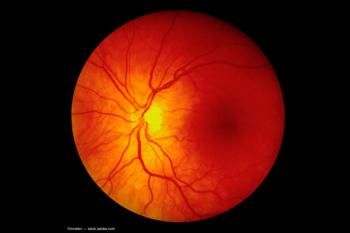
OCTA shows deep retinal vessel density mirrors thyroid eye disease activity, tying orbital inflammation and muscle thickening to improved monitoring.

Researchers uncover a DNA repair mechanism in Greenland sharks that preserves their vision for centuries, offering insights into longevity and eye health.

Advancements in macular laser therapy, emphasizing standardization, precision delivery, and innovative treatment strategies for retinal conditions.

According to the company, the FDA’s decision was supported by visual function results from the phase 2 ACUITY trial in ON.

Jennifer E. Thorne, MD, PhD, discusses evidence from the ADJUST trial, including relapse risk, retreatment success, and how clinicians should monitor children when considering adalimumab discontinuation.
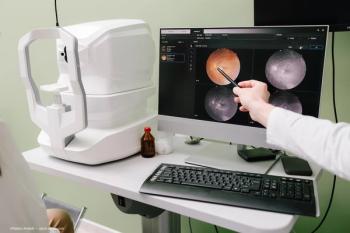
A recent study represents a step forward in investigations of the retinal layers as they are affected by glaucoma.

The letter noted the FDA is unable to approve the application for ONS-5010/LYTENAVA (bevacizumab-vikg) in its current form for the treatment of wet AMD, according to the company.
Advertisement
Advertisement
Trending on Eye Care Network - Ophthalmology Times
1
FDA approves phentolamine ophthalmic solution 0.75% (Ryzumvi) for presbyopia
2
Alvotech files first known aflibercept 8 mg biosimilar with EMA
3
Uveitis: a practical guide for ophthalmologists and optometrists
4
AAO 2026: How to become an ocular pain detective in dry eye
5