





Retina
Latest News

Advertisement
Video Series

CME Content










Advertisement
An analysis showed an association between patients who previously had undergone intravitreal injections and cataract surgery and a higher risk of the development of a non-clearing vitreous hemorrhage, retinal detachment, retinal tear, and glaucoma surgery.

Voretigene neparvovec (Luxturna, Spark Therapeutics, Inc.) was shown to be safe and effective in real-world settings.
Tylectomy indicates surgical resection of retinoblastomas via pars plana vitrectomy with intraoperative chemotherapy infusion.
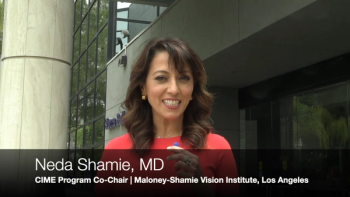
The 18th annual Controversies in Modern Eye Care conference, held on May 4, 2024, in Los Angeles, was co-chaired by Neda Shamie, MD, and Arjan Hura, MD, with the aim of discussing the latest advancements in eye care.
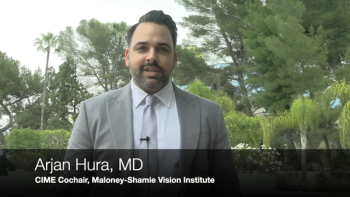
Hura highlighted some of the key takeaways from the Controversies in Modern Eye Care symposium where presenters and attendees shared their insights into the latest advancements in refractive surgery, retina care, and collaborative eye care.

News
According to the company, a subretinal injection of ATSN-201 was well tolerated in all patients in the first cohort with extensive resolution of schisis observed in 2 patients. Safety data from the first cohort of the LIGHTHOUSE study will be presented at the Retinal Cell and Gene Therapy Innovation Summit 2024 being held May 3, 2024, in Seattle.
The tool shows disease progression and vision loss simulations for multiple diseases such as AMD, XLRP, and achromatopsia

CRISPR manipulation presents opportunities and challenges.

SGT-1001 uses its novel gene coding technology for gene integration via transposition. It plans to advance SGT-1001 into the clinic in the first half of 2025.

Shift could lead to changes in the current management of retinal diseases
News
According to the company, 46.2% of patients demonstrated a 1- or 2-step improvement in the Diabetic Retinopathy Severity Scale (DRSS) at 40 weeks in the Axpaxli arm, compared to 0% in the control arm.

According to the company, the grant funding from the Choroideremia Research Foundation is in support of validating functional vision assessments for patients with profound blindness.
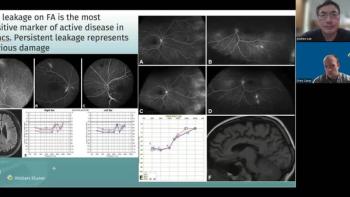
Andrew Lee, MD, and Andrew Carey, MD, sit down on another episode of the NeuroOp Guru to discuss Susac syndrome, and how leakage on fluorescein angiogram might be the most sensitive marker of activity of disease.

Scientists at the National Institutes of Health use artificial intelligence called ‘P-GAN’ to improve next-generation imaging of cells in the back of the eye.

VG901 is designed to deliver a functional CNGA1 gene to retinal photoceptor target cells in patients diagnosed with retinitis pigmentosa.
The Phase 3 study will have a sample size of 150 participants—one arm of 75 participants with the RHO gene mutation and the other arm with 75 participants that are gene agnostic.
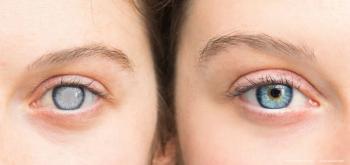
Investigators wanted to determine why patients who have retinal diseases such as diabetic retinopathy (DR) or age-related macular degeneration (AMD) can undergo cataract surgeries without experiencing a worsening of their retinal disease, while some patients do.

According to the company, MCO-010 achieved its primary and key secondary endpoints with statistical significance and no serious adverse events.
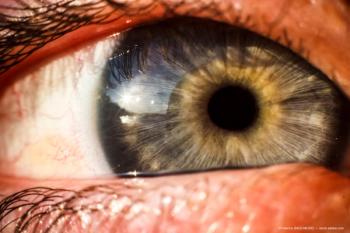
Patients can experience solar retinopathy after viewing the eclipse without protection, but it also can occur from outdoor activities, including those mentioned. It can lead to symptoms that include blurry vision, vision loss at the center of a patient’s sight and eye pain.

The effort led to the creation of an artificial vitreous body for treating retinal detachment. This solution is based on a natural carbohydrate derived from algae.
Explore cutting-edge ophthalmology innovations in this new series on the Ophthalmology Times EyePod podcast. Throughout this series, we'll hear insights from various stakeholders in clinical practice, academia, and industry. In this episode, host Ehsan Sadri, MD, engages in a conversation with Jeffry Weinhuff, managing partner at Visionary Ventures, exploring trends and offering advice for individuals driven by an entrepreneurial mindset.

Stargardt disease is the most common inherited retinal dystrophy (causing blurring or loss of central vision) in both adults and children.

The new cohort will add patients living with IRDs caused by mutations in multiple genes to the already existing cohort of patients with IRDs caused by single gene mutations.

In a recent study led by Steven Pittler, PhD, and his team at the University of Alabama Birmingham (UAB), the role of modifier genes in retinitis pigmentosa type 59 (RP59) was meticulously examined.
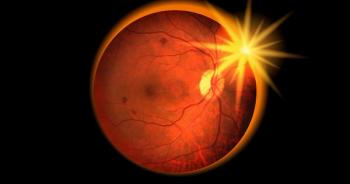
Solar retinopathy is caused by prolonged or high intensity exposure of the fovea centralis to light energy. Suspected cases of solar retinopathy may require urgent referral to an ophthalmologist for diagnosis, and to eliminate treatable causes for central visual disturbance.
Advertisement
Advertisement