




Retina
Latest News
Advertisement
Video Series






CME Content













Advertisement
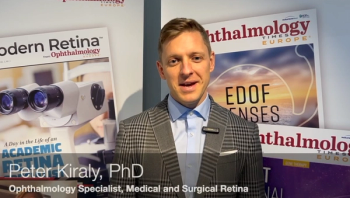
EURETINA 2025: Peter Kiraly, PhD, helps young retinal specialists break into the vitreoretinal space
The EURETINA YOURS program prepares retina specialists for the EBO exam and helps them find training in the competitive subspecialty of vitreoretinal surgery.

In the debut episode of The Retina TL;DR, host Christina Y. Weng, MD, MBA, FASRS, talks with Tony Stefater, MD, PhD; and Tommy Stryjewski, MD, about PYK-2101, a biodegradable retinal sealant designed to replace gas and oil tamponades.
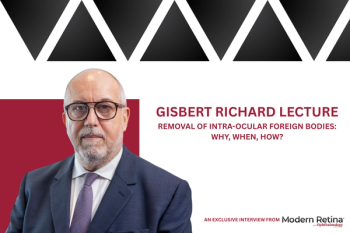
At the 2025 EURETINA Congress, Prof Korobelnik delivered the Gisbert Richard Lecture, focusing on removal of intra-ocular foreign bodies and mitigating ocular trauma.

Aleksandra Rachitskaya, MD, FASRS, is a member of the Modern Retina editorial advisory board.

BVI launches Virtuoso, a groundbreaking dual-function surgical platform for cataract and vitreoretinal procedures, enhancing efficiency and control in surgery.

identifeye HEALTH unveils a retinal screening platform, enhancing accessibility and efficiency in patient care through innovative technology and AI integration.

Long-term cannabis use may reduce the risk of proliferative vitreoretinopathy after retinal detachment surgery, suggesting potential therapeutic benefits.

Revisiting a classic tool that still gets you out of a jam works best when you understand its powers and limitations.
Research reveals how neighborhood social factors impact patients with tractional retinal detachments, highlighting the need for improved access to care and support.
Reliable visualization tools, especially those indicated for ocular use, are crucial for success.

Patients weigh in on the value of provider communication.

Neurotech Pharmaceuticals performs the first ENCELTO procedure.
Franklin shares how methotrexate significantly reduces reoperation rates in diabetic patients with retinal detachments, enhancing postoperative outcomes and vision.
Matthew Starr, MD, discusses techniques for correcting astigmatism in patients lacking capsular support, enhancing visual outcomes surgery.

Christina Weng, MD, MBA, FASRS, explores the viability of postoperative day 0 exams as a substitute for day 1 after vitreoretinal surgery, revealing promising findings.

Topcon Healthcare enhances its connected care model by acquiring IRIS, integrating AI for improved diabetic eye disease screening and patient coordination.
The platform, developed by University College London and Heidelberg Engineering, demonstrated accuracy and precision in early tests.

RetinalGeniX partners with Labcorp to enhance genetic testing and retinal imaging, aiming for early disease detection and improved patient care.

How artificial intelligence could enhance clinical trials.

Patients express mixed feelings about AI in healthcare, favoring its use for documentation and administrative tasks while demanding transparency and safety standards.

Insights on injection technique and the future potential of SCS treatments.
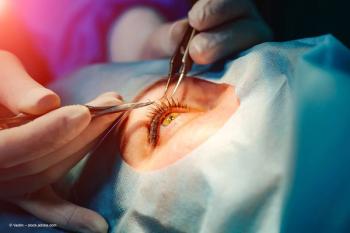
Looking at innovative tools and their applications in different disease states can help to think creatively about ways to benefit patients in retina care.
Advertisement
Advertisement
Trending on Eye Care Network - Ophthalmology Times
1
FDA approves phentolamine ophthalmic solution 0.75% (Ryzumvi) for presbyopia
2
Alvotech files first known aflibercept 8 mg biosimilar with EMA
3
Uveitis: a practical guide for ophthalmologists and optometrists
4
AAO 2026: How to become an ocular pain detective in dry eye
5