






Retina
Latest News
Advertisement
Video Series








Shorts

0:41
AXPAXLI's real-world potential to reduce wet AMD treatment gaps
3 months ago
by
Arshad M. Khanani, MD, MA, FASRS(+2 more)

0:24
AI's future role in retina care recordkeeping, imaging, and research
3 months ago
by
Sundeep Dev, MD, FASRS(+2 more)

0:38
Treatment durability and Medicare status both drive retinal outcomes
3 months ago
by
Sundeep Dev, MD, FASRS(+1 more)

0:24
Early faricimab use linked to longer treatment durability
3 months ago
by
Sundeep Dev, MD, FASRS(+2 more)

0:47
Patient education in the AI era
3 months ago
by
Margaret Chang, MD, MS(+2 more)
CME Content













Advertisement

A wider partial-total ellipsoid zone gap on OCT predicted faster total EZ loss and geographic atrophy in intermediate AMD—pointing to a biomarker for trial enrichment.

Presenters highlight clinical insights and lessons from recent trial data and surgical experience
3-year REMAIN data show MCO-010 optogenetic therapy delivered durable ~3-line vision gains in retinitis pigmentosa regardless of gene mutation, with no treatment-related serious adverse events, per Benjamin Bakall, MD, PhD, at ASRS 2026.

ARCHER data reveal which GA eyes risk major vision loss: midrange baseline acuity and subfoveal lesions, shaping counseling and future AMD trials.

An AI platform that screens patient charts for clinical trial eligibility increased randomization by 37.5% and cut screen failures by 13% in a retina practice.

Arshad M. Khanani, MD, MA, discusses phase 3 SOL-1 data showing axitinib sustained vision in wet AMD for 9-12 months after 1 dose, outperforming aflibercept 2 mg.

OLN324 outperformed faricimab on anatomic outcomes as early as week 1 in the JADE trial, with no cases of intraocular inflammation across both dose groups.
Initiating aflibercept 8 mg or faricimab as a first-line therapy was associated with longer treatment intervals and superior anatomic outcomes in a real-world analysis of more than 12,000 eyes.

Cynthia Toth, MD, of Duke University, discusses new BabySTEPS research showing that retinal nerve fiber layer and choroidal thickness on OCT correlate with 2-year neurodevelopmental outcomes in preterm infants and what it will take to bring bedside screening into routine NICU care.

Bedside OCT in preterm infants links retinal thickness to motor, cognition, and autism risk at age 2, hinting at earlier brain screening.

Ultra-widefield imaging reveals early retinal risk in pediatric patients.

Retina cells that sense light falter in Alzheimer’s, potentially derailing sleep and body clocks—pointing to new diagnostic and treatment angles.

StemSight secures new patents for scalable induced pluripotent stem cells-derived limbal stem cells, boosting STE-101’s path to off-the-shelf limbal stem cell deficiency therapy and upcoming Series A.

Meeting founder and co-chair Arshad M. Khanani, MD, MA, FASRS, shares what attendees can expect during this year's program, opening the evening of June 12 and running through June 13 in Las Vegas, Nevada.

The device, described in a new study, uses a technique called temporal interference-based transcorneal electrical stimulation, or TI-TES.

Wireless brain implant taps visual cortex to deliver artificial sight, marking third successful surgery and recruiting volunteers for trials.

Siegfried G. Priglinger, MD, FEBO, weighs in on the emerging rationale for gas-free, position-free macular hole surgery using an ILM flap.

Study finds low-vision rehab boosts daily function and quality of life, but exposes gaps in long-term data and diverse research.

Optoretinography is an emerging technology used to test light-evoked photoreceptor activity.

When no retina podcast was available, Jayanth Sridhar, MD, created one—and learned lessons about branding, bandwidth, and mentorship along the way.

Researchers uncover a DNA repair mechanism in Greenland sharks that preserves their vision for centuries, offering insights into longevity and eye health.

A recent study represents a step forward in investigations of the retinal layers as they are affected by glaucoma.

In the latest episode of The Retina TL;DR with Dr. Weng, host Christina Y. Weng, MD, MBA, FASRS, talks with Dr. Zacks about ONL1204, a first-in-class Fas pathway inhibitor showing promise in neuroprotection for retinal diseases—from retinal detachment to geographic atrophy and glaucoma.
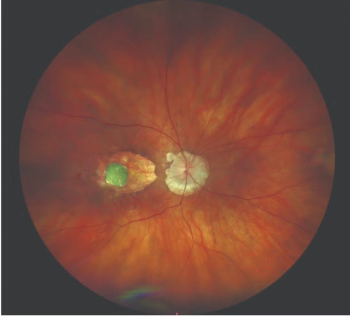
The novel system converts light into electrical signals to stimulate retinal cells.

Advancements in macular laser therapy, emphasizing standardization, precision delivery, and innovative treatment strategies for retinal conditions.
Advertisement
Advertisement
Trending on Eye Care Network - Ophthalmology Times
1
FDA approves phentolamine ophthalmic solution 0.75% (Ryzumvi) for presbyopia
2
Alvotech files first known aflibercept 8 mg biosimilar with EMA
3
Uveitis: a practical guide for ophthalmologists and optometrists
4
AAO 2026: How to become an ocular pain detective in dry eye
5