











Cochair Peter J. McDonnell, MD, highlights what this year’s conference will mean for clinicians and addresses the anticipated increased patient volume.
Cochair Peter J. McDonnell, MD, highlights what this year’s conference will mean for clinicians and addresses the anticipated increased patient volume.

The company plans to share the first-in-human safety data from the Phase 2/3 SIGLEC trial evaluating intravitreal AVD-104.

The American Society of Retina Specialists (ASRS) Research and Safety in Therapeutics (ReST) Committee has linked Apellis’ pegcetacoplan injection (Syfovre) with a handful of cases of occlusive retinal vasculitis.

According to the ASRS Research and Safety in Therapeutics Committee, ophthalmologists noted instances of intraocular inflammation (IOI) after the initial injection of pegcetacoplan.

The complement system identifies and eliminates pathogens and dying cells, 3 pathways can activate the complement system—classical, lectin, and alternative—and their activation results in similar functions of opsonization, inflammation, and cell lysis.

Cognition Therapeutics has dosed the first participant in the phase 2 MAGNIFY study of CT1812. This oral therapy is being studied as a for geographic atrophy (GA) secondary to dry age-related macular edema (AMD).

Akari remains on track and plans to submit an IND application to the US FDA in the first half of 2024, and plans on starting clinical trials in the second half of 2024

Apellis has announced that seven abstracts will be presented at the American Society of Retina Specialists Annual Scientific Meeting including safety and efficacy data for the company’s pegcetacoplan injection for geographic atrophy (GA).

The company has completed evaluation on candidates and selected a single drug candidate to move forward into clinical trials.

CT1812 is an experimental, oral therapy for the treatment of geographic atrophy secondary to dry age-related macular edema.

This trial is testing tinlarebant, a novel oral therapy which is intended to reduce the accumulation of toxins in the eye that cause STGD1 and contribute to geographic atrophy (GA).
Clinical benefit of complement inhibition has been demonstrated in clinical trials, but there are possible consequences to consider.


Aviceda Therapeutics doses its first patient with AVD-104 in its Phase 2 SIGLEC Trial. This intravitreal asset is being tried for treatment of geographic atrophy (GA) secondary to age-related macular degeneration (AMD).

Data supports ANX007 as the first complement therapy to preserve visual acuity, achieving statistically significant protection, but reduction in rate of geographic atrophy lesion growth did not reach statistical significance.

Curative Biotechnology Inc. has completed and filed a patent cooperation treaty (PCT) application with the U.S. Receiving Office.

Data supports ANX007 as the first complement therapy to preserve visual acuity, achieving statistically significant protection, but reduction in rate of geographic atrophy lesion growth did not reach statistical significance.

According to the company, topical administration is capable of delivering metformin to choroid, RPE, and retina.

Data demonstrate a reduction in the loss of retinal pigmented epithelial and photoreceptor cells.

The company made these announcements at the American Society of Gene & Cell Therapy (ASGCT) 2023 Annual Meeting in Los Angeles, California.
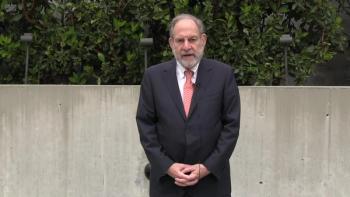
David S. Boyer, MD, senior partner at Retina Vitreous Associates Medical Group, shares key takeaways from "Advances in geographic atrophy," which he co-presented.
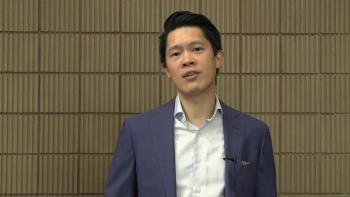
Allen Chiang, MD, discussed the assessment of geographic atrophy progression from the Phase 3 OAKS and DERBY trials with our team at the 2023 ARVO annual meeting.

Analysis signals up to 59% risk reduction in rate of vision loss compared with sham treatment at 12 months.

Lineage Cell Therapeutics Inc. presented results from the company's imaging analyses of structural changes and visual data from a Phase 1/2a clinical study of RG6501 (OpRegen), which is development as a potential treatment for geographic atrophy (GA).
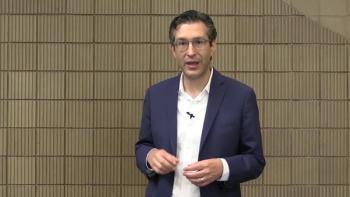
Ophthalmology Times® spoke with Carl Danzig, MD, FASRS, at the 2023 ARVO annual meeting to learn more about the post hoc analysis for the GATHER trials and the new data on the correlation between vision loss and GA growth.