







Cataract
Latest News
Advertisement
Video Series







Shorts

CME Content













Advertisement

Epithelial basement membrane dystrophy can affect premium IOL outcomes.

Ahead of the 44th ESCRS Congress in London, a look at the presbyopia-correcting IOL, glaucoma and dry eye disease research on this year's scientific programme.
Cataract safety, Glaucoma drugs and MIGS, plus Artificial Intelligence debates and retina breakthroughs—key FDA moves and trial updates in ophthalmology.

Antibiotic injection reduced endophthalmitis risk vs topical drops after cataract surgery, meta-analysis found.

Preparing the ocular surface for surgery in the presence of Demodex blepharitis
Published: | Updated:
Alice Epitropoulos, MD, shares cases of Demodex blepharitis and reflects on how lotilaner has changed treatment before ocular surgery.

Approach centers on pressure-free messaging and optometric education

Waste, cost, and carbon are converging to reshape how cataract centers choose instruments.
In part 2 of a 2-part article, Arun C. Gulani, MD, walks through the 4 patient types of the Gulani classification of refractive lens exchange, from primary vision enhancement to staged vision engineering, and explains why outcomes depend on treating the eye as a complete optical system rather than on the implant alone.

Frantz EyeCare reports 98% of Light Adjustable Lens patients achieved refractive accuracy within ±0.50 D of target, exceeding published national cataract surgery benchmarks.
Arun C. Gulani, MD, introduces the Gulani classification of refractive lens exchange, a 4-type framework for individualizing premium IOL selection and surgical strategy around each eye's visual potential rather than its diagnosis.

The multicenter study is evaluating ZOC2017217, a lanosterol-derived investigational eye drop, ahead of a planned phase 3 trial.
Length and width, not thickness, emerge as key drivers of higher-order aberrations.

A midyear recap of the cataract-related news Ophthalmology Times has covered in 2026

Host Deborah Ristvedt, DO, welcomes Vance Thompson, MD, to discuss how prioritizing people has shaped the culture and growth of Vance Thompson Vision.

In part 2 of a 2-part Q&A, John Berdahl, MD, weighs in on AI-driven IOL power calculation in challenging eyes, best practices for reducing posterior capsule opacification, and how surgical mission work abroad has shaped his approach in the OR.
In part 1 of a 2-part Q&A, John Berdahl, MD, discusses the widening global cataract surgical gap and examines emerging evidence linking cataract extraction to a reduced risk of dementia.
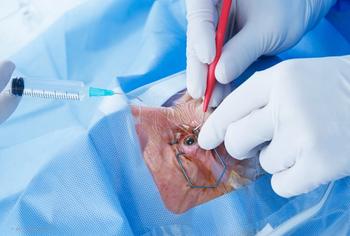
Off-label use of laboratory-grade dye preparation found to harbor Sarocladium kiliense beyond the sterilizing capacity of standard filtration.

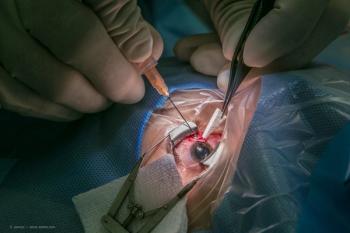
A trio of ASCRS presentations collectively offer insight to surgeons, suggesting that glaucoma drops harm meibomian glands, while combining cataract surgery with MIGS can boost long-term IOP control.


The merger, originally announced in March 2025, included the ALLY Robotic Cataract Laser Treatment System.

Aflibercept briefly reverses severe ROP in tiny preemies, yet nearly half relapse within weeks—prompting laser rescue and renewed safety questions.

See which ophthalmology surgery centers earn US News’ 2026 high-performing badge, where they cluster, and why complication rates drop 40%.

The planned phase 3 trial will evaluate the triamcinolone acetonide injectable for managing inflammation and pain after cataract surgery.

Revisyon is described as a device-led therapy that applies specific wavelengths of low-level LED light to the crystalline lens through a non-invasive, in-clinic procedure.
Advertisement
Advertisement
Trending on Eye Care Network - Ophthalmology Times
1
Brepocitinib meets all Phase 3 end points in noninfectious uveitis
2
Matching artificial tears to dry eye phenotype: a Q&A with Omur Ucakhan, MD
3
Demodex blepharitis: Diagnosis, treatment response, and recurrence
4
Myopia control using spectacle lenses with highly aspherical lenslets
5