Frantz EyeCare reports 98% of Light Adjustable Lens patients achieved refractive accuracy within ±0.50 D of target, exceeding published national cataract surgery benchmarks.

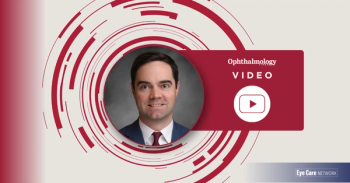
In part 2 of a 2-part Q&A, John Berdahl, MD, weighs in on AI-driven IOL power calculation in challenging eyes, best practices for reducing posterior capsule opacification, and how surgical mission work abroad has shaped his approach in the OR.
In the second installment of a 2-part conversation, Ophthalmology Times continues its discussion with John Berdahl, MD, a board-certified ophthalmologist at Vance Thompson Vision in Sioux Falls, South Dakota, and a professor at the University of South Dakota. Where
This is part 2 of a 2-part conversation with Berdahl,
This interview has been edited for length and clarity.
Berdahl: In normal eyes the AI formulas have basically caught the whole field up to a ceiling it seems we are all bumping into. In the hard eyes, post-refractive, extreme myopia, irregular corneas, they pull modestly ahead.
The truth about normal eyes is that leading formulas are all quite good now. In an elderly cataract population, predictability within ±0.5 D was about 72% for both Kane and Barrett Universal II, with no significant difference between them.1 The modern AI formulas (Kane, Hill-RBF) and the best analytic vergence formula (Barrett) are similar in routine eyes. The pioneers of formulas have done us all an incredible service.Predicting how the eye is going to heal, especially astigmatically, remains a major limiting factor for normal eyes.
Where AI separates itself is in the tails. In extreme axial myopia, in eyes 32 mm and longer, Kane had the lowest mean and median absolute error, 0.44 D and 0.40 D, and both Kane and Hill-RBF had far fewer big misses than SRK/T—refractive errors beyond ±1.0 D in 7.5% of eyes versus 42.5% for SRK/T.2 Think about that—a 42% large-miss rate with an old vergence formula in a long eye is basically a refractive-surprise factory. That's the real case for AI. Not that it wins the average eye, but that it shrinks the disasters.
On the post-refractive question specifically, which is the one that matters most for my spectacle-independence patients, the field still leans on dedicated approaches like Barrett True-K and the ASCRS calculator, with the AI methods earning a seat at the table but not yet owning the room.
My read: AI formulas are already first-line reasonable and especially help to avoid outlier outcomes.
Berdahl: The single biggest lever is one we've had for 20 years, a square optic edge followed by hydrophobic material. The pharmacology is interesting but not yet practice-changing.
The square edge is the heavyweight, and it's not close. The mechanism is mechanical: a sharp posterior edge creates a discontinuous bend in the capsule that physically blocks lens epithelial cells from migrating across the posterior capsule. The long-term data are emphatic. In a 9-year randomized fellow-eye study, square-edge IOLs had a 2% YAG rate versus 37% for round-edge lenses of the same PMMA material. Same material, same surgeon, same patient's two eyes. The only variable was the edge, and it cut YAG dramatically.3
Material is the second lever. Pooled across trials, hydrophilic acrylic lenses had roughly a 7-fold higher YAG capsulotomy rate than hydrophobic acrylic at 2 years, RR 6.96.4 To put a number on it, one clinic reported a 17.7% two-year capsulotomy rate for hydrophilic IOLs.5
The newer wrinkle is that not all hydrophobic, square-edge lenses are created equal. A network meta-analysis found AcrySof had a lower YAG risk than other hydrophobic acrylics, with sharp-edged hydrophilic acrylic carrying about a 9-fold higher hazard, and a modeled 3-year YAG rate of 4.19% for AcrySof versus 1.82% for the newer Clareon material.6
The other real contributors: a well-centered, appropriately sized capsulorhexis with 360-degree overlap on the optic, thorough cortical cleanup, good capsule polishing, and a posterior square edge that runs the full optic, not just the center.
On drugs, nothing has cleared the bar of being safe to the rest of the eye while reliably ablating epithelial cells. The risk-benefit of YAG is low, because PCO is already treatable with a 60-second laser, therefor any preventive drug must be extraordinarily safe to earn its place.
Berdahl: Mission work changes my heart, and I complain less for about 6 months after I return. So, I should probably go about every six months. At my core, I am a teacher. Teaching residents overseas, and helping those with the least among us fills my cup in an unselfish way that other daily efforts don’t.
There's almost nothing else in medicine where you take someone from blind to seeing in 15 minutes, for a few hundred dollars, and hand them back their independence, their livelihood, often their place in their own family and a caretaker. Cataract surgery is one of the most cost-effective interventions in all of healthcare.7 Standing in a recovery line the morning after, watching people see their grandkids for the first time in years, you feel that statistic in your chest, not your head. My faith is lived through service, and this is service with an unusually clear benefit.
How it changed my practice at home, concretely: