







AMD
Latest News
Advertisement
Video Series




CME Content













Advertisement

The study further defined the relationship between delayed rod-mediated dark adaptation and the status of outer retinal bands on optical coherence tomography.

Preliminary safety data support a favorable benefit-risk profile at both dose levels. The preliminary efficacy and safety data trending similar to or better than the OPTIC study, in which patients continue to see ongoing clinical benefit through at least 3 years.

According to the company, 4D-150 was well tolerated with a favorable safety profile when evaluated through up to 48 weeks of follow-up, with no significant inflammation observed.

Dr. Jennifer Lim reveals new data on Angiopoietin-2 inhibition as a target for addressing nAMD and DME.
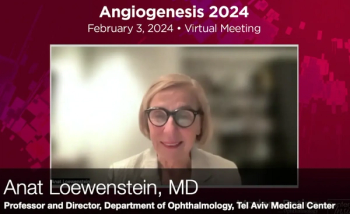
In conversation with Ophthalmology Times Europe, Anat Loewenstein, MD, illuminates the outcomes of using an AI-based fluid quantification for remote retina monitoring and analysis.

Dr. Carl Regillo provided an overview of topline results and a deep dive into subgroup analyses of DAVIO 2 trial data.

EODM may be an ideal candidate for development of complement gene therapy due to the high-impact genetic variants.
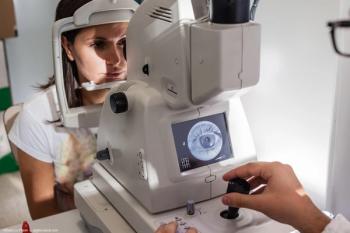

David Hutton of Ophthalmology Times talks with Adrienne Scott, MD, FASRS, about her part in a panel discussion detailing emerging therapies for AMD.

According to the company, ABBV-RGX-314 continues to be well tolerated in over 100 patients from three dose levels with no drug-related serious adverse events. The new data was presented at the Hawaiian Eye and Retina meeting in Maui, by John Pitcher, MD, and includes 6-month results from two additional dose level 3 cohorts.

A new case-control study found that older people ages 70 and older living in South Korea’s urban areas were at a significantly higher risk for developing incident exudative age-related macular degeneration.

Principle findings showed that aflibercept 8 mg demonstrated similar improvements in BCVA and CST when compared to the 2 mg dose of aflibercept.

The data indicated that patients with Alzheimer’s disease who were treated with acetylcholinesterase inhibitors had a slightly lower hazard of developing AMD compared with untreated patients.

The European Union approval applies to aflibercept 8 mg for treatment of nAMD and DME.

In a letter to shareholders, Ricciardi provided updates on Cognition’s 2024 pipeline and expected advances for several diseases.

The company announced more advancements of its RASP modulator platform, including plans for ADX-629 and ADX-246.

If granted, this device would be assigned an official classification as a Class II device with special controls.

This study compared AVT06 with aflibercept (Eylea) in patients with neovascular AMD.

According to a news release, the services will be provided for RetinalGeniX Technologies’ Institutional Review Board to conduct a study to personalize medical evaluations for patients receiving treatment for wet macular degeneration.

According to the company, the designation follows interim Phase 1 PRISM clinical data for 4D-150 that demonstrated an encouraging safety, tolerability and clinical activity profile in patients with wet age-related macular degeneration.

The suspension is unrelated to product quality and will lift in February of 2024.
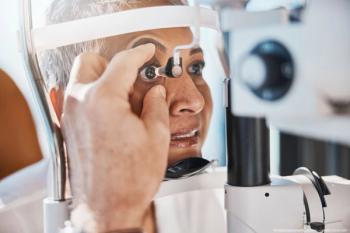
Randomization has been completed and, according to the company, topline data is expected during the third quarter of 2024.

The research marks the first attempt at integrating a photoactivatable anti-angiogenic agent with a photosensitizer into a single nanoformulation for AMD treatment.

Umedaptanib pegol has potential to improve outcomes if used as a first-line medication prior to patients receiving treatments targeting VEGF.

According to the company, OCU410 is a modifier gene therapy product candidate being developed for dry AMD.
Advertisement
Advertisement
Trending on Eye Care Network - Ophthalmology Times
1
One day, three approvals: FDA expands options for ocular redness, thyroid eye disease, and presbyopia
2
Brepocitinib meets all Phase 3 end points in noninfectious uveitis
3
Diabetic macular edema: an inflammatory disease in focus
4
Matching artificial tears to dry eye phenotype: a Q&A with Omur Ucakhan, MD
5