

Medicare’s 2023 fee schedule includes cuts in reimbursement, which some groups say could lead to reduced access to care to patients who need it most.
Medicare’s 2023 fee schedule includes cuts in reimbursement, which some groups say could lead to reduced access to care to patients who need it most.
An end-of-week review of what happened in ophthalmology from 29 October to 3 November 2022.

RGX-314 is being investigated as a potential one-time treatment for wet AMD, diabetic retinopathy, and other chronic retinal conditions.

RGX-314 continues to be well tolerated in 50 patients from Cohorts 1-3 with no drug-related serious adverse events. The Phase II trial will be expanded to include higher third dose level, with patients stratified by DRSS levels across cohorts and all receiving short-course prophylactic ocular steroids following RGX-314 administration.

New details define the molecular patterns in thyroid eye disease and further implicate the role of insulin-like growth factor-1 in patients with low Clinical Activity Scores.

In a real-world setting, eyes with AMD with a relatively good initial best-corrected visual acuity and no fibrovascular pigment epithelial detachment sustained or improved BCVA after anti-VEGF therapy within 3 years of follow-up.
Jay S. Duker, MD, chief operating officer of EyePoint Pharmaceuticals, highlights the Phase 1 and Phase 2 DAVIO clinical trials for EYP-1901 in wet age-related macular degeneration. The company also announced the first patient has been dosed in the Phase 2 PAVIA trial of EYP-1901 for nonproliferative diabetic retinopathy.

OVDs that are currently used in cataract surgery fit into different classes including higher viscosity cohesives, lower viscosity dispersives, viscoadaptives and higher viscosity dispersives.

Ferdinand-Braun-Institute in Berlin, Germany is developing a solution with its semiconductor-based laser sources.

One clinician advises investigating prospective patients for history and evidence suggesting HSV keratitis, and monitoring for post-surgery epithelial defects.

A previously uncharacterized area of the protein known as RPE65 spontaneously turns spiral-shaped when it encounters intracellular membranes, or thin structures that surround different parts of a cell.
Nicole Bajic, MD, and Neel S. Vaidya, MD, MPH, share their insights from when they were at this crossroads. Learn more clinical pearls on topics like this and more at Real World Ophthalmology’s virtual conference, “Top 10 Things I Wish I Knew Sooner,” this Saturday, November 5.

The novel genetic engineering approach, tested in mice and laboratory-grown nerve and light-receiving cells, will initially have research applications.
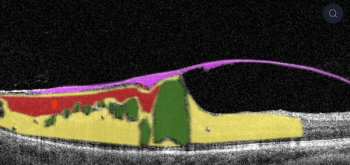
The company's AI cloud-based platform is available via a browser to any eye care professional in the world. The artificial intelligence algorithm was trained on millions of graphically labeled OCT scans collected from ophthalmic clinics.

A global survey of retinal experts assessed their perceptions of evolving clinical practice in the Covid-19 era, focusing on digital teleophthalmology, home monitoring and decentralised patient care.


According to National Institutes of Health/National Eye Institute researchers, the study may help lead to gene therapy for rare inherited blinding disease.

The Sailing study was a 12-month, 18-center, randomized, double-masked, double-sham, parallel-controlled, phase 3 trial that was conducted in China and included eyes with center-involved DME that were randomly assigned to undergo either laser photocoagulation followed by as-needed sham intravitreal injections or sham laser photocoagulation followed by as-needed 0.5 mg intravitreal injections of conbercept.

The study is one of the first clinical trials to validate the clinical utility of real-world remote physiologic monitoring using an on-demand vision-as-a-service extension to the specialty retina clinic to enable remote monitoring of patients with chronic diseases such as AMD, diabetic retinopathy, and other retinal conditions.
Lawrence Whittle, Chief Commercial Officer for Verana Health, explains what the significance of imaging data linked with electronic health record data means for patient outcomes.
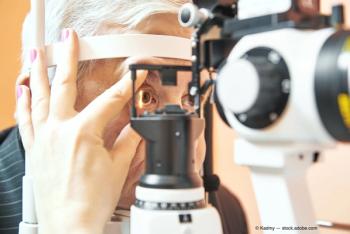
Nicox reports that daily dosing of NCX 470 0.1% met the primary efficacy objective of demonstrating non-inferiority to latanoprost 0.005%.

Replay is launching Eudora, an HSV gene therapy company that will target genetic retinal diseases.

Genentech announced this week that faricimab-svoa (Vabysmo) achieved its primary endpoint of non-inferiority compared to aflibercept in RVO in the BALATON and COMINO clinical trials.

Prevent Blindness offers videos, fact sheets, social media graphics and PowerPoint presentations to help ophthalmologists educate the public on the potential effects diabetes may have on vision.
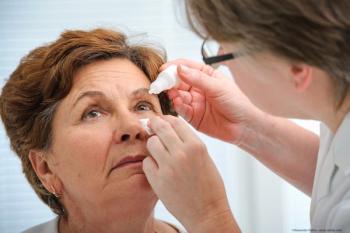
Gentle eye drops, laser or minimally invasive surgery, advising patients on safe viewing of electronic devices, and addressing eyelid disorders can all help to minimise adverse effects.
Scott Walter, MD, an investigator in the TENAYA and LUCERNE trials discusses the year 2 data for the treat-and-extend regimen of faricimab for the treatment of nAMD and DME.

According to a study, untested therapies can cause retinal detachment and blindness.

In this retrospective, non-comparative clinical study, the investigators evaluated the preoperative, intraoperative, and postoperative data of the 225 study patients (295 eyes; mean patient age, 56.1 years) collected from several European centers.

The EyeBuddy app will bring telehealth to eye doctors in the coming months, connecting patients across Bangladesh with ophthalmologists at a major eye-care hospital.

Investigators evaluated VA outcomes after cataract surgery and the factors associated with good visual outcomes in a population of patients with type 2 diabetes.