

In a multicenter trial including 162 eyes undergoing cataract surgery with implantation of a variety of IOL types, use of intraoperative aberrometry to guide IOL spherical power selection minimized residual refractive error.
In a multicenter trial including 162 eyes undergoing cataract surgery with implantation of a variety of IOL types, use of intraoperative aberrometry to guide IOL spherical power selection minimized residual refractive error.
Results of two phase III trials with dexamethasone intracanalicular depot are highlighted. Both trials met the endpoints for postsurgical pain, but only one trial met the endpoints for postoperative inflammation
Patients with keratoconus pose unique challenges with IOL calculations.
By just about anybody's definition of success, ophthalmologists are successful: intelligent, well-paid, able to make people’s lives better and held in high esteem by the public. Not to mention good-looking. So they must be happy-right? Not necessarily.
An approach is described for completing cortex removal and IOL implantation after intraoperative 180° zonular dialysis.
Ophthalmologists have been waiting more than a decade for a new treatment option for their dry eye patients-and the anticipation is finally over. Lifitegrast ophthalmic solution 5% (Xiidra, Shire Ophthalmics) is a twice-daily eye drop solution and is the only FDA-approved drug indicated to treat the signs and symptoms of dry eye disease, according to the company.
Watch as Ben Wucher, researcher at University of Rochester Medical Center, summarizes his research titled, "Clinical keratitis isolates of Pseudomonas aeruginosa develop resistant biofilms."
Alcaftadine ophthalmic solution 0.25% was superior to olopatadine hydrochloride ophthalmic solution 0.2% in reducing the itching related to grass and tree pollens in a multicenter, randomized study in subjects with allergic conjunctivitis.
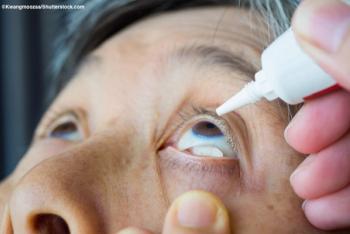
A topical treatment that breaks apart disulfide bonds between crystalline lens proteins was shown to increase accommodative amplitude and improve near visual acuity in a randomized, placebo-controlled clinical trial.
Early results from a repeatability and reproducibility study of a precision ultrasound device indicate the anterior segment imaging device can provide unique measurements on the cornea and will have multiple applications in the future.
Emerging trends and hot topics in eye and vision research filled the sessions at this year’s meeting of the Association for Research in Vision and Ophthalmology.
An advanced, self-validating method is providing a new approach to IOL power selection, explains Warren E. Hill, MD, FACS.
Bausch + Lomb (B + L) outlines the company's commitment to eye care with a strong portfolio, new programs, patient access, and better pricing.
The pace of new glaucoma drug development continues, fueled by continuing research into novel mechanisms of action. Three companies, Aerie Pharmaceuticals, Bausch + Lomb, and Inotek Pharmaceuticals, shared their latest results.
Allergan is moving forward with plans to introduce innovative drug delivery device and surgical device for glaucoma
The laws governing ophthalmic drug and device approvals have changed little in recent years. But the FDA is making significant and far-reaching changes in its approvals process.
Seven glaucoma drug delivery companies reviewed the latest data on platforms
Device manufacturers presenting new implants and technologies to treat glaucoma. As the industry moves from 1.0 devices to 2.0 devices, this will be a transformative time in the way physicians treat patients.
Since glaucoma progresses faster in some patients than others, optical coherence tomography (OCT) and visual field progression analysis can be more useful than IOP in guiding treatment decisions.
A tsunami of glaucoma is sweeping toward the U.S. healthcare system, according to Cynthia Mattox, MD. For many ophthalmologists, coping with the increased demand will mean teaming up with other eye-care professionals.
Clinicians have a variety of tools and options at their disposal to treat narrow angle glaucoma. Sunita Radhakrishnan, MD, provided an overview of these possibilities.
Glaucoma progression occurs slowly in the vast majority of patients, and most patients with glaucoma will not go blind from the disease. However, it is important to get early diagnosis, treatment when indicated, and develop a disease surveillance protocol.
When glaucoma is progressing despite good intraocular pressure control, clinicians should consider a variety of issues before advancing patients along the therapeutic ladder.
Yvonne Ou, MD, reviewed the scientific evidence regarding the effects of various lifestyle practices on glaucoma and IOP.
Microinvasive glaucoma surgery devices already have transformed the management of glaucoma and will have a bigger impact in the future considering the options in the investigational pipeline and the opportunities they present.
Glaucoma is a common complication of uveitis, occurring in about 20% of affected eyes and arising through several different mechanisms.Here are seven common mistakes clinicians make in evaluating and managing elevated IOP in eyes with uveitis.
Ophthalmologists need to prepare their practices for the Value-Based Payment (VBP) program for Medicare services. VBP is a strategy to promote quality and value of health care services, with providers being paid based on value-of-care-delivered rather than volume. Regardless of the perspectives, the fact remains that reimbursement can increase or decrease substantially with the VBP program.
New agents and devices offer promise to control IOP and slow, perhaps even stop, the advancing vision loss that is common in glaucoma. Research and development to restore vision is starting to show significant results in preclinical models and early stage clinical trials.
Trimethoprim-sulfamethoxazole can be used both acutely and prophylactically in patients with Toxoplasma gondii retinochoroiditis.
Recently, I attended two public addresses. Neither of the speakers, I believe, are stupid. But neither (obviously) had a science background.