
News
Advertisement
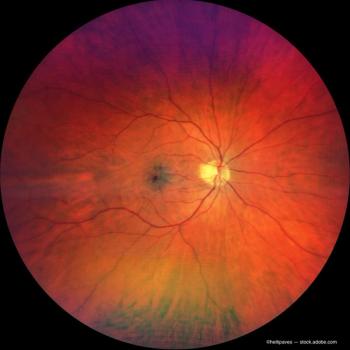
Mobile cameras allow University of Colorado ophthalmology residents working in hospital settings to conduct more comprehensive and efficient patient evaluations.
Advertisement
David Sola-Del Valle, MD, sat down with David Hutton of Ophthalmology Times to discuss his talk at the annual American Glaucoma Society meeting held in Huntington Beach, about the importance of bridging the language barrier in patients who may not be fluent in English.

April Maa, MD, sat down with David Hutton of Ophthalmology Times to discuss her presentation at the annual American Glaucoma Society meeting held in Huntington Beach, about tips and tricks for implementing telehealth into ophthalmology.
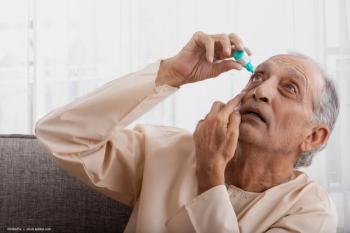
Repetitive exercises before drop instillation, may decrease difficulty and improve the successful instillation of eye drops.

Mentorship, leadership and addressing bias are key areas for improvement
Advertisement

In the trial, PL9643 failed to meet co-primary and secondary endpoints.

In ophthalmology, women continue to take on leadership roles and make a difference in the profession.

Advertisement

Michael Greenwood, MD, discusses the safety of laser refractive surgery for patients at high risk for glaucoma, focusing on the need for thorough pre-surgery assessment, careful monitoring of eye pressure during and after the procedure, and awareness of prolonged steroid use following PRK.
Steven R. Sarkisian, MD, sat down with David Hutton of Ophthalmology Times to discuss his poster about the Travoprost intraocular implant in phakic eyes from the American Glaucoma Society meeting held in Huntington Beach
I. Paul Singh, MD, sat down with David Hutton of Ophthalmology Times to discuss his poster "Travoprost Intraocular Implant Demonstrates Efficacy in Diverse Subpopulations of OAG and OHT Subjects," from the American Glaucoma Society meeting held in Huntington Beach

The supplement is specifically crafted to promote healthy intraocular pressure (IOP), nurturing the well-being of retinal ganglion cells, and sustain the health of the retinal nerve fiber layer while boosting memory and concentration.

Lowe syndrome, a genetic disease, affects about 1 in 500,000 people in the general population.
Leon Herndon, MD, President of the American Glaucoma Society, sat down with David Hutton of Ophthalmology Times to discuss the AGS meeting held in Huntington Beach and what attendees can expect as well as new and exciting information to come from the meeting.

In an annual report, the company revealed the impact of a dramatic increase in commercially available biosimilars and progress in the areas of patient accessibility and treatment affordability.
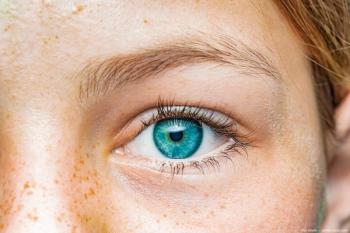
According to the company, Stargardt disease is an orphan blindness disease that affects approximately 35,000 people in the United States.

Stargardt disease is an orphan blindness disease that affects approximately 35,000 people in the United States.

The algorithms could provide major accessibility improvements and cost savings to underdeveloped regions
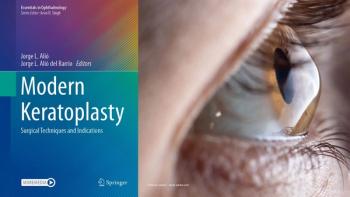
Penetrating keratoplasty remains a popular choice for certain patients

According to the company, its proprietary non-viral gene therapy platform with minimally invasive delivery technology is providing long lasting gene expression and favorable distribution in the retina.
Bonnie An Henderson, MD, leads HelpMeSee to provide advanced cataract surgery training globally, emphasizing humanitarian aid and innovative simulation technology.
Several eye care products sold at Walmart and CVS locations have been recalled due to FDA findings during a facility inspection conducted earlier this month.
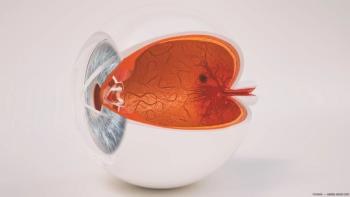
RVO can significantly reduce vision-related quality of life, particularly in more severe cases.

According to the company, 2,500 clinical and peer-reviewed studies that span 235 disease states have demonstrated the clinical utility of Optos technology.

The patch is the world's first non-degradable, synthetic tissue substitute for ophthalmic surgery.

The authors suggested genetic mutation may relax the body’s defences and allow harmful bacteria to reach the eye.
ECP105 has been developed for the recovery of post-surgical treatment of glaucoma.

The authors suggested genetic mutation may relax the body’s defences and allow harmful bacteria to reach the eye
Advertisement
Advertisement
Trending on Eye Care Network - Ophthalmology Times
1
2026 Nobel Prize in Physiology or Medicine awarded for optogenetics discovery
2
Oku Digital Health launches from Topcon to link eye care, primary care
3
EURETINA 2026: Optogenetic therapy MCO-010 aims to restore vision in advanced macular disease
4
Real-world VOYAGER data on faricimab in nAMD, DME, RVO at EURETINA 2026
5