

Stargardt disease is the most common inherited retinal dystrophy (causing blurring or loss of central vision) in both adults and children.
Stargardt disease is the most common inherited retinal dystrophy (causing blurring or loss of central vision) in both adults and children.

The new cohort will add patients living with IRDs caused by mutations in multiple genes to the already existing cohort of patients with IRDs caused by single gene mutations.

The positive opinion concerns authorization of bevacizumab gamma (ONS-5010/LYTENAVA), a formulation of bevacizumab for treatment of wet age-related macular degeneration (wet AMD).

Conference defines the future of anterior segment surgery.

Alice Epitropoulos, MD, discusses the importance of considering ocular surface health in cataract surgery patients.

A Purdue University researcher is leading a team that is creating patent-pending smart contacts for glaucoma, neovascularization and dry eyes.

In a recent study led by Steven Pittler, PhD, and his team at the University of Alabama Birmingham (UAB), the role of modifier genes in retinitis pigmentosa type 59 (RP59) was meticulously examined.

Results from the trial by Nannodropper show microdrops could reduce waste, cost, and side effects while being as effective as traditional size drops.

The prevalence of AMD features in Republic of Korea Air Force pilots was higher than in other general populations studied.

Multiple symptomatic improvements, as well as tear film break-up time improvements and a reduction in ocular pain, were noted.

The Phase 2 trial tested whether inhibiting microglia with minocycline might help slow GA expansion and its corresponding vision loss.

Indiana University and local public safety officials combine safety and educational efforts.

Laser blended vision is a proven modality for presbyopia treatment, but its principles can be reproduced with EDOF IOLs
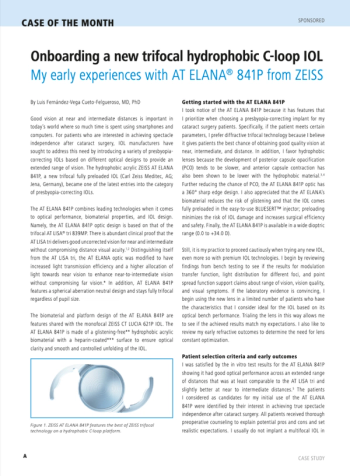
AT ELANA 841P from ZEISS is a fully preloaded lens built with leading technologies when it comes to optical performance, biomaterial properties, and IOL design. In this Case of the Month, Dr Luis Fernandez-Vega Cueto-Felgueroso explains why these features motivated him to trial the ZEISS AT ELANA 841P. He also shares his encouraging early outcomes using the AT ELANA 841P that have motivated him to expand its use.

Lonigutamab is a subcutaneously (SC) delivered humanized IgG1 monoclonal antibody targeting the insulin-like growth factor-1 receptor (IGF-1R).


Office-based surgery could prove to be a viable option for physicians.
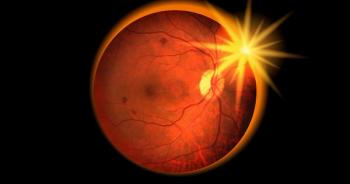
Solar retinopathy is caused by prolonged or high intensity exposure of the fovea centralis to light energy. Suspected cases of solar retinopathy may require urgent referral to an ophthalmologist for diagnosis, and to eliminate treatable causes for central visual disturbance.

Proteins common to Alzheimer disease play a significant role in glaucoma
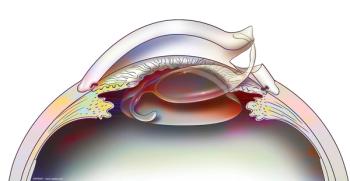
Quantitative and qualitative improvement in IOL design


In court documents in Connecticut Superior Court in Bridgeport, Isidore Sobkowski claims surgeons at the Wilton Surgery Center failed to properly clean their instruments resulting in him contracting a sight-threatening eye infection.

According to the company, NCX 470 is a novel NO-donating bimatoprost eye drop, is currently in Phase 3 clinical development for the lowering of IOP in patients with open-angle glaucoma or ocular hypertension.

Wang and colleagues conducted a retrospective case series patients with full-thickness macular holes.

Electrophysiologic testing combined with structural imaging to zero in on issues.

Research estimates that the RVO market with see a compound annual growth rate of 11.9%.

With 37 years of clinical trial experience, Peter J. McDonnell, MD, offer some tips.

NR1D1 and NR2E3 orphan nuclear receptors were found to have low levels of expression in patients with advanced retinoblastoma.

The company noted that individuals can purchase the ARx AI headset and register for access to the Seeing AI app through the provided links or download the latest version of the NaviLens app.

The company’s EVO family of Implantable Collamer Lenses for myopia, astigmatism and presbyopia, are designed to correct vision through a minimally invasive procedure.