

At ESCRS 2026 in London, Radhika Rampat, MBBS, FRCOphth, describes bringing low-level light therapy into her refractive practice, from dry eye care to chalazion treatment and pre-surgical ocular surface optimisation.

At ESCRS 2026 in London, Radhika Rampat, MBBS, FRCOphth, describes bringing low-level light therapy into her refractive practice, from dry eye care to chalazion treatment and pre-surgical ocular surface optimisation.

Suzana Konjevoda, MD, presents data at ESCRS 2026 showing citicoline eye drops aid corneal nerve recovery post-cataract surgery.

ESCRS 2026 study shows multifocal IOLs tie at distance, but reading speed plunges in dim light; focus curves predict laser touch-ups.

Mingo Botín, MD, PhD, discusses ESCRS 2026 data on an EDOF IOL in post-LASIK eyes vs non-LASIK controls.
Real-world data show tear film and Schirmer improvements with two preservative-free dry eye drops at ESCRS 2026.

The 44th Congress of the ESCRS kicked off at ExCeL London with iNovation Day and the Opening Ceremony, setting the stage for a five-day programme.
Suzana Konjevoda, MD, previews ESCRS 2026, highlighting new IOLs, presbyopia correction, AI in everyday practice, and advances in post-cataract surgery recovery and comfort.

Opus Genetics announced positive 3- and 6-month results OPGx-BEST1 in BEST1-related retinal diseases.
A JAMA Ophthalmology Clinical Trial of the Year enrolled 1421 eyes across 28 sites, with NEI-funded follow-up extending the findings to 5 years.
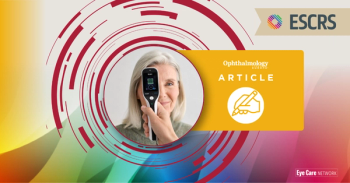
Handheld IC1000 pairs rebound tonometry with camera-guided alignment
Piotr A. Woźniak, MD, PhD, previews the ESCRS' growing focus on AI-assisted digital surgery and an expanding dry eye programme.

Ahead of the 44th ESCRS Congress in London, a look at the presbyopia-correcting IOL, glaucoma and dry eye disease research on this year's scientific programme.

Andrew G. Lee, MD, and Drew Carey, MD, break down a debate over PDE-5 inhibitor use after non-arteritic anterior ischemic optic neuropathy.
Startup S5G Therapeutics aims to move ubiquinol technology from the laboratory toward treatments for dry eye, Fuchs dystrophy, and other corneal conditions.

A VR lens simulator used at InVision Eye Care lifted premium IOL conversion rates from 30%-35% to the mid-40s

Study authors discuss fishing-related eye injury patterns, pediatric risk, and prevention strategies drawn from other sports.

Giant cell arteritis, long known by its more familiar name, temporal arteritis, is the most common vasculitis in adults over 50 and a true ophthalmic emergency. If untreated, it can result in permanent bilateral vision loss within days. Women are more often afffected than men, the the disease manifests differently between the sexes.
Ashraf Ahmad, MD, explains what tear breakup time testing shows and why results vary between clinic visits.

Ocugen's global phase 3 ArMaDa3 trial evaluates OCU410, a one-time gene therapy targeting multiple disease pathways in geographic atrophy secondary to dry age-related macular degeneration.
Cataract safety, Glaucoma drugs and MIGS, plus Artificial Intelligence debates and retina breakthroughs—key FDA moves and trial updates in ophthalmology.

A same-platform, prospective comparison of 123 eyes suggests diffractive trifocal optics don't compromise standard automated perimetry outside the central 5°

Survey reveals most women don't recognize dry eye as a symptom of perimenopause or menopause.
Yehia Hashad, MD, discusses BL1332's phase 1b pain data and what's ahead as the TRPV1 antagonist enters phase 2 in patients with PRK.

Cerebral visual impairment is now the leading cause of childhood vision loss. Three experts explain the history, science, and clinical signs eye care providers need to know.

Esen Akpek, MD, weighs in on lifitegrast-perfluorohexyloctane phase 2 data and what it means for the drop's path to phase 3.
Antibiotic injection reduced endophthalmitis risk vs topical drops after cataract surgery, meta-analysis found.

This article discusses the evolution of the body of information about Demodex blepharitis over the years, from the convening of a consensus panel to the realization that a new drug provides rapid relief to the ocular surface.

Two optical treatment modalities can slow pediatric myopia progression without the need for pharmacologic intervention, ie, spectacle lenses incorporating highly aspherical lenslets (HAL) and orthokeratology (ortho-k) contact lenses. Both treatments are based on the same underlying theory that peripheral retinal defocus is a growth signal for axial elongation‚ but the treatments focus on different structures of the visual system, one through a manufactured spectacle lens surface (HAL) and the other through temporary corneal reshaping (ortho-k).

The agency assigned a PDUFA target action date of April 30, 2027.

Douglas D. Koch, MD, and Julie Schallhorn, MD, MS, discuss the optical designs behind EDOF lenses, where they fit in clinical practice, and advances shaping the category.