

News|Articles|September 10, 2026
iCare launches IC1000 handheld tonometer with camera-guided alignment
Author(s)Martin David Harp
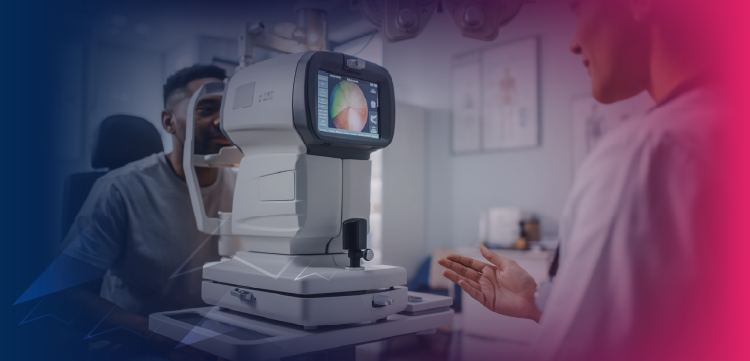
Handheld IC1000 pairs rebound tonometry with camera-guided alignment
Advertisement
iCare has launched the IC1000, a handheld rebound tonometer the company describes as the next step in its guided approach to intraocular pressure (IOP) measurement. The device combines the company's established rebound tonometry platform with GuideCam, a camera-based alignment aid, along with anaesthesia-free operation, single-use probes, and a SmartCradle dock designed to keep the unit charged and move IOP data into clinical workflows.
“iCare IC1000 brings the iCare experience to the next generation of handheld tonometry,” Daniele Mantovano, iCare's product marketing director, said in a statement announcing the launch. “By combining trusted rebound technology with guided alignment, patient comfort and digital workflow capabilities, we are giving eye care practitioners a simpler and more efficient way to acquire reliable IOP measurements in everyday clinical practice.”
A guided answer to an operator-dependent measurement
IOP measurement is one of the few vital signs in ophthalmology that still varies meaningfully by who performs it. GAT, the long-standing reference standard, requires substantial operator training, and even experienced staff show measurable inter-observer variability.
iCare's rationale for GuideCam is that visual, on-screen alignment feedback can flatten that learning curve, making accurate readings less dependent on who is holding the device—a claim consistent with prior published data on iCare's patient-operated rebound tonometer, which found inter-user agreement (intraclass correlation coefficient, 0.93) that was as good as or better than GAT performed by different trained clinicians at the same centre (0.74).1
For related coverage of how handheld and slit-lamp tonometers compare in practice, see Ophthalmology Times’
What the rebound literature shows
Rebound tonometry works by launching a light, disposable probe against the cornea and measuring its deceleration on rebound, a principle first described more than two decades ago as an alternative to applanation.2 The approach has made anaesthesia-free, calibration-free IOP measurement practical in settings from paediatric exams to community screenings, and single-use probes have been shown to carry a lower theoretical cross-infection risk than reusable applanation tips.3 That combination is part of why iCare's platform has been widely adopted for
Agreement between rebound tonometry and GAT, however, is not uniform across the published literature. A 2021 comparison of 1,000 eyes measured with iCare's earlier ic100 rebound tonometer and GAT found only moderate concordance (intraclass correlation coefficient, 0.73), with the rebound device underestimating IOP by a mean of 4.2 mm Hg—a gap the authors described as clinically significant for treatment decisions in glaucoma.4 Other studies in the iCare literature have reported closer agreement, particularly at lower and mid-range pressures, with divergence more common at higher IOPs. That spread is a reasonable argument for clinicians to confirm, rather than assume, how a given rebound device tracks against their centre’s GAT before leaning on it for glaucoma staging or treatment thresholds—a caution that will extend to the IC1000 until device-specific validation data are available.
The stakes of getting IOP measurements right at scale are not small. Glaucoma affected an estimated 76.0 million people worldwide as of 2020, a figure projected to reach 111.8 million by 2040 as populations age, with open-angle disease accounting for the majority of cases.5 Tools that make accurate, repeatable IOP measurement easier to obtain across general ophthalmology, optometry and primary eye care settings speak directly to a diagnostic bottleneck in a disease that is often asymptomatic until damage has occurred.
Workflow and connectivity
Beyond measurement itself, iCare is positioning IC1000 as a workflow device. SmartCradle is designed to keep the tonometer charged between patients and to support digital transfer of IOP readings, which the company says can reduce manual data entry and connect results to clinical workflows where integration is available. A “Quick Measure” mode is intended to speed acquisition in patients who are harder to measure—paediatric, anxious or cognitively impaired patients among them—while single-use probes are intended to simplify infection-control protocols relative to devices that require probe disinfection between patients.
References
Quérat L, Chen E. iCare® Home vs Goldmann applanation tonometry: agreement of methods and comparison of inter-observer variation at a tertiary eye centre. Eur J Ophthalmol. 2023;33(1):312-318.
Kontiola AI. A new induction-based impact method for measuring intraocular pressure. Acta Ophthalmol Scand. 2000;78(2):142-145.
Briesen S, Schulze Schwering M, Roberts H, Kollmann M, Stachs O, Behrend D, Schäfer S, Guthoff R. Minimal cross-infection risk through Icare rebound tonometer probes: a useful tool for IOP-screenings in developing countries. Eye (Lond). 2010;24(7):1279-1283.
Subramaniam AG, Allen P, Toh TY. Comparison of the Icare ic100 rebound tonometer and the Goldmann applanation tonometer in 1,000 eyes. Ophthalmic Res. 2021;64(2):321-326.
Tham YC, Li X, Wong TY, Quigley HA, Aung T, Cheng CY. Global prevalence of glaucoma and projections of glaucoma burden through 2040: a systematic review and meta-analysis. Ophthalmology. 2014;121(11):2081-2090.
Advertisement
Related Content
Advertisement




Latest CME











Advertisement
Advertisement
Trending on Eye Care Network - Ophthalmology Times
1
Boosting premium IOL confidence through a mix-and-match approach
2
EURETINA 2026: Gene therapy sessions to watch in Vienna
3
Pediatric progressive myopia is an epidemic causing permanent vision loss
4
Aldeyra to appeal FDA rejection of reproxalap as a treatment for dry eye disease
5