
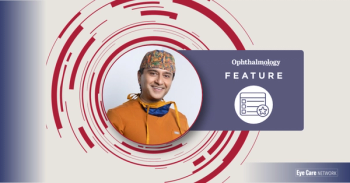
Arun C. Gulani, MD, applies his keratoconus classification to cross-linking, rings, transplant, lens surgery, and staged care.

Arun C. Gulani, MD, applies his keratoconus classification to cross-linking, rings, transplant, lens surgery, and staged care.
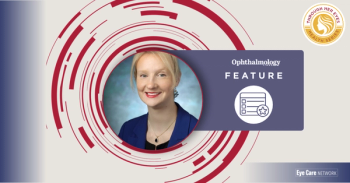
Rheumatoid arthritis, is an autoimmune disorder, develops more often in women than men in a 3:1 ratio.
IRIS Registry data showed no change in anti-VEGF frequency, vision, or retinal thickness after patients with DME began a GLP-1RA.

Sarah Cheng, MD, PhD, discusses findings on orbital tissue changes in thyroid eye disease after teprotumumab treatment.
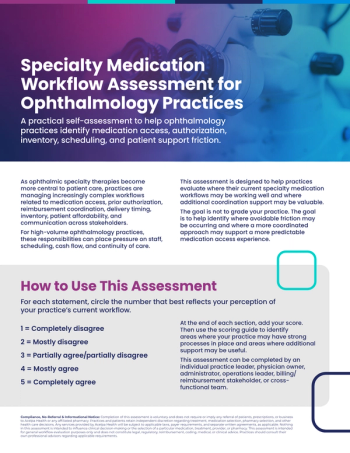
Sponsored Content
Managing specialty medications can be complex. From prior authorization and reimbursement to inventory, patient affordability support and appointment scheduling, inefficiencies can create unnecessary administrative work and delays in treatment coordination.
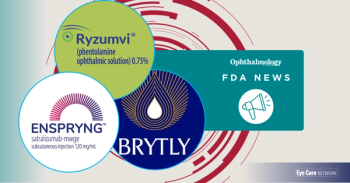
In a single day, the FDA cleared the first nonprescription apraclonidine drop, the first at-home subcutaneous therapy for thyroid eye disease, and a presbyopia indication for an established pupil-modulating drop.

Murtaza K. Adam, MD, shares pearls on haptic docking, patient selection, and preventing complications with the Yamane technique.
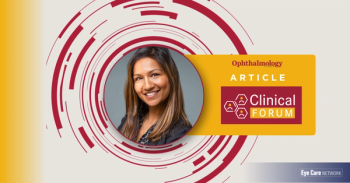
Himani Goyal, MD, reviews a patient case and discusses what a multispecialty group is seeing in practice.
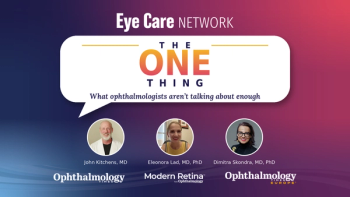
Eleonora Lad, MD, PhD, Dimitra Skondra, MD, PhD, and John Kitchens, MD, point to structure and function, diet and the gut, and the future of reimbursement.
Spectacle lenses with highly aspherical lenslets are safe and effective for reducing myopia progression in US children.
Andrew G. Lee, MD, and Drew Carey, MD, break down the link between optic neuritis and uveitis in central nervous system demyelinating disease.

Enrollment in the licaminlimab trial closed above target, with two-thirds of 176 patients carrying a TNFR1 variant associated with stronger treatment response. Topline data are expected around year-end 2026.
Prevent Blindness marks IED Week, October 19 to 25, as new therapies and pivotal trials reshape care for uveitis and thyroid eye disease.
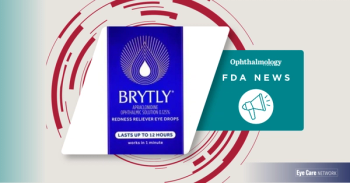
The nonprescription 0.125% apraclonidine drop is approved for adults and children 12 years and older, and Alcon says each dose whitens the eye for up to 12 hours.
Anat Galor, MD, MSPH, discusses subtyping dry eye, emerging diagnostic tools, and when to consider oral neuromodulation.

Interim 48-month data show 86% of patients with glaucoma or ocular hypertension remain off topical drops after a single cataract procedure, although the drop-free rate has eased from earlier timepoints.
At AAO 2026, Anjum F. Koreishi, MD, shared how to prevent complications after cataract surgery in patients with uveitis.
David F. Chang, MD, shares how to set realistic refractive IOL expectations and streamline patient counseling.
Timothy Janetos, MD, explained when to refer uveitis to a specialist and why access to uveitis care remains limited.
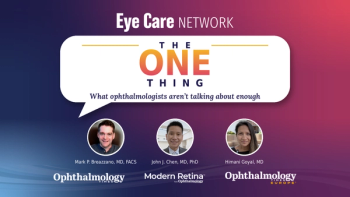
Himani Goyal, MD, John J. Chen, MD, PhD, and Mark P. Breazzano, MD, FACS, point to academic compensation, optic nerve damage, and who chooses retina.
Ryzumvi gained a presbyopia indication in adults based on the phase 3 VEGA-2 and VEGA-3 trials, adding a pharmacologic option for optometrists managing near vision loss.

Enspryng is the first subcutaneous, at-home treatment option for TED and the first interleukin (IL)-6 receptor inhibitor approved in the indication.
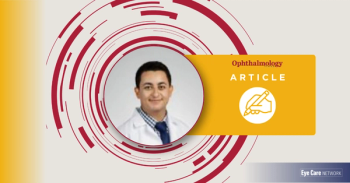
Noab Banoub, a third year medical student, describes his journey into medicine and his view of ophthalmology's future.
OT Roundup covers the optogenetics Nobel Prize, remigromig in DME with Veeral Sheth, MD, Stargardt disease and a total human eye transplant.
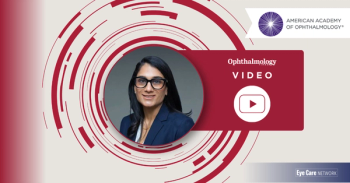
Vaidehi Dedania, MD, discussed surgical advances, candidates, and how far whole eye transplant is from clinical use.
At AAO 2026, Adam, MD, shares Yamane technique pearls, from docking the trailing haptic to preventing tilt and haptic exposure.
Anat Galor, MD, MSPH, explains how to tell whether dry eye pain stems from the nerves or the tear film and how to target it.
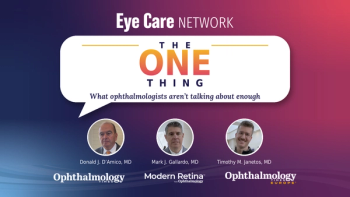
Timothy M. Janetos, MD, Donald J. D’Amico, MD, and Mark J. Gallardo, MD, point to uveitis access, clinical trial rigor, and procedural pharmaceuticals.
At AAO 2026, Michael T. Yen, MD, explained how at-home subcutaneous elegrobart could ease treatment burden in thyroid eye disease.
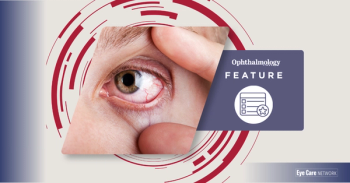
Uveitis is uncommon, but it causes a disproportionate share of visual morbidity.