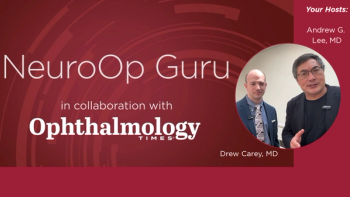
Andrew G. Lee, MD, and Drew Carey, MD, break down the link between optic neuritis and uveitis in central nervous system demyelinating disease.


Eleonora Lad, MD, PhD, Dimitra Skondra, MD, PhD, and John Kitchens, MD, point to structure and function, diet and the gut, and the future of reimbursement.
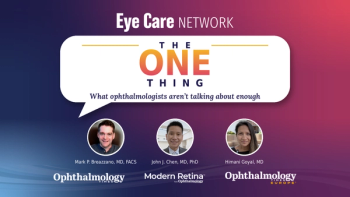
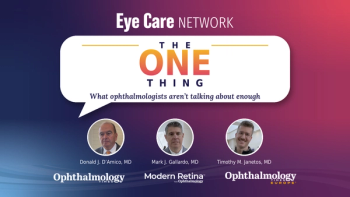
Sometimes the overlooked issue is how a disease is studied, sometimes it is the patient beyond the eye, and sometimes it is the economics of care. The Eye Care Network put one question to ophthalmologists: “What aren’t ophthalmologists talking about enough?” Three answers anchor the third episode of The One Thing: one on natural history studies, one on diet and the gut microbiome, and one on the future of reimbursement.
Eleonora Lad, MD, PhD, of
Lad said that work lays the groundwork for therapeutic development, describing it as “how we can work on those things foundationally before we develop new therapeutic areas.” It is difficult, she said, “but companies are increasingly recognizing this.”
Dimitra Skondra, MD, PhD, of
“We are very focused on drugs, and this is great,” Skondra said, “but we need to … put in mind that the eye is not alone, but the eye is part of the body.” Systemic factors such as antibiotic exposure can affect disease progression and response to treatment, she said. “Unless we put this all together, we’ll not be able to really move the field or apply the best way all these amazing discoveries we’re having.”
John Kitchens, MD, of Retina Associates of Kentucky and Rocky Mountain Retina Associates, turned to how care is paid for. “The thing that we need to be talking more about is … the future of reimbursements,” he said. With debt mounting in the US, he said, healthcare costs “just continue to go up and up and up.”
Retina has “such amazing treatments,” Kitchens said, but they are “very expensive treatments” and “chronic therapies for these patients.” He asked how the profession will reconcile having the most expensive healthcare in the world with “having the greatest debt in the world,” and he pointed to last year, when, as he put it, “Good Days ran out of money.” An honest discussion about where things are headed is “something that we just aren’t talking about enough,” he said, adding that “there’s no good direction, and things constantly are changing and things get put off.” Some kind of reconciliation is needed, Kitchens said, “because it’s just not sustainable.”
Taken together, these three responses look at what surrounds treatment rather than the treatments themselves: how disease is studied before a therapy exists, which systemic factors shape its course, and how care gets paid for. The One Thing is an editorially independent recurring series from the Eye Care Network that asks ophthalmologists to name the issue they believe deserves more attention. The views and perspectives are those of the ophthalmologists.