

Upsher-Smith Laboratories LLC and Rafarm SA have announced the U.S. commercial launch of moxifloxacin ophthalmic solution, USP 0.5% following a recent abbreviated new drug application (ANDA) approval by the FDA.

Upsher-Smith Laboratories LLC and Rafarm SA have announced the U.S. commercial launch of moxifloxacin ophthalmic solution, USP 0.5% following a recent abbreviated new drug application (ANDA) approval by the FDA.

The company is hoping to commercialize the first FDA-approved ophthalmic formulation of bevacizumab-vikg for retinal disease. It expects to receive BLA approval from the FDA by mid-2022.
A new report by George Washington University offers a snapshot of health care workers during the COVID-19 pandemic and offers recommendations to prepare for the future.

Practices can turn a moment of crisis into a win-win for all.

Intermediate/near vision improvements are achieved without compromising distance vision.
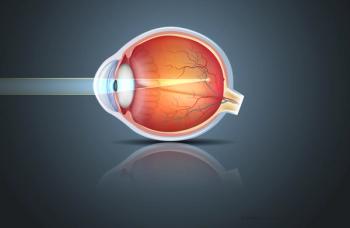
Vyluma Inc. will focus on the development and commercialization of therapies to treat ophthalmic diseases, including pediatric myopia.
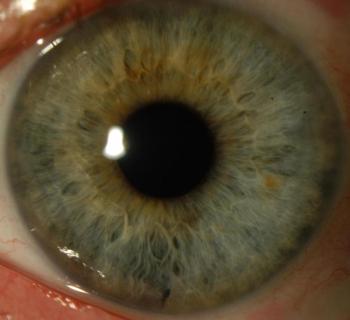
Backed by a five-year, $6.4 million grant from the National Eye Institute of the National Institutes of Health, investigators from Case Western Reserve University, University Hospitals and the Jaeb Center for Health Research hope to determine which diabetic patients can successfully donate their corneas for keratoplasty (and which should not).
The company plans to start a second Phase 3 registration study, VISION-2, as it continues on path toward a New Drug Application submission to the FDA.
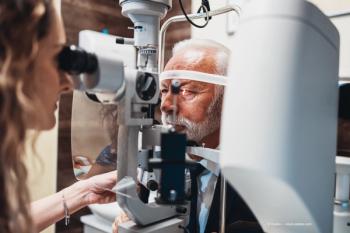
Investigators determine that patient rates of adherence with gonioscopy are low.
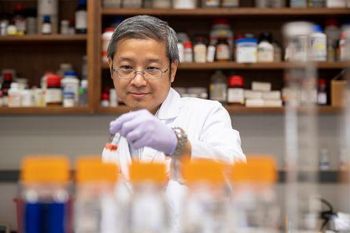
A team of researchers at the University of Cincinnati's Department of Chemistry and Department of Ophthalmology, in collaboration with researchers at Cincinnati Children's Hospital Medical Center and the Ohio State University, have received a four-year, $1.6 million grant from the National Institutes of Health/National Eye Institute to develop a drug delivery system that is more efficient and longer lasting than conventional eye injections.
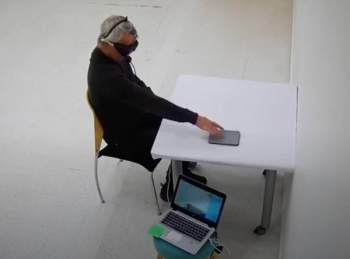
An international research team has shown that optogenetic therapy has helped to partially regain visual function in a patient with retinitis pigmentosa. This is a milestone towards a gene therapy that could restore vision.

Patients frequently require a multidisciplinary approach.
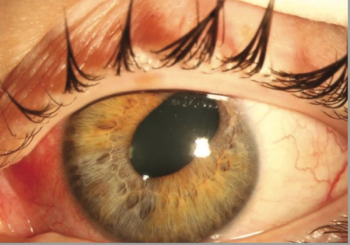
Case of anterior segment ischemia involves young adult with prior carotid artery injury.

Investigators find increased treatment regimen is effective and long-lasting for patients.

Increased time on digital devices and erratic schedules have disrupted patients’ management of their MGD and dry eye disease.
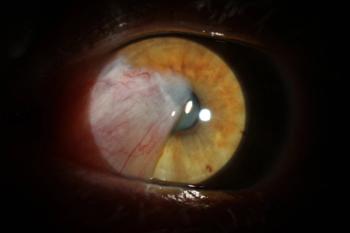
A recent study may indicate the need for future research to assess the relationship between pain and the anterior chamber depth.

Dexamethasone implant is key to treating non-infectious posterior segment uveitis.

Investigators at Mount Sinai report that ocular cells may be infected directly by the virus, with the limbus especially susceptible.

There are more people with vision loss and blindness than previously estimated, according to a new study supported by Prevent Blindness.
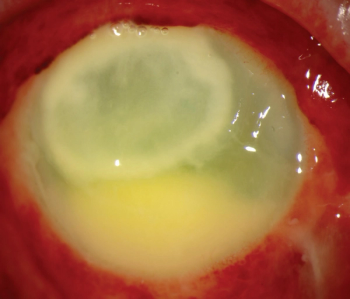
Delivering existing therapeutics through alternative routes may offer option.

The U.S. Patent and Trademark Office issued today two patents to Ocuphire Pharma covering the late-stage product candidate Nyxol (phentolamine mesylate).
Experts discuss durability of action and atrophy inhibitor among primary treatment goals.

After a US District judge rules against request for preliminary injunction, Johnson & Johnson Vision moves forward with litigation in several countries, including the United States, to resolve intellectual property disputes against Alcon.

While Biogen’s XIRIUS study did not meet its primary endpoint of demonstrating a statistically significant improvement in treated eyes, positive trends were observed across several clinically relevant prespecified secondary endpoints.

According to investigators, understanding the ocular manifestations in patients with COVID-19 could ultimately help with the diagnosis and prevent transmission.

Mark Pennesi, MD, PhD, reports during ARVO 2021 that preliminary results have shown that AGTC-401 and AGTC-402 seem safe and well tolerated in patients with ACHM.
Investigators examine the demographic, refractive, PRO data measure.
Observation over the long term is needed to determine treatment efficacy.
A study led by investigators at St. Michael's Hospital of Unity Health Toronto supports pneumatic retinopexy as a primary retinal reattachment technique to achieve better long-term integrity of photoreceptors.