
Timely diagnosis and successful intervention are key to successful treatment.

Timely diagnosis and successful intervention are key to successful treatment.
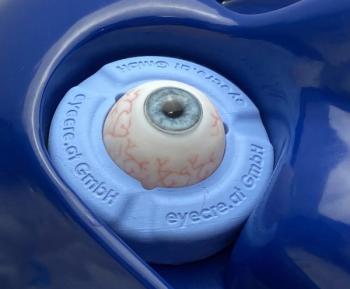
Addion GmbH has selected Stratasys technology to create realistic eye models for ophthalmic surgery.

Stanford University researchers released information indicating that in hospitalized patients with severe COVID-19, the virus can cause production of autoantibodies that can, in effect, cause the body to attack itself and result in inflammatory diseases.
Myopia is a global epidemic that is driven in part by educational pressures, especially in Asian populations.

A study sought to implement and test a trained deep learning algorithm using pre-operative corneal topography scans in order to classify between keratoconus and normal corneas, stage the disease, and predict whether a patient will be likely to benefit from CXL treatment.

American Society of Retinal Specialists program to drive awareness and action around retinal diseases that put millions at risk for blindness.
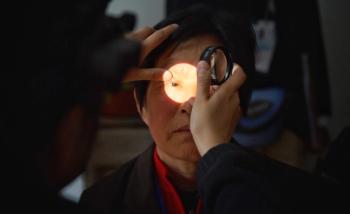
Orbis, with support from FedEx, is offering training that will develop ophthalmologists’ skills to treat diabetic retinopathy in China.

The company announced that inebilizumab-cdon produces rapid and sustained B-cell depletion in African Americans with neuromyelitis optica spectrum disorder.
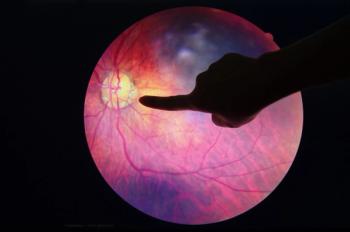
Future investigations will assess findings, evaluate their prognostic value.
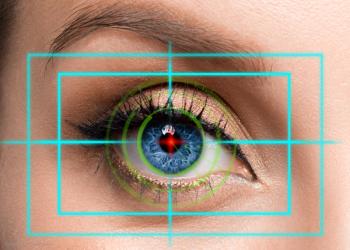
A recent report by Heru Inc. has found that visual field (VF) results from re:Vive, its wearable testing platform, have a strong association to the ZEISS Humphrey Field Analyzer (HFA).
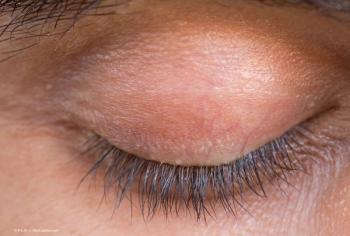
Topical oxymetazoline HCL ophthalmic solution 0.1% (RVL-1201, RVL Pharmaceuticals, Inc.) has the potential to treat patients with varying degrees of severity of acquired ptosis compared with vehicle.
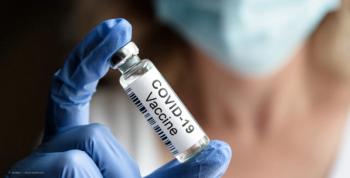
Massachusetts researchers are reporting structural disparities in vaccine distribution in the state.
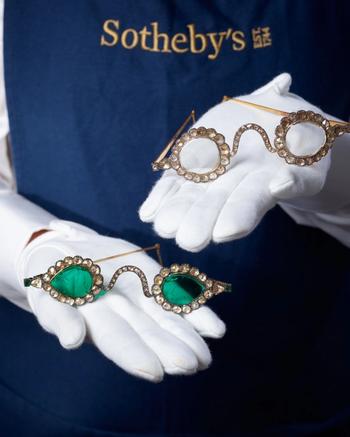
The eyeglasses were reportedly designed to help the wearer reach enlightenment and drive away evil, according to Sotheby’s London, which will host the auction next month.

Bath, who invented the Laserphaco Probe for treating cataracts, is the first African-American woman inducted into the National Inventors Hall of Fame.
Technology can track the progression of retinal abnormalities
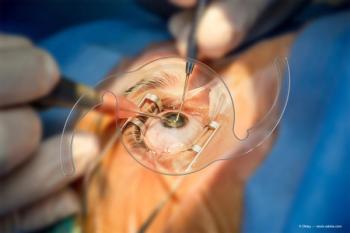
Lens an option for complicated eyes, astigmatism, monovision candidates.
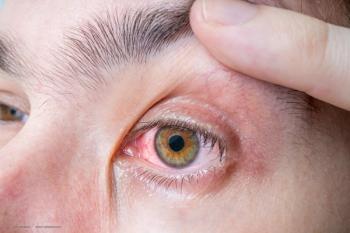
Glaukos has entered into a licensing agreement with Attillaps Holdings Inc., giving it an exclusive license to research, develop, manufacture and commercialize Attillaps’ proprietary library of investigational pharmaceutical compounds that target the eradication of Demodex mites.

The company will host Innovation Week from Sept. 21-23, demonstrating new data management innovations across devices, workflow solutions and software applications.

According to Samsung Bioepis and Biogen, ranibizumab-nuna becomes the first ophthalmology biosimilar to gain FDA approval in the United States.

A retrospective review was performed to describe changes in corneal thickness and to identify the incidence of posterior corneal changes characteristic of keratoconus, following DMEK surgery. Here’s what investigators found.
Mutations in this glaucoma-associated gene may be commonly reported in many other neurodegenerative diseases.
Researchers conducting a case-control surveillance of COVID-19 vaccination during pregnancy found that spontaneous abortions did not increase as a result of vaccinations.
See the latest cartoon!
Investigators are working on the development of an intranasal subunit vaccine that provides durable local immunity against inhaled pathogens.

Investigators examine usefulness in refractive surgery evaluations.

Dr. McDonnell shares his thoughts.
The organization’s policies come amid federal mandates designed to spur Americans who are not vaccinated against COVID-19 to get a shot.
TearLab, MellingMedical reach an agreement to enhance early detection of dry eye disease in veterans.
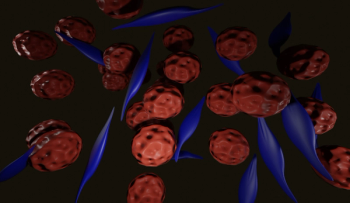
A team of investigators have found that a molecular mechanism drives the progression of uveal melanoma, an often lethal eye cancer in adults.
Researchers found that the effectiveness of the vaccine held for about 6 months in most adults, but began to be less effective at that time point.