
Corneal surgery for Fuchs’ rejuvenates the endothelium rather than replacing it, and DSO is joining the lineup as a new treatment option.
Corneal surgery for Fuchs’ rejuvenates the endothelium rather than replacing it, and DSO is joining the lineup as a new treatment option.

During Refractive Day at ASCRS 2019, Julie Schallhorn, MD, MS, shed some new light on the topic by challenging conventional wisdom about dry eye and LASIK.
A carefully packed surgical toolkit can optimize cataract surgery outcomes.
If you find yourself waffling back and forth on private equity, Ruth D. Williams, MD, has some guidance tips to make the decision easier.
Janey L. Wiggs, MD, PhD, shares the key points from her presentation.
Ellie Chabi, MD, Therapeutic Area Head for Glaucoma & Neuroprotection and Lead for Artificial Intelligence Programs within Global Biomedical Science for Santen, provides an update on its glaucoma pipeline.
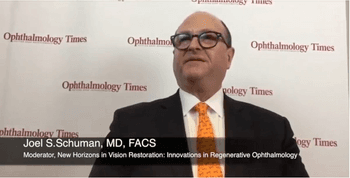
Joel S. Schuman, MD, FACS, shares what's in store for regenerative ophthalmology at the annual Glaucoma 360 2019 meeting.
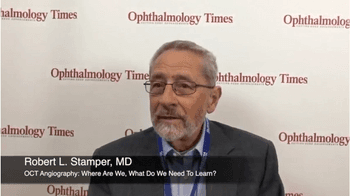
Robert L. Stamper, MD, discusses the current state of OCT angiography, and what remains on the horizon for glaucoma care.
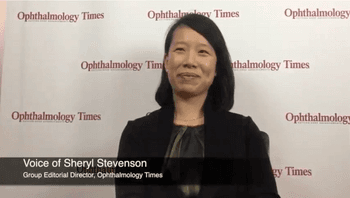
Yvonne Ou, MD, discusses Glaucoma 360's first-ever "Shark Tank" competition at the 2019 meeting.
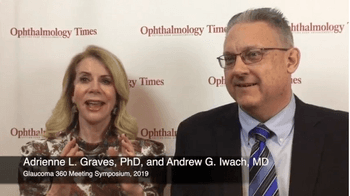
Drs. Graves and Iwach, co-founders of the Glaucoma 360 meeting, discuss the biggest advances in innovation and research at the 23rd annual meeting at the Palace Hotel in San Francisco on Feb. 2, 2019.
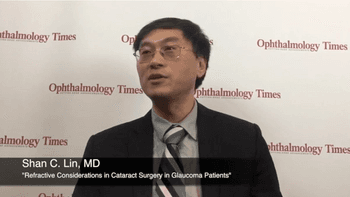
Shan C. Lin, MD, provides the key takeaways from his presentation at the annual Glaucoma 360 meeting.

The 2019 annual meetings of the American Society of Cataract and Refractive Surgery and the American Society of Ophthalmic Administrators will be held May 3 to 7 in San Diego.
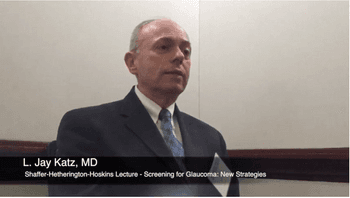
L. Jay Katz, MD, delivered the Shaffer‐Hetherington‐Hoskins Lecture, "Screening for Glaucoma: New Strategies" at the 23rd annual Glaucoma 360 meeting at the Palace Hotel in San Francisco on Feb. 2, 2019. Here, he shares his take-home message for clinicians.

For the first time ever, the Association for Research in Vision and Ophthalmology (ARVO) is taking its annual meeting outside the United States, heading north of the border to Vancouver, British Columbia.

Group offering ARVOLearn educational platform; AI focus of upcoming online session







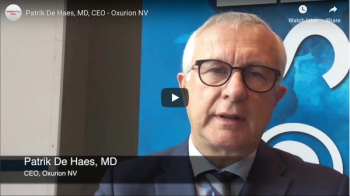
Patrik De Haes, MD, CEO of Oxurion NV, shares the latest updates in clinical studies at the OIS@AAO meeting in Chicago, Oct. 2018.

Chuck Hess provides a company update at the OIS@AAO meeting in Chicago, Oct. 2018.
Erin D. Stahl, MD, discusses why it's important to diagnose and treat children with keratoconus at the earliest signs of development for successful outcomes during the AAO 2018 meeting in Chicago.
Elad Kedar, CEO of Orasis Pharmaceuticals, provides a company update at OIS@AAO 2018 in Chicago.