

A non-viral gene therapy sustained drug-delivery product that delivers anti-VEGF to the eye may replace the need for repeated intravitreal anti-VEGF injections and improve vision in patients diagnosed with wet AMD.
A non-viral gene therapy sustained drug-delivery product that delivers anti-VEGF to the eye may replace the need for repeated intravitreal anti-VEGF injections and improve vision in patients diagnosed with wet AMD.

Logan Vander Woude, DO, MPH, examines research on improved resolution of symptomatic vitreomacular traction as an attempt to further refine the potential factors predictive of better outcomes.

Logan Vander Woude, DO, MPH, examines research on improved resolution of symptomatic vitreomacular traction as an attempt to further refine the potential factors predictive of better outcomes.

Glenn J. Jaffe, MD, discusses the key points of his virtual presentation on targeting neurodegenerative diseases with risuteganib, minimizing damage to the retina when compromised, and the need for newer treatment therapies to target different pathways.

Robyn Guymer, PhD, MBBS, highlights the latest trial results for faricimab, the first bispecific antibody designed for intraocular use in treating patients with neovascular age-related macular degeneration.
Dr Glenn J. Jaffe discusses the key points of his virtual presentation on targeting neurodegenerative diseases with risuteganib, minimizing damage to the retina when compromised, and the need for newer treatment therapies to target different pathways.

Robyn Guymer, PhD, MBBS, highlights the latest trial results for faricimab, the first bispecific antibody designed for intraocular use in treating patients with neovascular age-related macular degeneration.
Glenn J. Jaffe, MD, discusses the key points of his virtual presentation on targeting neurodegenerative diseases with risuteganib, minimizing damage to the retina when compromised, and the need for newer treatment therapies to target different pathways.

Robyn Guymer, PhD, MBBS, highlights the latest trial results for faricimab, the first bispecific antibody designed for intraocular use in treating patients with neovascular age-related macular degeneration.

Bryce Buchowicz, MD, outlines roadblocks to timely diagnosis of central retinal artery occlusion and treatment with tissue plasminogen activator.

Sunil Srivastava, MD, examines why and how optical coherence tomography characteristics may be predictive of the efficacy of the injections.
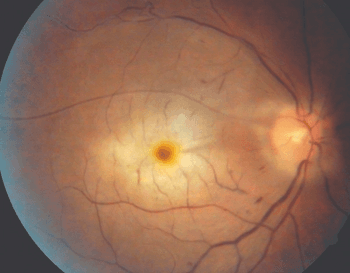
Bryce Buchowicz, MD, outlines roadblocks to timely diagnosis of central retinal artery occlusion and treatment with tissue plasminogen activator during a virtual presentation at ARVO.

Logan Vander Woude, DO, MPH, takes a deeper dive into symptomatic vitreomacular traction research in an attempt to further refine the potential factors predictive of better outcomes.

Investigators offer insight on how patients with BRVO or CRVO with any lapse in treatment of 3 months or longer are at risk for poorer outcomes.
Steffen E. Künzel, MD, discusses the key points of his research presentation regarding low vulnerability of the posterior eye segment to SARS-CoV-2 infection.

During ARVO 2021, Sunil Srivastava, MD, points out that optical coherence tomography characteristics may be predictive of the efficacy of the injections.

According to Sunil Srivastava, MD, optical coherence tomography characteristics may be predictive of the efficacy of the injections.

During ARVO’s 2021 virtual annual meeting, John Wells, MD, presented efficacy, durability, and safety findings from phase 3 YOSEMITE and RHINE trials.

At ARVO’s 2021 virtual annual meeting, John Wells, MD, presents efficacy, durability, and safety findings from the phase 3 YOSEMITE and RHINE trials.
Uwe Oberheide, MD, discusses the key findings of his virtual ARVO 2021 presentation on modeling of IOLs for patients with AMD by ray-tracing.

Bryce Buchowicz, MD, outlines roadblocks to timely diagnosis of central retinal artery occlusion and treatment with tissue plasminogen activator during a virtual presentation at ARVO.

During a presentation at ARVO, Jessica Liu explained that patients with BRVO or CRVO with any lapse in treatment of 3 months or longer are at risk for poorer outcomes.

According to Jessica Liu, patients with BRVO or CRVO with any lapse in treatment of 3 months or longer are at risk for poorer outcomes.
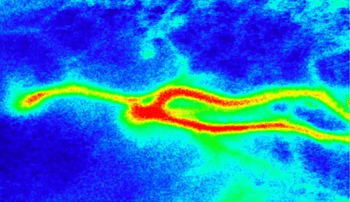
Investigators found that non-invasive ocular blood flow measurement using laser speckle flowgraphy may be a new indicator of shock-related organ damage.
Seth Miller, of Ora Inc., discusses the relationship between the symptoms of dry eye and aging, based on his ARVO 2021 presentation.

Investigators review changes in ocular anterior segment blood flow and temperature after treatment of patients with meibomian gland dysfunction.

Investigators review changes in ocular anterior segment blood flow and temperature after treatment of patients with meibomian gland dysfunction.

Uwe Oberheide, MD, discusses the key findings of his virtual ARVO 2021 presentation on modeling of IOLs for patients with AMD by ray-tracing.

John Wells, MD, presents efficacy, durability, and safety findings from phase 3 YOSEMITE and RHINE trials during the virtual ARVO meeting.
Seth Miller, clinical operations manager at Ora Inc., discusses the relationship between the symptoms of dry eye and aging, based on his ARVO 2021 presentation.