

Dilsher S. Dhoot, MD, FASRS, shares insights on avoralstat, a promising treatment for diabetic macular edema, at ASRS 2025.
Dilsher S. Dhoot, MD, FASRS, shares insights on avoralstat, a promising treatment for diabetic macular edema, at ASRS 2025.

Yasha S. Modi, MD, discusses promising results from the VERONA study on EYP-1901, a potential treatment for diabetic macular edema.
The DRD Cure Accelerator, highlighted at the CCOI-Stanford Summit, is a global initiative advancing clinical research and collaborations to eliminate vision loss from diabetic retinal disease.

Notably, Alcon will be providing a demo of the UNIPEXY Gas Delivery System.

In preparation for the American Society of Retina Specialist (ASRS) annual meeting being held in Long Beach, California, Modern Retina spoke with Gaurav Shah MD, FASRS, Program Chair of the 2025 event.

In preparation for the American Society of Retina Specialist (ASRS) annual meeting being held in Long Beach, California, Ophthalmology spoke with Gaurav Shah MD, FASRS, Program Chair of the 2025 event.


At the CCOI-Stanford Summit, Goldberg calls for collaborative trial models that could redefine efficiency and standardization in ophthalmology research.

Ocular Therapeutix to showcase its drug delivery solutions at upcoming ophthalmology conferences.
President Joel S. Schuman, MD, highlights the group’s mission and vision for the future—uniting 17 working groups and over 80 stakeholders.
Jim Mazzo is among the presenters who will highlight the need to break silos and accelerate eye health solutions at the Collaborative Community on Ophthalmic Innovation (CCOI) meeting at Stanford University on July 23, 2025.
Ophthalmologists discuss the most impactful advancements reshaping patient care over five decades.

A hope for reducing treatment burden for wet age-related macular degeneration with a sustained-release vorolanib intravitreal insert
In honor of Ophthalmology Times’ 50th anniversary, anterior segment surgeons attending ASCRS 2025 weigh in on the innovations that defined modern ophthalmology.

EYP-1901 shows promising results in reducing treatment burden for diabetic macular edema, offering sustained improvements in vision and safety.
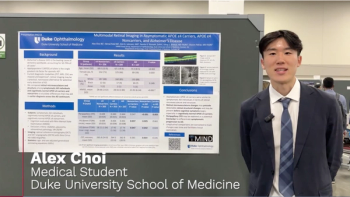
Retinal imaging and the future of early Alzheimer diagnosis.
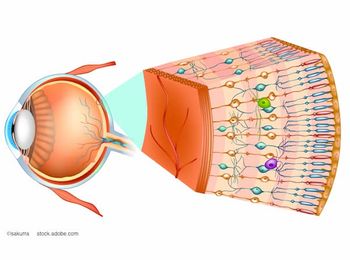
At the 2025 International SPECTRALIS Symposium—And Beyond (ISS), Chauhan discussed how two-photon microscopy enables precise, non-invasive monitoring of retinal ganglion cell function in living subjects.

In-orbit imaging drives innovation in terrestrial telemedicine, the NASA scientist explained

Perfuse Therapeutics is conducting trials for the treatment for glaucoma and diabetic retinopathy, aiming to restore vision and combat global blindness.
Phase 1/2 interim results highlight real-world functional enhancements in patients with severe LCA5-related Leber congenital amaurosis.
Christine A. Curcio, PhD, shares an update on histology and its critical role in advancing <3 μm optical coherence tomography interpretation

Preliminary analysis of FLIO data using artificial intelligence suggests potential novel biomarkers
Dr. Gonzalez shares 126-week topline results from the REMAIN study, assessing optogenetic therapy MCO-010 (Nanoscope Therapeutics).

Assistive devices empower patients with central vision loss to regain independence, enhancing daily activities and reducing reliance on low vision centers.
High-resolution optical coherence tomography illuminates crucial biomarkers in age-related macular degeneration, Dr Sadda said

FLIO ushers clinicians from structural to functional imaging, said Robert Sergott, MD, in a presentation at the International SPECTRALIS Symposium