
At AAO 2021, Aerie Pharmaceuticals presented the results of their phase 2b clinical trial of AR-15512, a TRPM8 antagonist, for the treatment of dry eye.

At AAO 2021, Aerie Pharmaceuticals presented the results of their phase 2b clinical trial of AR-15512, a TRPM8 antagonist, for the treatment of dry eye.
Verana Health showcases the VeraQ quality measures dashboard for the IRIS registry report at AAO 2021.
Dr Mohamed Abou Shousha discusses Heru’s wearable AI-powered diagnostic devices at AAO 2021.

A brief overview of the plethora of findings presented at the 2021 American Academy of Ophthalmology meeting held November 12-15 in New Orleans, LA.
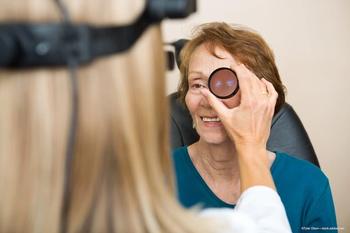
In a poster presented at the American Academy of Ophthalmology 2021 annual meeting in New Orleans, Dr Mark Wieland noted that the port delivery system with ranibizumab provides drug delivery over an extended period.

Dr Sunir J. Garg speaks on the influence of COVID-19 universal face masking on the risk of endophthalmitis following intravitreal anti-VEGF injections.

During a presentation at the American Academy of Ophthalmology 2021 annual meeting in New Orleans, Dr Veeral Sheth presented research that found faricimab, a bispecific monoclonal antibody, provided sustained retinal stability in patients with diabetic macular oedema (DMO) compared with other retinal treatments.

Speaking at the American Academy of Ophthalmology 2021 annual meeting in New Orleans, Dr Ines Lains explained that the mechanisms of AMD progression currently remain poorly understood and the tools to predict and halt progression are limited.
Dr Cathleen McCabe describes how VUITY, the first and only FDA-approved eye drop to treat age-related blurry near vision, provides opportunities for patients looking for spectacle independence.

Dr Ajay Kuriyan discusses his poster at AAO, "Fluctuations in central subfield thickness associated with worse visual outcomes in patients with diabetic macular oedema in clinical trial setting."
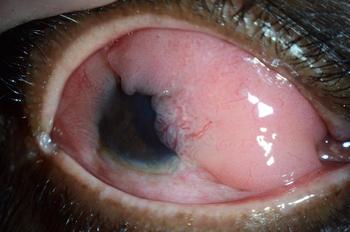
In a presentation at the American Academy of Ophthalmology’s 2021 annual meeting in New Orleans, Nathan Hall pointed out that an epidemiologic analysis of malignant ocular surface tumours found significant differences in geographic prevalence rates in the United States.

During a presentation at the American Academy of Ophthalmology 2021 annual meeting, Dr Denise Freitas reported that the ocular findings in infants with congenital Zika virus syndrome were similar among the affected infants and occurred frequently. The most prevalent of the findings was optic nerve pallor.
Dr Felipe Medeiros in a presentation at the American Academy of Ophthalmology 2021 annual meeting in New Orleans, noted that a phase 3 clinical extension study of the bimatoprost implant found that patients’ IOP was lowered and stayed low with no additional treatment or changes in their visual fields.

Dr Roger A. Goldberg, speaking at the American Academy of Ophthalmology 2021 annual meeting in New Orleans, noted that small misalignments in the plunger can lead to possible overdosing.
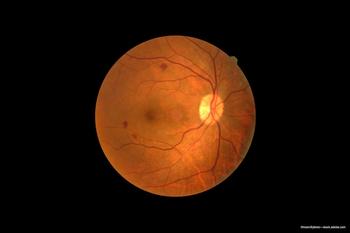
During the American Academy of Ophthalmology 2021 annual meeting in New Orleans, Dr Dilsher Dhoot reported the results of the KESTREL and KITE in which brolucizumab was compared with aflibercept for treating diabetic macular oedema.

Dr Shady Awwad in a presentation at the American Academy of Ophthalmology’s 2021 annual meeting in New Orleans, pointed out that the application of mitomycin C after corneal crosslinking does not prevent development of corneal haze after the procedure and instead contributes to development of more corneal haze.

Intra-arterial tPA treatment could provide benefits for patients with central retinal artery occlusion.

ImprimisRx President John Saharek shares an update on a few of the company's latest products during AAO 2021.

The American Academy of Ophthalmology's annual meeting will proceed November 12 to 15 in New Orleans, Louisiana.
Dr Timothy G. Murray discusses the 5-year followup data from a large, consecutive case series of combined anterior and posterior segment surgery and the benefits of a single procedure for the recovery of vision and decreased risk.
Dr Nathan Steinle discusses top-line results of the OAKS and DERBY trials, testing the efficacy of pegcetacoplan for the treatment of geographic atrophy.
Dr Carl Regillo takes us through the history of the port delivery system, from ideation to US FDA approval.
Dr Victor Gonzalez discusses his presentation at ASRS, regarding 0.19mg fluocinolone acetonide implants in diabetic macular oedema (DMO) patients.
In his presentation at ASRS 2021, Dr Michael Singer divulges the results of the phase 2 study of formulations used to decrease macular oedema in patients with retinal vein occlusion.
Dr W. Lloyd Clark discusses his presentation at ASRS 2021, "Impact of nonperfusion and leakage areas on diabetic macular oedema/vision-threatening complications in nonproliferative diabetic retinopathy (NPDR)."
Dr Leo Kim discusses his presentation at ASRS 2021, entitled "Rho-kinase inhibition on an in vitro patient-derived model of proliferative vitreoretinopathy."

Ophthalmologists gather to discuss artificial intelligence and the issue of false negatives, practice for surgeons and Best of the Best at the European Society of Cataract and Refractive Surgeons congress.

Talk of lens selection and patient satisfaction dominated discussion during the Advanced IOLs Symposium; cost vs. benefit analysis emerges as a theme throughout the congress.


A review of studies, presentations and discussions at ASRS 2021 in San Antonio, Texas.