
James Deom, OD, MPH, FAAO, FSLS, of Hazleton Eye Specialists, explains his baseline imaging approach, his nocturnal hypotension hypothesis and his same-day workup for patients on GLP-1 RAs who have sudden vision loss.
James Deom, OD, MPH, FAAO, FSLS, of Hazleton Eye Specialists, explains his baseline imaging approach, his nocturnal hypotension hypothesis and his same-day workup for patients on GLP-1 RAs who have sudden vision loss.

Data point towards clinical trials of a light-based keratitis therapy in humans.
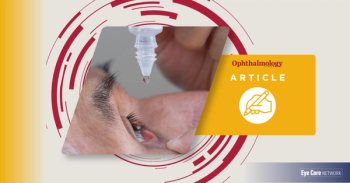
Yuvezzi Health Canada submission builds on BRIO-I and BRIO-II phase 3 data.

Eric Schlumpf discusses why Stuart Therapeutics is taking vezocolmitide beyond dry eye disease and into corneal wound healing.

A first-in-class small-molecule Fas inhibitor delivered by intravitreal injection is now under evaluation in more than 324 patients across North America and Europe.

The phase 2 EMERALD trial compares 2 doses of EO2002 with placebo, with a 15-letter BCVA gain at 26 weeks as the primary end point.
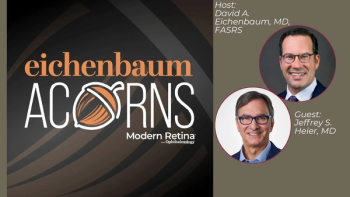
For Jeffrey S. Heier, MD, shaping retina trials, joining industry, and staying in clinic all rest on family and a strong team.

A hydrophilic topical cannabidiol formulation produced a sustained, largely local IOP reduction in DBA/2J mice with chronic dosing, adding a new wrinkle to one of glaucoma’s longest-running debates.

A longer axial length in the fellow eye of that treated for a rhegmatogenous retinal detachment was associated with a greater risk of a total retinal detachment.
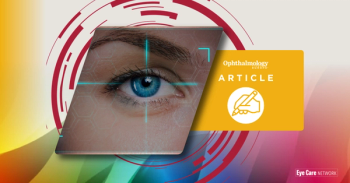
The Neurolens N3 gains EU MDR certification for Contoured Prism lens prescribing, with first European launches planned for 2027.

The non-invasive device, already available in Canada, Australia, and New Zealand, delivers low-level microcurrent through closed eyelids in 32-minute in-clinic sessions.
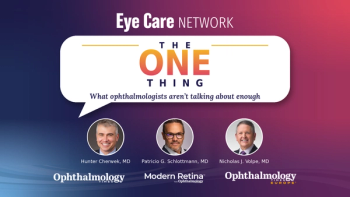
Patricio G. Schlottmann, MD, Nicholas J. Volpe, MD, and Hunter Cherwek, MD, point to retinopathy follow-up, missed diagnoses, and low-resource care.
Polygenic risk scores predicted glaucoma onset and treatment course better than family history alone in a 400,000-person biobank.
A structure-first approach to blepharoplasty and filler yields more durable, natural results.

The agreement brings J&J a next-generation bispecific antibody that outpaced faricimab on early anatomic measures in the phase 1b JADE trial, with Blackstone Life Sciences committing $750 million to fund phase 3 development.

Industry leadership gave her a wider lens that she now brings to patient care.
A systemic Sjögren therapy would make earlier identification more actionable for ophthalmologists, Esen K. Akpek, MD, said.
Veeral S. Sheth, MD, MBA, FACS, FASRS, discusses the evidence behind the new labeling requirement and how it aligns with the AAO/NANOS consensus statement.
Alfredo A. Sadun, MD, PhD, explains how LEMS mimics myasthenia gravis around the eyes and why its cancer link matters.

Retinal thickness fell by more than 100 µm within 8 weeks in each case.
Two cases highlight when to start therapy in extensive and early atrophy
Josef Huemer, MD, discusses retinal changes linked to atrial fibrillation and what they mean for eye care clinicians.

The FDA adds a NAION warning to GLP-1 drugs, plus LEMS clues, Eyedaptic's new Eva AI assistant and a retinal imaging link to AFib.

Fluid decreased in vein occlusion, AMD, and DME on aflibercept 8 mg or faricimab.

The first-in-human study of the GalNAc-conjugated siRNA joins a fast-moving Stargardt pipeline as the FDA weighs the first potential approval for the disease.
Jayakrishna Ambati, MD, discusses phase 2 K8 findings in geographic atrophy, inflammasome targeting and K8 dosing and delivery.
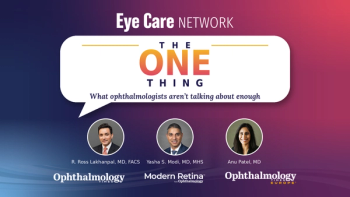
R. Ross Lakhanpal, MD, FACS, Anu Patel, MD, and Yasha S. Modi, MD, MHS, point to cell replacement in geographic atrophy, care burden, and glycemic control.

The once-daily combination drop is approved by the FDA to treat presbyopia.

Katherine Talcott, MD, discusses phase 2 VERONA findings on the vorolanib intravitreal insert in previously treated DME.

The half-life extended FcRn inhibitor showed a 74% peak reduction in IgG in healthy volunteers.